
Stucco Repair in Groveland, FL
Fix It Right Before Water Gets Behind It
Hear from Our Customers
Stucco Crack Repair That Lasts
You’re not overreacting. That hairline crack you’ve been watching isn’t going to fix itself, and it’s definitely not going to stay small. Florida’s heat, humidity, and afternoon storms turn minor stucco damage into water intrusion, mold growth, and structural rot faster than most homeowners realize.
When you fix stucco cracks early, you’re protecting everything behind that wall. Your insulation stays dry. Your framing stays solid. Your energy bills don’t spike because conditioned air isn’t leaking through compromised exterior walls.
The difference between a $400 repair and a $15,000 remediation project often comes down to timing. Patching stucco before water gets behind it means you’re dealing with surface-level work, not tearing into substrate, replacing rotted wood, or remediating mold. You’re also keeping your home’s value intact, because buyers and inspectors know what neglected stucco looks like.
Groveland Stucco Repair Contractors
We’ve spent two decades working on homes across Groveland, Clermont, Winter Garden, and the surrounding Lake County area. We’ve seen what Florida weather does to stucco, and we know how to repair it so it holds up.
We handle everything from small crack repairs to full stucco restoration. We work with engineers when structural issues are involved, and we use materials built for Central Florida’s climate. You’re not getting a national franchise or a crew that learned stucco repair in a different state. You’re working with people who understand how homes are built here and what fails first.
We keep job sites clean, show up when we say we will, and give you a clear estimate before any work starts. No surprises, no runarounds.
How We Fix Stucco Damage
First, we come out and look at what’s going on. We’re checking for visible cracks, soft spots, water stains, and any signs that moisture has gotten behind the stucco. If there’s underlying damage, we’ll tell you. If it’s a straightforward repair, we’ll tell you that too.
Once we know what we’re dealing with, we give you a written estimate that breaks down the work and the cost. No vague line items. If we need to remove damaged stucco, repair substrate, or coordinate with an engineer, that’s all spelled out before we start.
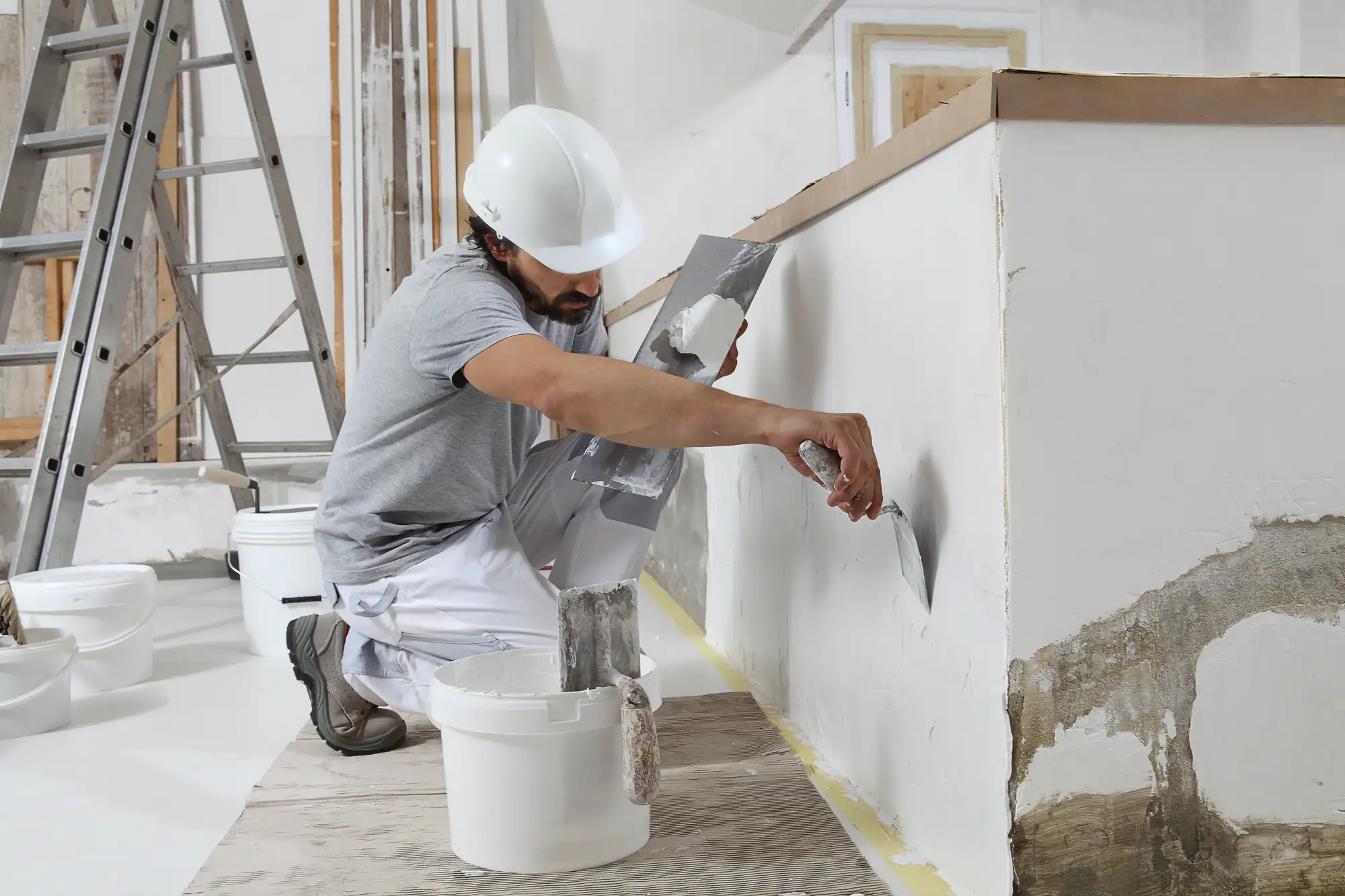
The actual repair depends on what your home needs. Minor cracks get cleaned, filled, and sealed with materials that flex with temperature changes. Larger repairs might involve cutting out damaged sections, addressing any water damage or rot underneath, and applying a new three-coat stucco system that matches your existing finish. We prep carefully, work clean, and make sure the repair blends in.
After the work is done, we walk you through what we did and answer any questions. You’re not getting handed an invoice and left to figure out the rest on your own.

Ready to get started?
Stucco Repair Services in Groveland
Every stucco repair starts with an honest assessment. We’re looking at the visible damage, but we’re also checking for what you can’t see: moisture intrusion, substrate issues, and structural movement. Groveland sits in an area where sandy soil and settling foundations are common, especially in homes built between the 1990s and 2010s. That movement shows up as cracks in your stucco, and ignoring it leads to bigger problems.
When we repair stucco cracks, we’re not just filling them and calling it done. We’re addressing the cause, whether that’s poor drainage, missing weep screeds, or substrate damage from water that’s already gotten in. If your stucco has soft spots or sounds hollow when tapped, that’s a sign water has compromised the layers underneath. We remove the damaged material, dry everything out, make any necessary substrate repairs, and rebuild the stucco system properly.
For homes dealing with widespread cracking or stucco failure, we coordinate with structural engineers to make sure we’re not just patching symptoms. Florida’s high humidity and frequent storms mean stucco needs to be installed right, with proper moisture barriers and drainage. If those weren’t done correctly the first time, a simple patch won’t hold. We make sure the repair actually fixes the problem.
How much does it cost to repair stucco in Groveland?
Stucco repair cost depends on how much damage you’re dealing with and what’s causing it. Small crack repairs typically run between $8 and $15 per square foot. If you’re patching a few hairline cracks around a window or door, you’re probably looking at a few hundred dollars.
Larger repairs get more expensive because there’s more involved. If water has gotten behind the stucco and damaged the substrate, you’re looking at $40 to $50 per square foot or more. That’s because we’re not just fixing the surface. We’re removing compromised material, addressing rot or mold, replacing damaged wood or foam board, and rebuilding the stucco system from scratch.
Most homeowners in Central Florida spend between $600 and $2,600 on stucco repairs, but that range is wide because every situation is different. The best way to know what you’re dealing with is to have someone come out and look at it. We’ll give you a written estimate that breaks down exactly what needs to happen and what it’ll cost.
Can I just patch stucco cracks myself or do I need a contractor?
You can patch small surface cracks yourself if they’re truly cosmetic and there’s no water damage involved. If you’re dealing with a hairline crack that hasn’t widened, isn’t near a window or door, and the stucco around it is solid, a quality exterior caulk or stucco patch compound might hold for a while.
But here’s the problem: most cracks aren’t just cosmetic. They’re symptoms of something else, whether that’s foundation settlement, missing expansion joints, or water intrusion that’s already started. If you patch a crack without addressing what caused it, you’re just buying time before it comes back, usually worse than before.
Florida’s climate makes DIY stucco repair tricky. High humidity means patches need to cure properly or they’ll fail. UV exposure breaks down the wrong materials fast. And if moisture is already behind the stucco, sealing the crack from the outside can actually trap water in, accelerating rot and mold growth. If the crack is wider than a quarter inch, if it’s growing, or if the stucco around it feels soft or sounds hollow, call someone who knows what they’re looking at.
How long does stucco repair take to complete?
Minor crack repairs usually take a day or less. We’re talking about small patches, surface-level work where there’s no underlying damage. We come out, prep the area, apply the repair, and you’re done. The patch needs time to cure, but the actual work is quick.
Larger repairs take longer because there are more steps involved. If we’re cutting out damaged stucco, repairing substrate, and applying a new three-coat system, you’re looking at several days. Each coat of stucco needs time to cure before the next one goes on, and rushing that process leads to cracking and failure down the road.
Weather plays a role too. We can’t apply stucco in the rain, and Florida’s afternoon storms mean we sometimes have to pause and pick back up the next day. Extreme heat can also affect curing times. When we give you a timeline, we’re factoring in realistic conditions, not best-case scenarios. If something takes longer than expected, we’ll tell you why and keep you updated.
What causes stucco to crack in Florida homes?
Foundation settlement is one of the biggest culprits, especially in Central Florida where sandy soil is common. As your foundation shifts, even slightly, that movement transfers to the stucco. You’ll see cracks near corners, around windows and doors, or running diagonally across walls. Homes built in the 1990s and 2000s are particularly prone to this because the soil has had time to settle and compact.
Water intrusion is another major cause. If your stucco wasn’t installed with proper moisture barriers, weep screeds, or drainage, water gets trapped behind it. That water causes the substrate to swell, rot, or deteriorate, and the stucco cracks as a result. Florida’s humidity and frequent rainstorms make this worse. Water doesn’t just sit on the surface here. It finds its way in.
Poor installation leads to cracking too. If the stucco was applied too thick, too thin, or without proper curing time between coats, it’s going to fail prematurely. Missing expansion joints, incorrect mixing ratios, and skipping the scratch coat all cause problems. UV exposure from Florida’s intense sun breaks down the binders in stucco over time, making it brittle and more likely to crack.
Will repaired stucco match the color and texture of my existing stucco?
Matching existing stucco is part of the job, but it’s not always perfect, especially if your stucco has been on the house for years. Stucco fades over time from UV exposure, and the texture can vary depending on how it was originally applied. We do our best to match the color and texture by mixing custom batches and using the same application techniques, but there may be a slight difference initially.
The good news is that difference fades as the repair weathers. After a few months of Florida sun and rain, repaired sections tend to blend in better. If you’re concerned about matching, we can discuss options like repainting the entire wall or section after the repair cures. That gives you a uniform look without any visible patches.
For larger repairs or areas where matching is critical, like front-facing walls, we take extra time to get the texture right. We’ll do test patches if needed and make adjustments before finishing the full repair. The goal is a repair that holds up and looks like it belongs there, not something that screams “patch job” every time you pull into the driveway.
How do I know if I need stucco repair or full stucco replacement?
If the damage is localized—a few cracks, some isolated soft spots, or water staining in one area—you probably need repair, not replacement. Stucco repair makes sense when the majority of your stucco is still in good shape and the problems are contained. Fixing those areas costs a fraction of what full replacement would run, and it solves the problem without tearing off your entire exterior.
Full replacement becomes necessary when the damage is widespread or the stucco system has failed across large sections of the house. If you’re seeing cracks on multiple walls, extensive water damage, or the stucco is delaminating and pulling away from the substrate, repair isn’t going to cut it. At that point, you’re looking at underlying issues that affect the whole system, and patching individual spots won’t stop the deterioration.
The best way to know for sure is to have someone inspect it. We’ll tell you honestly whether repair will hold or if you’re better off replacing. If replacement is the right call, we’ll explain why and what’s involved. If repair works, we’ll handle it and save you the cost and hassle of a full tear-off. You’re not getting upsold either way. You’re getting the truth about what your house needs.
Other Services we provide in Groveland