House Painters in Titusville, FL
Exterior Paint That Survives Florida's Climate
Hear from Our Customers
Exterior Painters Near Me Titusville
You’re not repainting every three years because the last crew skipped proper prep or used the wrong products for Florida. The paint stays put. The color doesn’t fade to nothing after one summer. Your home looks maintained, not weathered.
That’s what happens when exterior painting contractors actually understand how Titusville’s climate attacks a paint job. The UV exposure here isn’t a minor detail. Neither is the humidity that creeps into every crack if the surface wasn’t sealed right.
We use marine-grade and UV-resistant coatings designed for coastal Florida conditions. We prep surfaces the way they need to be prepped, not the way that saves time. And we don’t paint during the wrong weather windows, because that’s how you get bubbling and early failure.
The result is a finish that protects your investment and doesn’t need a redo before it should.
Titusville Exterior Painting Contractors
We’ve been handling stucco and exterior painting across Central Florida for over two decades. That’s long enough to know what fails here and why. Titusville homes face salt air from the coast, intense sun exposure, and moisture that finds every weak point in a paint job.
Most exterior home painters treat this market like anywhere else. They’re not thinking about how Florida’s UV index sits in the extreme category most of the year, or how your west-facing walls take a beating that interior paint could never survive.
We’ve seen what happens when crews rush prep work or skip mildew-resistant primers in shaded areas. We’ve fixed those jobs. And we’ve built a reputation on clear communication, realistic timelines, and finishes that hold up because we used the right process from the start.
Our House Painting Process Titusville
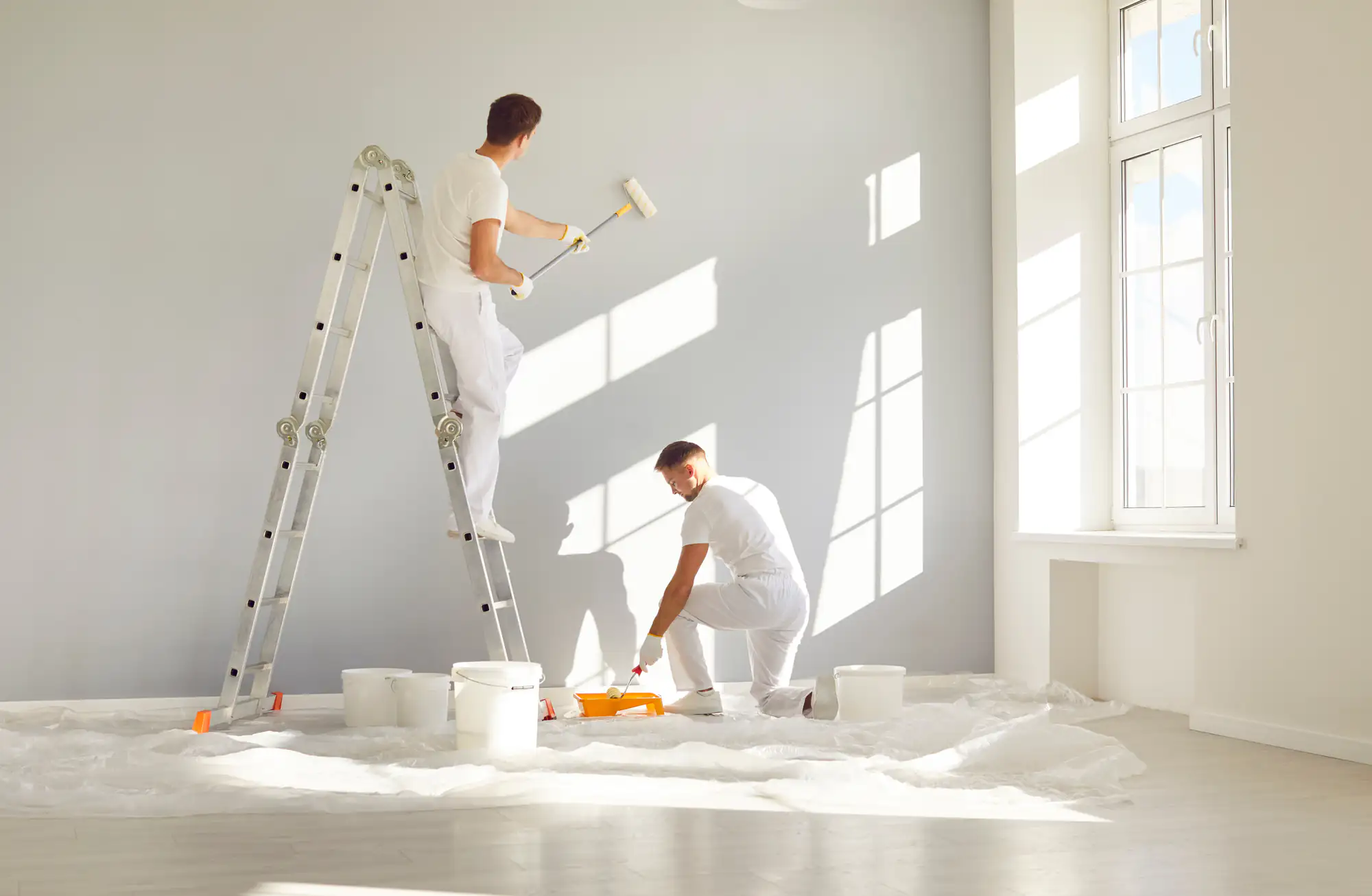
We start with a walkthrough of your property to identify problem areas: peeling sections, moisture damage, mildew growth, or surfaces that weren’t prepped correctly the first time. You get a clear estimate that breaks down what needs to happen and why.
Surface prep comes next, and this is where most painting jobs succeed or fail in Florida. We’re pressure washing, scraping loose paint, filling cracks, priming bare wood or stucco, and making sure every surface is clean and dry before any coating goes on. If there’s mildew, we treat it. If there’s rot, we address it.
Then we apply the right paint for your specific surfaces and exposure. That means UV-resistant exterior coatings for sun-facing walls, mildew-resistant products for shaded areas, and marine-grade options if you’re close to the water. We protect landscaping, clean up daily, and don’t leave until the job meets the standard we’d expect on our own homes.
You’re not dealing with surprise delays or vague timelines. We tell you what to expect, and we follow through.
Ready to get started?
Exterior Painting Companies Near Me
You’re getting a full exterior assessment before we touch a brush. We identify every area that needs attention: wood siding, stucco, trim, soffits, fascia. If something’s going to cause problems later, we flag it now.
Surface preparation is comprehensive. That means pressure washing to remove dirt and mildew, scraping and sanding any loose or peeling paint, caulking gaps and cracks, priming bare or porous surfaces, and treating any mildew or moisture issues before they’re sealed under new paint. This step takes time, and it’s the reason your paint job will last years longer than one that skipped it.
We’re using high-quality exterior coatings rated for Florida’s climate. In Titusville, that means products that resist UV degradation, handle high humidity, and don’t blister when temperatures spike. For homes near the coast, we use marine-grade paints that stand up to salt air. For shaded walls, we use mildew-resistant formulas that prevent the black streaking you see on so many Florida homes.
The job site stays clean. We protect your landscaping, cover walkways, and clean up at the end of each day. And we don’t paint in bad weather, because that’s how you get adhesion problems and early failure.
How long does exterior paint last on a house in Titusville?
In Titusville’s climate, you’re looking at five to seven years for a quality exterior paint job, sometimes longer if the prep work was done right and you used UV-resistant coatings. That’s shorter than what you’d get in cooler climates, but Florida’s sun and humidity are brutal on exterior finishes.
The lifespan depends on a few things: the quality of the paint, how well the surface was prepped, which direction your walls face, and whether the previous job addressed underlying moisture or mildew issues. South- and west-facing walls take the most UV damage and fade faster. Shaded areas near landscaping or under eaves are prone to mildew, which breaks down paint from underneath.
If you’re repainting every three years, something went wrong with the last job. Either the surface wasn’t prepped correctly, the wrong type of paint was used, or it was applied during poor weather conditions. A proper exterior paint job in Titusville should give you at least five solid years before you’re thinking about a refresh.
What type of paint holds up best in Florida's climate?
You want 100% acrylic latex paint with UV inhibitors and mildew resistance built in. That’s the baseline for any exterior paint job in Florida. Cheaper paints that use vinyl or other binders break down faster under UV exposure and don’t handle the humidity.
For homes near the coast, marine-grade paints add another layer of protection against salt air, which accelerates corrosion and paint failure. For shaded areas, look for products specifically rated for mildew resistance, because Florida’s humidity creates the perfect environment for mold growth on any surface that doesn’t get direct sun.
The sheen matters too. Satin or semi-gloss finishes hold up better than flat paint on exterior surfaces because they’re easier to clean and more resistant to moisture penetration. Flat paint might look good initially, but it traps dirt and mildew more easily. Most exterior painters will recommend satin for siding and semi-gloss for trim, and that’s the right call for Titusville’s conditions.
How much does it cost to paint a house exterior in Titusville?
For a typical single-family home in Titusville, you’re looking at anywhere from $3,500 to $8,000 depending on size, condition, and what needs to be done beyond just painting. A 1,500 square foot home with minimal prep might come in around $4,000. A 2,500 square foot home with wood rot, extensive scraping, or stucco repairs could push closer to $7,000 or more.
The variables that affect cost: how much surface prep is needed, whether there’s wood rot or stucco damage that needs repair, the type of paint you’re using, how many stories your home is, and whether we’re painting just siding or including trim, soffits, and fascia. If your home hasn’t been painted in ten years and the existing paint is peeling badly, expect the prep work to add significant time and cost.
The cheapest bid isn’t usually the best value in Florida. If someone’s significantly undercutting other exterior painting companies, they’re either skipping proper prep, using lower-grade paint, or rushing the job. That might save you money now, but you’ll be repainting sooner and dealing with more problems. A properly executed exterior paint job costs more upfront but spreads that cost over more years of protection.
What's the best time of year to paint a house exterior in Florida?
Late fall through early spring—roughly November through April—is your best window for exterior painting in Titusville. You’re avoiding the worst of the summer heat and the daily afternoon thunderstorms that make scheduling nearly impossible from June through September.
Temperature and humidity matter more than most homeowners realize. Paint needs specific conditions to cure properly. If it’s too hot, paint dries too fast and doesn’t adhere correctly. If it’s too humid, it doesn’t dry at all and you get runs, sags, or a finish that stays tacky. If it rains within a few hours of application, you’re starting over.
Summer painting isn’t impossible, but it requires careful timing and flexibility. We’re starting early in the morning, watching weather radar constantly, and sometimes calling off work mid-day because conditions aren’t right. That’s why we prefer the cooler, drier months. You get more predictable weather, better curing conditions, and fewer delays. If you’re planning an exterior paint job, booking it for winter or early spring gives you the best chance of a smooth process and a finish that lasts.
Do I need to repaint if my exterior paint is just faded but not peeling?
Fading alone doesn’t mean you need to repaint immediately, but it’s often an early warning sign that your paint is losing its protective qualities. If the color has noticeably dulled but the paint is still adhering well and there’s no chalking when you run your hand across it, you might have another year or two before repainting becomes necessary.
What you’re watching for: chalking (a powdery residue that comes off on your hand), any areas where paint is starting to crack or peel, bare spots where the coating has worn through, or mildew growth that’s spreading. Once UV damage progresses past fading into chalking, the paint is breaking down and no longer protecting the surface underneath. That’s when moisture starts getting in and you see wood rot or stucco damage.
Repainting before you have major peeling or substrate damage is actually the smarter financial move. Surface prep is minimal when the existing paint is still mostly intact. Wait until you have widespread failure, and you’re looking at extensive scraping, repairs, and priming that add significant cost. If your home’s exterior paint has faded significantly and it’s been more than six years since the last paint job, getting an assessment from us is worth your time.
How do I know if a painting contractor prepped my surfaces correctly?
Proper prep means every loose or peeling section has been scraped or sanded down to solid paint or bare substrate. You shouldn’t see any flaking edges or areas where new paint is just going over old peeling paint. All cracks and gaps should be caulked. Any mildew or dirt should be completely removed, usually with pressure washing and sometimes with a mildew treatment solution.
Bare wood or stucco needs to be primed before the topcoat goes on. If you see raw substrate getting painted without primer, that’s a shortcut that will cause early failure. Glossy surfaces need to be sanded or chemically deglossed so new paint can adhere. And everything should be dry before painting starts—if it rained yesterday and they’re painting today, that’s a problem.
You can tell when prep was skipped because the paint fails early. It peels in sheets within a year or two. It bubbles where moisture was trapped underneath. It doesn’t adhere in areas that weren’t cleaned or primed. Most homeowners don’t realize their paint job was done wrong until it’s failing, which is why choosing painters based on price alone is risky. The crew that charges less is usually the crew that’s skipping the time-consuming prep work that makes the difference between a paint job that lasts five years and one that lasts two.
Other Services we provide in Titusville