A water stain on your ceiling. A crack that wasn’t there six months ago. A patch from the last contractor that you can still see every time the light hits it at the wrong angle. These aren’t unusual problems in Orange County, FL — they’re almost predictable, given the climate, the housing stock, and how often drywall damage gets treated as a surface issue when it’s really not. This page covers what’s actually going on when drywall fails in Central Florida, how to tell when a repair will hold versus when it won’t, and what we look at before we ever pick up a trowel.
Water Damage Repair: Why the Stain Is Never the Whole Story
Water-damaged drywall is the most common call we get in Orange County, FL, and it’s also the most mishandled. The visible stain — that yellowish-brown ring on your ceiling or the soft spot on your wall — is just the surface evidence of something that’s already spread further than you can see. Drywall is pressed paper and gypsum. It absorbs moisture quickly, and once it does, the wet zone is almost always larger than the discoloration suggests.
In Florida’s climate, that matters more than it would anywhere else. Central Florida averages over 50 inches of rain per year, and humidity stays consistently above 70% year-round. At those levels, mold can begin growing on wet drywall within 24 to 48 hours of a water event. By the time a homeowner in Orange County notices a stain and schedules a repair, the material behind the wall may already be compromised in ways that a patch won’t fix.
Drywall and Stucco Repair: When the Exterior Is the Real Problem
Here’s something most drywall contractors won’t tell you, because most of them only do drywall: if your interior wall damage is being caused by water coming through the outside of your home, patching the drywall is a temporary fix at best. The water will find the same path again. You’ll be back to square one within a season or two.
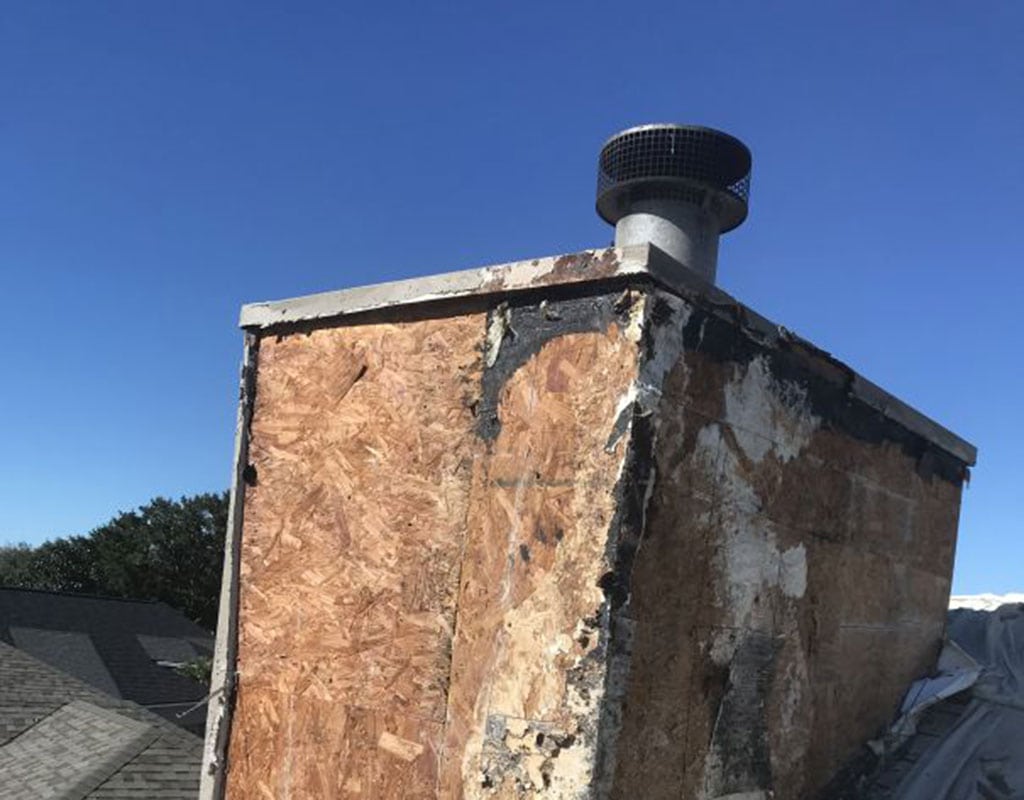
This is a pattern we see constantly in Orange County, FL, particularly in homes built during the 1990s construction boom. A significant portion of those homes were finished with EIFS — Exterior Insulation and Finish Systems, sometimes called synthetic stucco. Those systems are now 25 to 35 years old. When EIFS ages and develops cracks or moisture infiltration points, water doesn’t stay on the outside. It travels into the wall cavity and saturates the interior drywall from behind. The homeowner sees a stain. A drywall-only contractor patches it. The stain comes back.
Because we specialize in both exterior stucco systems and interior drywall repair, we can identify when the exterior is driving the interior damage. Our owner has a 20-year background in foundation repair — which means we’re trained to think about what’s behind and beneath the finish surface, not just what’s on it. When we look at a water-stained wall, we’re asking where the water came from, how it got in, and whether the entry point is still active. If the exterior is the source, we address that too. That’s not upselling — it’s the only way the repair actually lasts.
For Orange County, FL homeowners with EIFS exteriors, this matters a great deal. A proper inspection of the exterior system before any interior repair work begins is the difference between a fix that holds and one that gives you the same problem in a different spot six months later. We work with cosmetic masonry specialists for texture and color matching, and we coordinate with engineers when a structural concern is involved — because sometimes what looks like a drywall issue is pointing at something more serious underneath.
Water Damage Wall Repair: What the Process Actually Looks Like
A lot of homeowners assume drywall repair is straightforward — cut out the bad section, put in new material, tape and mud, paint over it. And for a clean hole or a nail pop, that’s roughly accurate. Water damage is different. The process has to start with moisture assessment, not material replacement.
Before we cut anything out, we want to know whether the source of the moisture has been stopped. If there’s an active leak — a roof penetration, a failed window seal, a plumbing drip — and we patch the drywall without addressing it, the new material will be damaged again. We also check the extent of the wet zone, because visible staining is almost never the boundary of the actual damage. Cutting to the edge of the stain and leaving saturated material in the wall is a common mistake that leads to mold growth behind a fresh patch.
Once we’ve confirmed the source is resolved and mapped the actual damage, we remove the affected drywall completely. In Florida’s climate, we strongly recommend moisture-resistant drywall — sometimes called green board or purple board — for any repair in areas prone to humidity exposure. It costs more than standard drywall, but in a market where ambient humidity rarely drops below 70%, it’s the right call. After installation, we tape, apply compound in multiple coats, and sand carefully to avoid creating texture inconsistencies that will show under light.
The finish matters as much as the repair itself. Central Florida’s older housing stock — homes from the 1980s through the early 2000s across neighborhoods like Winter Park, Doctor Phillips, and Hunters Creek — often has hand-applied textures like knockdown or orange peel that vary from house to house. Matching those textures requires skill and experience. We work with cosmetic masonry specialists specifically because texture matching is where most repairs become visible, and visible patches are the complaint we hear most often from homeowners who’ve had work done elsewhere.
What Orange County, FL Homeowners Ask Before Hiring a Drywall Contractor
Most people searching for drywall repair have the same handful of questions — and they’re good questions. How much will it cost? Can they do it themselves? Does the contractor need to be licensed? What if there’s mold? We’d rather answer those directly than make you dig for them.
The answers matter more in Orange County, FL than in most markets, because Florida’s climate and housing stock create specific conditions that change the calculus on several of these. Here’s what we actually tell people when they ask.
Does Drywall Repair Require a Licensed Contractor in Florida?
In Florida, handypeople are legally permitted to perform minor repairs without a contractor’s license. So yes — an unlicensed operator can legally patch a nail hole or fix a small ding in your wall. For that kind of work, it’s a personal judgment call.
But the line moves quickly. Water damage, mold-related repairs, structural concerns, ceiling work, and larger replacements all fall under the scope of a licensed Gypsum Drywall Contractor in Florida — a specific specialty designation regulated by the Construction Industry Licensing Board (CILB) under the Florida Department of Business and Professional Regulation (DBPR). Contractors holding that license have passed trade-specific exams, carry minimum general liability insurance of $100,000 for bodily injury, and have documented field experience. You can verify any Florida contractor’s license at myfloridalicense.com.
The reason this matters in Orange County, FL specifically is that the market has no shortage of unlicensed operators willing to take on work that exceeds what they’re legally or practically qualified to handle. When the job involves water damage — which in Central Florida almost always involves some mold risk — you want someone who knows how to assess the extent of the damage, not just someone who can make the wall look smooth. We are fully licensed and insured in Florida, and we’re happy to provide documentation before any work begins.
How Do I Know If My Drywall Has Mold — and What Happens If It Does?
The signs of mold in drywall aren’t always obvious. Visible discoloration — dark spots, greenish or black patches — is the clearest indicator, but mold can be growing on the back face of the drywall without showing through to the surface at all. A musty odor in a room that doesn’t have an obvious source is often the first real signal. Soft or spongy drywall that gives slightly when you press it is another — that texture means the material has absorbed moisture and the structural integrity is already compromised.
One of the most common mistakes we see in Orange County, FL is mold-resistant paint being applied over a wall with active mold growth. Mold-resistant paint treats the surface only. It does nothing about the colony growing on the back of the panel or in the insulation behind it. The mold continues to grow, the paint eventually fails, and the homeowner is dealing with a larger remediation job than they would have had if the material had been removed initially.
If mold is confirmed — or even reasonably suspected — the right move is removal of the affected drywall, inspection of the insulation and framing behind it, and replacement with fresh material after the area has been dried and treated. In Florida’s climate, where mold can establish itself within 24 to 48 hours of a water event, this isn’t an overcautious approach. It’s the standard that protects the home long-term.
For Orange County, FL homeowners, the rainy season runs from May through October, and hurricane season overlaps almost entirely with that window. Roof leaks, storm-driven water intrusion, and plumbing stress from weather events are concentrated in that period — which means mold risk is highest precisely when the weather is doing the most damage. Getting water-damaged drywall assessed and repaired quickly is not a luxury in this climate. It’s the practical choice.
Finding the Right Drywall Contractor in Orange County, FL
Good drywall repair in Central Florida starts with understanding why the damage happened, not just what it looks like. A patch that doesn’t account for the moisture source, the mold risk, or the texture of the surrounding wall is going to show — either visually or as a recurring problem.
We’ve worked across Orange County, FL long enough to know that the homes here have specific challenges. Aging EIFS exteriors, sandy soil that causes settling cracks, and a climate that turns minor water intrusion into a mold situation faster than most homeowners expect. Those aren’t problems a generic approach handles well.
If you’re dealing with a water stain, a crack, a patch that keeps coming back, or damage you’re not sure how to categorize, CF Stucco and Painting is worth a conversation. We offer upfront estimates after inspection, clear timelines, and a callback within 24 to 48 hours for online quote requests. We also offer discounts for military members, first responders, and seniors.