Synthetic Stucco Installation Central Florida

Cut Your Cooling Bills Without Constant Repairs
Florida heat drives your AC bill through the roof, and traditional stucco keeps cracking. Synthetic stucco installation with proper insulation drops energy waste by 18-25%, blocks moisture before it becomes mold, and flexes through storms instead of splitting.
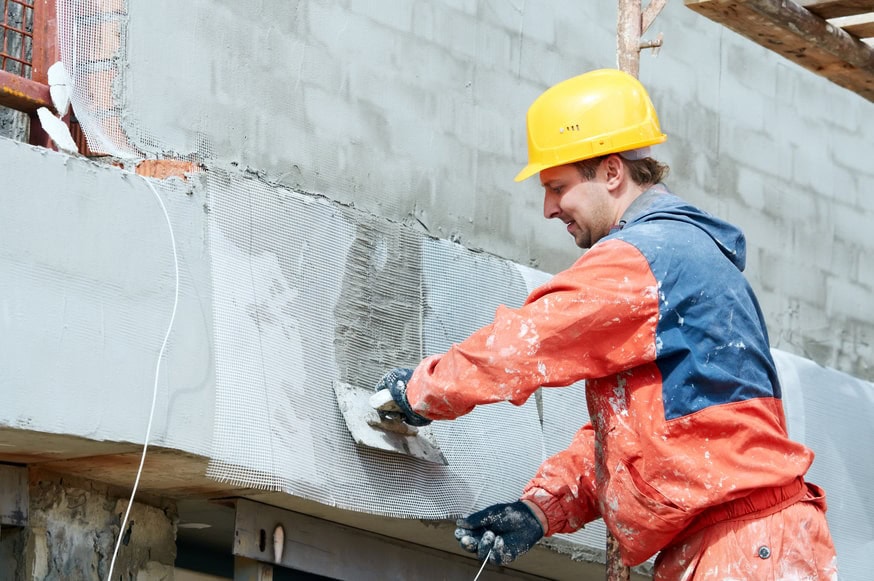
A construction worker in an orange and blue jumpsuit and yellow hard hat spreads plaster on an exterior wall, showcasing expert stucco services Central Florida relies on for durable building finishes.

Central Florida Climate Expertise

We've installed EIFS systems through two decades of Central Florida hurricanes, humidity, and heat—we know exactly what works here.

Proper Drainage Systems Included

Every installation includes water-resistive barriers and drainage planes that prevent the moisture problems cheaper contractors skip.

Licensed in Six Counties

Fully licensed and insured across Orange, Osceola, Seminole, Volusia, Brevard, and Lake Counties with the same quality standards everywhere.

Two Decades of EIFS Experience

Over 20 years installing synthetic stucco systems means we've solved every challenge Central Florida weather creates for exterior finishes.
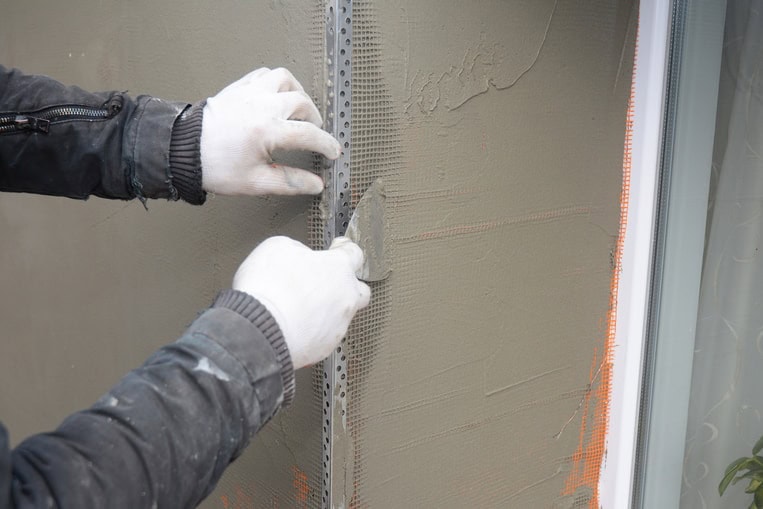
A person wearing white gloves applies plaster to a wall using a trowel, smoothing the surface around a metal corner bead near a window—a detail of expert work provided by Stucco Services Central Florida.

EIFS Installation Central Florida

What Synthetic Stucco Actually Is

Synthetic stucco—called EIFS or exterior insulation finish system—combines insulation with your exterior finish in one integrated system. Traditional cement stucco just sits there looking decorative while offering zero insulation value and cracking whenever your building shifts or temperatures swing. EIFS is completely different. The system starts with foam insulation board secured to your exterior walls, creating continuous coverage without thermal bridges where heat sneaks through. Over that goes a water-resistant base coat reinforced with fiberglass mesh for impact resistance and crack prevention. The finish coat uses acrylic polymers that flex with temperature changes, resist UV fading, and shed water. The complete system weighs 80% less than traditional stucco but performs significantly better for energy efficiency and moisture control. Research from Oak Ridge National Laboratory confirmed EIFS as the best performing cladding for thermal and moisture control when compared to brick, traditional stucco, and fiber cement. In Central Florida where you’re battling 50+ inches of annual rainfall, 90% humidity, and cooling costs that eat 40% of your energy bill, that performance difference is measurable every month.

Energy Efficient Siding Orlando FL

What Changes After Professional Installation

Synthetic stucco installation isn’t cosmetic. It’s a building envelope upgrade that reduces operating costs, eliminates maintenance headaches, and protects your property from Florida’s climate.

Your AC runs less frequently because continuous insulation stops heat transfer—most properties see cooling cost reductions between 18-25%.

Crack repairs become a thing of the past since EIFS flexes with temperature swings instead of splitting like rigid cement.

Water damage and mold stop being concerns because drainage planes let moisture escape before it penetrates your wall assembly.

Your exterior keeps its color year after year without fading since acrylic finishes resist UV degradation that destroys paint.

Storm damage repairs drop significantly because the reinforced system absorbs impacts that crack traditional stucco.

You're done with constant repainting cycles—properly installed EIFS maintains its finish for 30+ years with minimal maintenance.

Ready to get started?

A bold white number 1 is centered inside a solid black circle on a light gray background, representing top-rated Stucco Services Central Florida.

Share project details

Call us or get a free online quote to help us identify your project needs.

A bold white number 2 centered inside a solid black circle on a light gray background, representing Stucco Services Central Florida with a modern and professional touch.

We'll follow up

If you requested an online quote, you can expect a callback within 24-48 hours of your request.

A bold, white number 3 is centered inside a solid black circle on a plain white background, representing top-tier Stucco Services Central Florida.

The floor is yours

Connect with an expert and share all project specifics.

A bold white number 4 centered inside a solid black circle on a light gray background, representing Stucco Services Central Florida.

Plan your project

Like what you hear? We'll provide next steps and expert guidance.
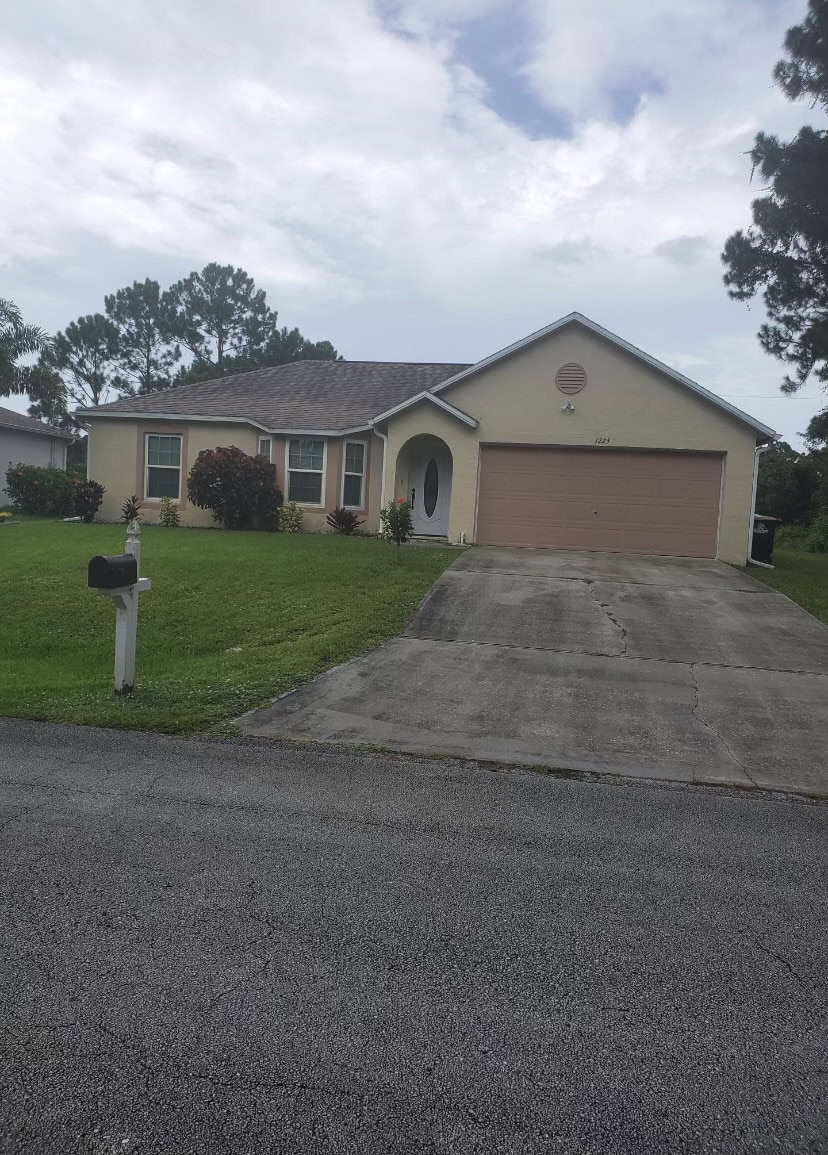
Single-story beige house with a two-car garage, sloped driveway, green lawn, and black mailbox at the edge of the yard. Stucco Services Central Florida enhances its curb appeal. Trees and a cloudy sky are visible in the background.

Commercial Stucco Systems Central Florida

Why EIFS Outperforms Traditional Stucco Here
Traditional cement stucco might work fine in dry climates with stable temperatures. Central Florida isn’t that. We get 50+ inches of rain annually, humidity that stays above 90% for months, afternoon storms that drop temperatures 20 degrees in an hour, and hurricanes that test every exterior finish. Traditional stucco wasn’t designed for this. Cement stucco is rigid, heavy, and offers zero insulation. When buildings settle slightly—which all buildings do—or when temperatures fluctuate dramatically, rigid stucco cracks. Every crack becomes a moisture entry point, and in Florida’s humidity, moisture problems escalate into mold, rot, and structural damage quickly. You end up in a constant cycle of patching cracks, resealing, and repainting every few years just to maintain basic weather protection. EIFS synthetic stucco weighs 80% less, which matters for structural loading, especially on wood-frame construction. The foam insulation provides R-5 to R-6 value—traditional stucco gives you nothing. That continuous insulation eliminates thermal bridging where heat transfers through wall studs and framing. The flexibility is what really matters in Florida. When temperatures swing or buildings shift, EIFS moves with it without cracking. Modern drainage EIFS systems include water-resistive barriers and drainage cavities specifically engineered to manage moisture. Water that gets past the finish coat drains safely back outside instead of getting trapped and causing damage. For commercial stucco systems where energy costs and maintenance expenses directly impact your bottom line, EIFS delivers measurable ROI through lower utility bills and reduced repair frequency.
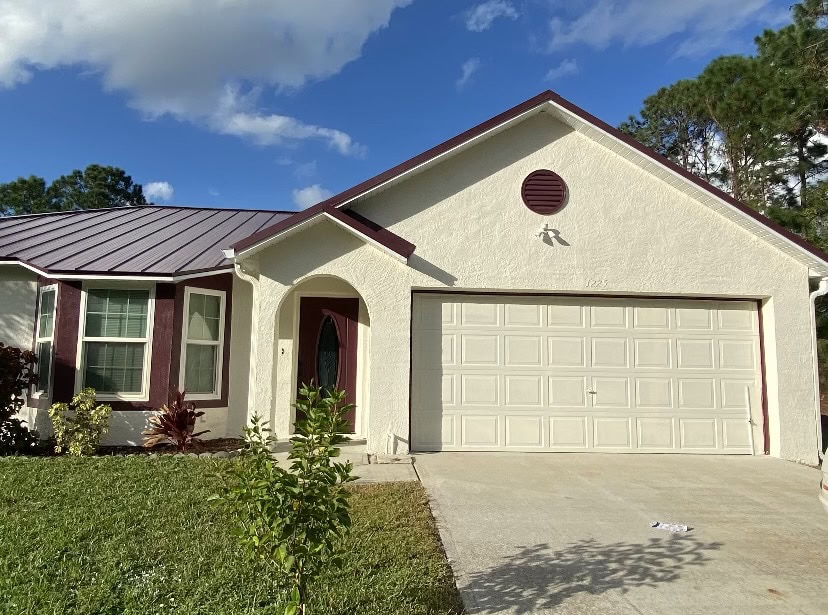
A single-story beige house with a maroon roof and trim features quality stucco services Central Florida trusts, a two-car garage, and a small front yard with grass and shrubs, all under a blue sky with scattered clouds.

Exterior Insulation Finish System Florida

What's Included When We Install EIFS

Proper synthetic stucco installation starts before we touch any materials. We inspect your existing exterior sheathing for moisture damage, structural soundness, and proper preparation. Installing over compromised substrate just hides problems that will worsen. If we find issues, we address them first—that’s not upselling, that’s preventing callbacks and ensuring the system performs as designed. The water-resistive barrier installation is non-negotiable in Florida. This goes over the substrate with proper overlaps, sealed penetrations, and integration with window and door flashing. Then we create drainage cavities using vertical ribbons of adhesive—these channels are what let moisture drain out if it gets behind the finish. The insulation board, typically expanded polystyrene foam, gets secured with adhesive or mechanical fasteners depending on your substrate type and wind load requirements. The base coat application requires attention to detail. This water-resistant layer gets embedded with fiberglass mesh while wet, creating a reinforced barrier that provides impact resistance and prevents cracks from propagating. The mesh needs complete coverage with adequate base coat thickness—no gaps, no thin spots. Finally, the acrylic finish coat provides your selected color and texture while delivering UV resistance and weather protection. We can match virtually any appearance from smooth modern finishes to traditional stucco textures. The complete installation typically takes 4-6 days for residential projects, and the system starts performing immediately. No extended curing time like cement stucco requires, and you’ll notice the temperature difference inside within days as the insulation starts working.
EIFS Stucco FAQs

Common questions about our EIFS Stucco services

Most properties in Orange County, Osceola County, Seminole County, Volusia County, Brevard County, and Lake County see cooling cost reductions between 18-25% after professional EIFS installation. The continuous insulation layer—typically R-5 to R-6 value—eliminates thermal bridging and significantly reduces heat transfer through your exterior walls. Since HVAC systems account for over 40% of energy use in Florida homes according to the University of Florida’s research, that insulation creates measurable monthly savings. The exact reduction depends on your property size, existing insulation levels, thermostat settings, and how your HVAC system is sized. But the Department of Energy confirms proper insulation saves 15-30% on heating and cooling costs, and in Central Florida where you’re running AC nearly year-round, those savings accumulate quickly. The insulation also reduces how often your HVAC cycles on and off, which extends equipment life and reduces maintenance costs. Commercial stucco systems see even more dramatic savings because larger buildings have more exterior surface area and higher baseline energy consumption.
Modern drainage EIFS systems are specifically engineered for moisture management and perform exceptionally well in Central Florida’s climate. The key difference from early systems is the drainage plane—a cavity between the water-resistive barrier and insulation board that lets any moisture drain safely back outside. Early EIFS from the 1980s and 1990s were barrier systems without drainage, so water that got behind the finish had nowhere to go and caused damage. That’s not how current systems work. Today’s synthetic stucco installation includes water-resistive barriers, proper flashing around all penetrations, and drainage cavities as standard components. Research from Oak Ridge National Laboratory confirmed EIFS as the best performing cladding for moisture control compared to brick, traditional stucco, and fiber cement siding. The acrylic finish coat inherently resists water absorption, and when properly detailed around windows, doors, and roof lines, the complete system handles Central Florida’s 50+ inches of annual rainfall without the rot, mold, and structural issues that plague wood siding and even traditional stucco. We’ve installed systems that have performed flawlessly through two decades of Florida summers, hurricanes, and tropical storms.
Professionally installed EIFS systems routinely last 30+ years in Central Florida, and many exceed that with minimal maintenance. The acrylic finish resists UV degradation, fading, and chalking far better than paint on traditional stucco or wood siding. The fiberglass-reinforced base coat doesn’t crack like cement stucco, so you avoid the constant repair cycle that comes with rigid finishes. The foam insulation board is dimensionally stable and doesn’t deteriorate from moisture exposure when the system is properly installed with drainage. What really determines lifespan is installation quality—proper moisture barriers, correct drainage details, adequate sealant around penetrations, and proper base coat thickness. We’ve seen systems installed correctly in the late 1980s and 1990s still performing well today across Central Florida. Maintenance requirements are minimal compared to traditional stucco: occasional cleaning with mild detergent and water, inspecting sealants around windows and doors every few years, and addressing any impacts promptly if they occur. You’re not repainting every 5-7 years or patching hairline cracks constantly like you would with cement stucco. For commercial stucco systems, that reduced maintenance translates directly to lower operating costs over decades.
Yes, properly installed EIFS systems meet Florida Building Code requirements for wind resistance and perform well in hurricane conditions. The fiberglass-reinforced base coat provides impact resistance, and the flexible nature of synthetic stucco allows it to absorb impacts that would crack rigid cement stucco. Many EIFS manufacturers offer systems specifically tested and approved for high-velocity hurricane zones, including products that meet Miami-Dade County’s stringent requirements for wind-borne debris impact. The key factors are proper mechanical fastening in high-wind areas, adequate base coat thickness with complete mesh coverage, and correct installation of all system components according to manufacturer specifications. EIFS weighs 80% less than traditional stucco, which actually reduces wind load on the structure itself—lighter cladding means less stress on your building envelope during storms. The drainage systems help manage driving rain that can penetrate any exterior finish during severe weather. Multiple commercial and residential EIFS installations throughout Orange County, Osceola County, Seminole County, Volusia County, Brevard County, and Lake County have weathered major hurricanes including Charley, Frances, Jeanne, Irma, and Ian without system failure when installed by experienced contractors who understand Florida-specific requirements and proper detailing.
EIFS repair requires different materials, techniques, and expertise than traditional stucco repair. You can’t patch synthetic stucco with cement-based compounds—the materials are fundamentally incompatible. Proper EIFS repair involves cutting out damaged sections cleanly, inspecting and replacing insulation board if necessary, reapplying base coat with proper mesh reinforcement, and matching the finish coat texture and color. The repair needs to maintain the system’s moisture management properties, which means proper integration with surrounding areas and maintaining drainage pathways. Traditional stucco repair uses cement-based patching compounds applied over wire lath—completely different process. Many contractors experienced only with cement stucco don’t understand EIFS systems and can actually create moisture problems by using incorrect repair methods or materials. Small impacts or scratches in EIFS are actually easier to repair invisibly than cement stucco because the acrylic materials blend seamlessly when applied correctly by someone who knows what they’re doing. The critical part is finding contractors who specifically work with exterior insulation finish systems and understand how all the layers function together, not just how to make the surface look good temporarily. Poor repairs can compromise the moisture management that makes EIFS perform well in Florida’s climate.
EIFS makes sense for Central Florida properties where energy efficiency, low maintenance, and moisture resistance are priorities. If you’re dealing with high cooling bills, tired of constant crack repairs on traditional stucco, or concerned about moisture problems with other siding materials, synthetic stucco installation addresses all three issues. It’s particularly valuable for commercial buildings where energy costs significantly impact operating expenses and maintenance budgets. For residential properties, it delivers long-term performance without the ongoing maintenance cycle that other exteriors require. EIFS works on new construction and can be installed over existing substrates in renovation projects, though proper substrate preparation is critical. It’s not ideal if you need extremely high impact resistance at ground level where equipment, vehicles, or heavy activity might damage the finish—traditional cement stucco is harder and more impact-resistant in those specific areas. The best approach is having us assess your specific property, existing conditions, budget, and goals. We’ll evaluate your substrate, discuss your priorities, and honestly tell you whether EIFS is the right solution or if another approach makes more sense for your situation. Not every property needs synthetic stucco, but for most Central Florida applications, the combination of energy savings, durability, and low maintenance makes it the superior choice.
A bold white number 1 is centered inside a solid black circle on a light gray background, representing top-rated Stucco Services Central Florida.

Property Evaluation

We assess your existing exterior, check for moisture or structural concerns, and verify substrate conditions before starting any installation work.

A bold white number 2 centered inside a solid black circle on a light gray background, representing Stucco Services Central Florida with a modern and professional touch.

Barrier and Insulation Layers

Water-resistive barriers with drainage systems go in first, then insulation board gets properly secured using methods appropriate for your building type.

A bold, white number 3 is centered inside a solid black circle on a plain white background, representing top-tier Stucco Services Central Florida.

Reinforced Finish Application

Base coat with fiberglass mesh creates impact resistance, then your selected finish coat completes the system with lasting color and texture.

Scroll to Top