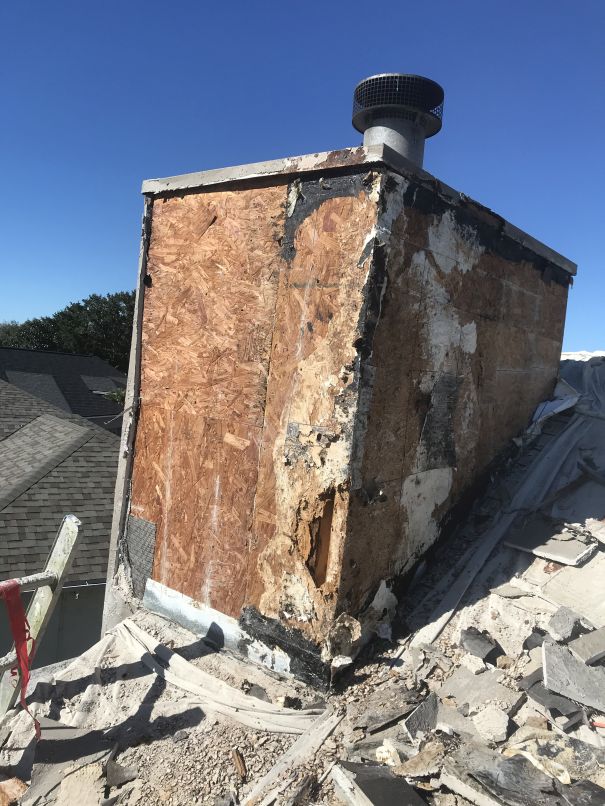
You noticed a crack. Maybe a stain. Maybe a section of stucco that sounds hollow when you knock on it. Now you’re trying to figure out whether this is a $400 fix or a $40,000 problem—and nobody’s giving you a straight answer.
That’s exactly where most Orange County homeowners get stuck. The damage is visible, but what’s behind it isn’t. And the stakes feel high enough that you don’t want to guess wrong in either direction.
We’ve designed this guide to help you think through the repair-versus-replacement decision the right way—starting with what the damage is actually telling you.
Stair Step Cracks in Stucco: What They Mean for Orange County Homes
Stair-step cracks are exactly what they sound like—cracks that travel diagonally along the mortar joints between concrete blocks, forming a stepped pattern up the wall. They’re one of the most common things we see on homes throughout Orange County, and they’re also one of the most misread.
Most people assume any crack in stucco is a surface problem. Sometimes it is. But stair-step cracks specifically follow the mortar lines in concrete block construction, which is how the vast majority of homes in Central Florida are built. That pattern matters because it tells you something about what’s happening structurally, not just cosmetically.
When Stair Step Cracks Are Cosmetic vs. When They’re Structural
Here’s the honest answer: the width, depth, and movement of the crack determine how serious it is. A hairline crack—one you can barely fit a fingernail into—is typically the result of normal thermal expansion and contraction. Florida’s temperature swings cause stucco to expand and contract daily, and fine surface cracks are a normal byproduct of that.
These are generally repairable with proper prep, patching material, and a good sealant. The red flags come when a crack is wider than about 1/8 of an inch, when the edges on either side of the crack don’t sit flush with each other, or when the crack is actively growing.
Diagonal cracks, especially ones that run from a window or door corner, and stair-step patterns that span a significant portion of a wall are worth taking seriously. These patterns are often symptoms of differential settlement—meaning the soil beneath the foundation is shifting unevenly.
This is where Orange County’s geology matters. Central Florida’s sandy, moisture-sensitive soils are prone to movement, particularly in older neighborhoods, areas near retention ponds, and anywhere with a history of fill. When the ground moves, the structure above it moves too—and in a concrete block home, that movement shows up first in the mortar joints. Which means it shows up as stair-step cracks in your stucco.
Our owner spent 20 years in foundation repair before starting CF Stucco and Painting. That background shapes how we assess every crack we look at. Most stucco contractors are trained to patch what they see. We’re trained to ask why it happened—and whether what’s visible on the surface reflects something more significant happening below it.
For cracks that suggest structural movement, we coordinate with engineers before recommending a repair plan. That’s not something most stucco contractors do, and it’s the difference between a repair that holds and one that fails again in 18 months. If you’re in a home built between the 1960s and 1990s in areas like Conway, Pine Hills, or Apopka, and you’re seeing stair-step cracks that have been patched before and keep coming back, that’s a pattern worth investigating properly—not just patching again.
Masonry Stucco Repair: What the Process Actually Looks Like
Repairing stucco on concrete block—what’s sometimes called masonry stucco repair—is different from repairing stucco on a wood-frame wall. The substrate behaves differently, moisture moves through it differently, and the crack patterns you’re working with follow the block and mortar geometry rather than framing members or sheathing seams.
Done right, the process starts with removing all loose or delaminated material around the damaged area. You can’t patch over compromised stucco and expect it to hold—the new material needs a clean, solid surface to bond to.
From there, the substrate gets cleaned, a bonding agent is applied, and the patch is built up in layers that match the profile of the surrounding wall. In a three-coat stucco system, that means scratch coat, brown coat, and finish coat, each allowed to cure properly before the next goes on.
The part most homeowners don’t think about until after the fact is texture and color matching. A structurally sound repair that looks like a patch is still a problem—especially in higher-value Orange County communities like Windermere, Dr. Phillips, or Lake Nona, where curb appeal is tied directly to property value. We coordinate with cosmetic masonry specialists specifically to get the finish right, not just the structure.
The other thing proper masonry stucco repair addresses is the moisture barrier. If water has been getting behind the stucco—through the crack, through failed caulking around windows, or through compromised flashing—patching the surface without addressing how water is entering the wall system means you’re back to square one. Every repair we do includes an assessment of the moisture pathway, because that’s the only way to make sure the fix actually lasts in Orange County’s climate.
Replace Stucco with Siding Cost vs. Re-Stucco: The Florida Comparison
At some point in the research process, a lot of homeowners start wondering whether they should just replace the stucco with siding altogether. It’s a reasonable question—especially if you’ve dealt with recurring repairs or you’ve heard that siding is lower maintenance.
The short answer is that in Florida, the math usually doesn’t work out the way people expect it to. The longer answer depends on what’s actually happening with your exterior and what you’re optimizing for.
When Full Stucco Replacement Makes More Sense Than Repair
There’s a general rule of thumb in the industry: if the damaged or failed area covers more than roughly 25 to 30 percent of a wall plane, or if moisture has already reached the sheathing or framing, repair starts to become less cost-effective than replacement. At that point, you’re not patching isolated failures—you’re chasing damage across an entire surface, and the cumulative cost of doing that correctly often exceeds what a full re-stucco would cost.
This comes up frequently with homes built in Orange County between 1985 and 2000. A significant portion of those homes were finished with EIFS—Exterior Insulation and Finish Systems, sometimes called Dryvit. Many homeowners, inspectors, and even real estate agents refer to it as stucco, but it’s a fundamentally different system.
The early barrier-type EIFS designs used in that era had no drainage plane, meaning moisture that got behind the surface had nowhere to go. After 25 to 40 years, those systems are frequently showing delamination, soft spots, and hidden rot behind what looks like a normal stucco exterior.
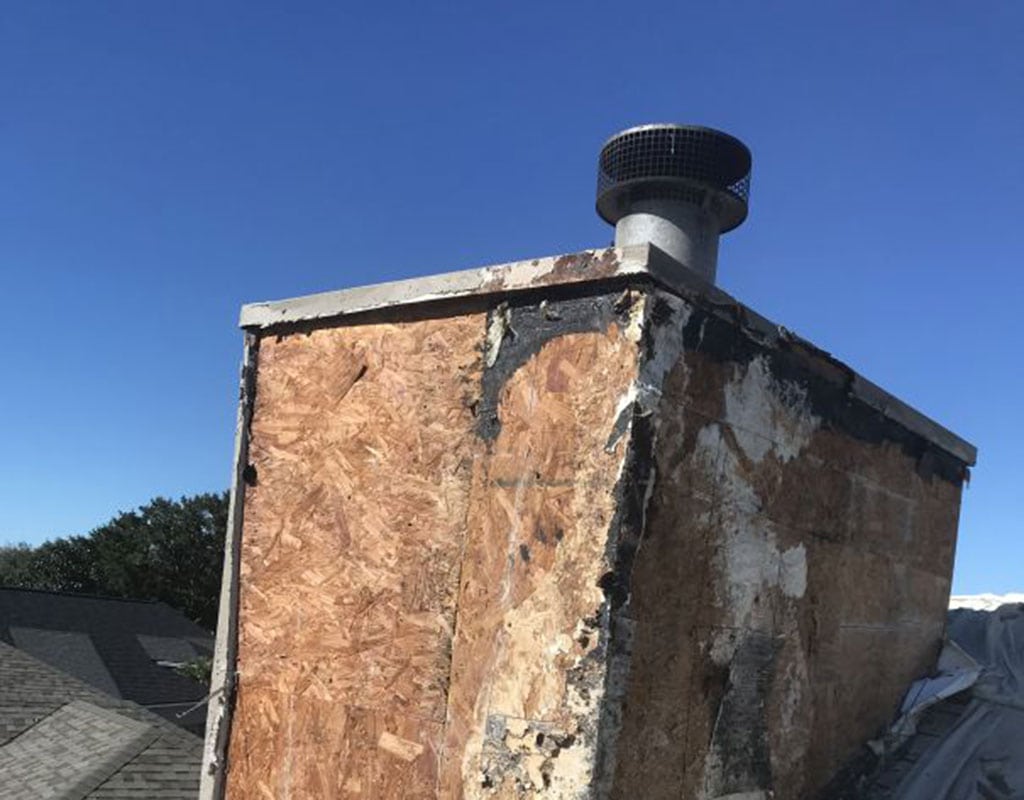
When we inspect a home and find that moisture has been working its way into the wall system for years, the conversation shifts from repair to remediation. That’s not a sales pitch—it’s just an honest assessment of what a surface patch accomplishes when the damage behind it is already significant. A roughly $200 to $500 invasive moisture inspection, where small test holes are drilled to check the sheathing directly, is often the clearest way to know what you’re actually dealing with before committing to any scope of work.
We’re EIFS specialists, and we’ve worked on a lot of these aging systems across Orange County. The repair approach for EIFS is completely different from hard-coat stucco repair, and treating it as the same thing is one of the most common mistakes we see from contractors who aren’t familiar with the system.
Cost to Remove Stucco and Replace with Siding in Florida
If you’ve gotten this far in your research, you’ve probably come across the idea of removing stucco entirely and replacing it with vinyl or fiber cement siding. It’s worth addressing directly, because the cost comparisons you’ll find online often don’t reflect what actually happens on a Florida home.
Siding materials in Florida generally run between $4 and $13 per square foot installed, depending on the product. What the range doesn’t capture is what happens during demolition. When stucco comes off—especially on a home that’s had moisture intrusion for years—it’s common to find water damage, rot, or compromised sheathing underneath.
Those discoveries don’t just add to the project cost; they can significantly change the scope of work. A project that looked like a straightforward siding install becomes a structural repair job first.
Beyond the upfront cost, there’s the performance question. Vinyl siding in Florida’s climate—sustained high humidity, intense UV exposure, and hurricane-force wind events—performs differently than it does in a dry climate. Stucco, by contrast, is a material that’s been used in Florida construction for decades specifically because it handles the climate well when it’s installed and maintained correctly.
Homeowners who switch to siding sometimes find they’ve traded one set of problems for a different one. That said, there are situations where siding replacement makes sense—particularly when the underlying wall system has been compromised to the point where re-stucco would require the same demolition and substrate work anyway. In those cases, the choice becomes a matter of long-term preference and budget, not a clear-cut better option.
For homeowners in Orange County’s newer communities—Horizon West, Lake Nona, parts of Ocoee and Winter Garden—where homes were built with modern hard-coat stucco systems and proper moisture barriers, targeted exterior plaster repair is almost always the more practical and cost-effective path when damage is caught early.
How to Make the Right Call on Exterior Plaster Repair in Orange County
The repair-versus-replacement decision isn’t one you should have to make based on guesswork or a contractor who’s already decided what they want to sell you. It’s a decision that should follow a real inspection, an honest assessment of what’s behind the surface, and a clear explanation of what your options actually cost and why.
Orange County’s combination of humidity, rainfall, aging housing stock, and CMU construction makes this a more nuanced call than it would be in most parts of the country. Getting it right the first time matters—both for the longevity of the repair and for what it costs you over the next decade.
If you’re trying to figure out where your situation falls, CF Stucco and Painting is the place to start. We’ll tell you what we find, explain what it means, and give you a straight answer on what makes sense—repair, remediation, or replacement.