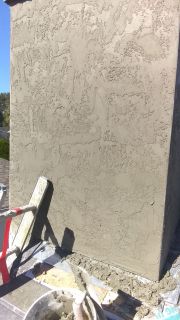
You noticed a crack, picked up a patching compound at the hardware store, and gave it your best shot. It looked decent. Then a few months later—same crack, same spot, maybe a little worse. Sound familiar?
You’re not doing it wrong, exactly. The problem is that Orange County doesn’t play by the same rules as the rest of the country, and most DIY stucco advice was written for drier climates. Our region’s humidity, rainfall patterns, soil composition, and aging housing stock create specific conditions that make surface-only repairs fail in ways that aren’t always obvious until real damage has already set in.
Why Stucco Patching in Orange County Is Different
The average humidity in Orange County sits around 74% year-round. That’s not a seasonal spike—it’s the baseline. Add more than 50 inches of annual rainfall concentrated into a summer rainy season that tests your exterior almost every single afternoon, and you start to understand why a patch that cures fine in a dry climate can fail here within one storm season.
Then there’s the soil. Orange County sits on Myakka fine sand, which shifts with moisture cycles. That movement transfers into your walls, producing cracks near corners, window frames, and door openings that return no matter how well you fill them on the surface. Patching without accounting for what’s underneath is like fixing a symptom while the cause keeps running.
The 1990s EIFS Problem Most Orange County Homeowners Don’t Know They Have
Here’s a detail that matters a lot in this market: the median home in Orange County was built in 1992. That puts a significant share of local housing stock right in the middle of the EIFS boom—the era when synthetic stucco systems were installed on homes across Central Florida at scale. Those systems are now more than 30 years old, and they were built without drainage planes, meaning any moisture that got into the system had nowhere to go.
EIFS, or Exterior Insulation and Finish System, looks like traditional stucco from the outside. It’s a layered system—foam insulation board, a base coat, fiberglass mesh, and a finish coat—and it requires a completely different repair approach than hardcoat stucco over concrete block. When homeowners treat an EIFS surface like a standard stucco wall, they often end up trapping moisture rather than sealing it out.
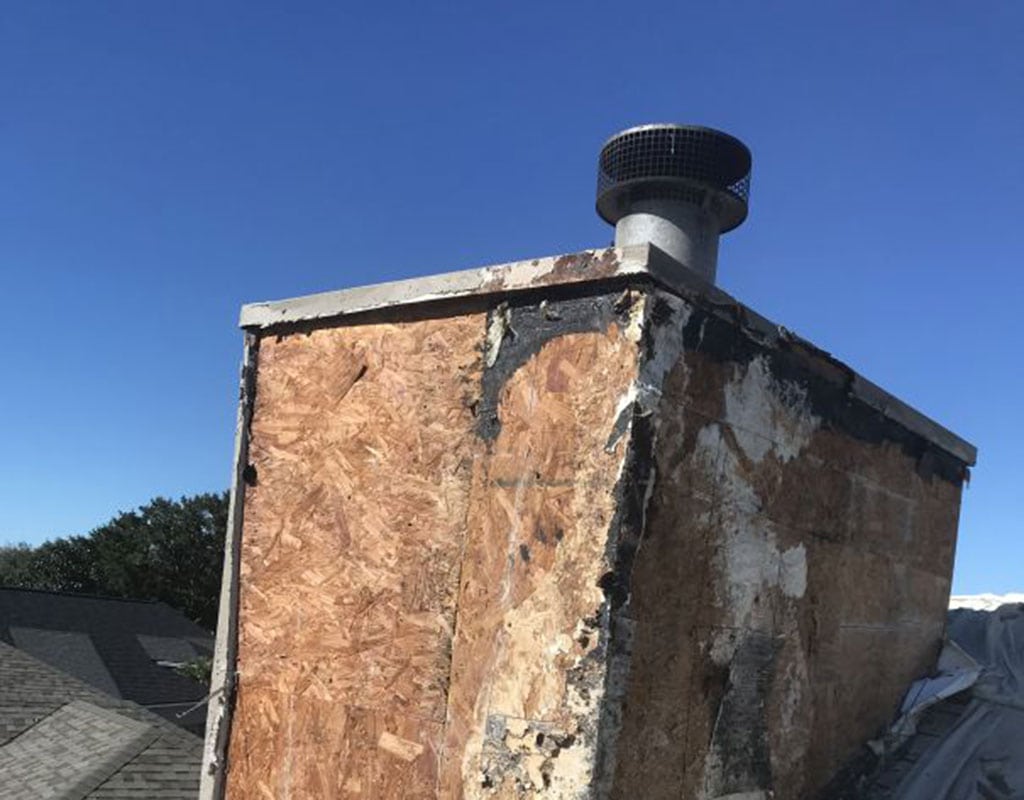
What looks like a surface crack on a 1990s home in Dr. Phillips, Windermere, or Apopka could be a sign that the EIFS system behind it has been failing for years. The foam board absorbs moisture. The mesh corrodes. The wall assembly behind the finish coat develops rot and mold in conditions that Central Florida’s heat and humidity make ideal. By the time a patch fails visibly, the underlying damage has often been compounding for months.
This is exactly why we approach EIFS repairs differently than a standard patch job. Our team has specific experience with aging 1990s systems, and our owner’s background in foundation repair means we look at these walls structurally—not just cosmetically. When a repair warrants it, we coordinate with engineers. That’s not common in this industry, but it matters when the problem goes deeper than the surface.
The “Looks Fixed” Trap: When a Good-Looking Patch Hides a Bigger Problem
The most dangerous DIY stucco patch is the one that appears to work. You fill the crack, let it cure, maybe paint over it, and it holds through a few weeks of dry weather. What you can’t see is whether moisture is still entering the wall behind it.
Stucco is porous. Even a well-applied patch can leave micro-gaps at the edges where it meets the surrounding material. In Orange County’s climate with 74% average humidity and afternoon thunderstorms from June through September, those micro-gaps become water entry points on a near-daily basis. The moisture that gets in doesn’t just stay there—it travels, settling into wood framing, insulation, and wall cavities where it feeds mold and accelerates rot.
Most Florida home insurance policies don’t cover damage from slow leaks or poor installation. That’s worth sitting with for a moment. If a DIY patch fails and water intrusion causes structural damage or mold, you’re likely bearing that cost yourself. The repair that seemed like a money-saver can end up being the most expensive decision on the project.
There’s also the texture and color problem. Even when a patch holds structurally, matching weathered, UV-faded stucco is genuinely difficult. Florida’s sun degrades protective sealant in five to seven years—faster than almost anywhere else in the country. The surrounding stucco has been fading and shifting in tone since it was applied, and a fresh patch stands out immediately. Getting a truly seamless result requires identifying the original texture pattern, mixing to match, and applying with the same technique as the original finish. We work with cosmetic masonry specialists specifically for this reason, and we still do test patches before committing to the finish. It’s that particular.
Stucco Siding Installation vs. Patching: Knowing When One Isn’t Enough
There’s a threshold where continued patching stops making sense. When more than roughly 25 to 30 percent of a stucco surface is damaged—or when widespread moisture intrusion has compromised the system behind the finish—patching individual areas is like bailing a boat with a cup. Full stucco siding installation or remediation becomes the more cost-effective path.
This comes up more than people expect in Orange County, particularly with the 1990s EIFS stock described above. When we inspect a home and find that the damage isn’t isolated to one section but is distributed across an elevation, we’ll tell you that directly. Transparent estimates after a proper inspection are how we operate—not over the phone, not with a ballpark before we’ve seen the scope.
Colored Stucco vs. Paint: Which Option Works Better After a Repair
After a stucco repair, one of the most common questions we hear is whether to use colored stucco for the finish coat or paint over a standard finish. Both are legitimate options, but they behave differently in Orange County’s climate and have different implications for long-term maintenance.
Integral color stucco runs through the full depth of the finish coat. It doesn’t peel, and it holds up well in high-UV environments because there’s no surface film to break down. The tradeoff is that it’s harder to match if you need additional repairs down the road—the original color may have shifted over years of sun exposure, and mixing a new batch to align with weathered material takes real skill.
Painting over stucco—particularly with an elastomeric coating—offers a different set of advantages. Elastomeric coatings stretch up to 600% without breaking, which means they flex with the daily thermal expansion and contraction that Florida’s heat cycles produce. They bridge hairline cracks and create a waterproof surface barrier that standard exterior paint simply can’t replicate. For homes that have already been painted, or where the stucco system has any history of moisture issues, elastomeric coating is usually the right call.
The wrong answer is regular exterior paint applied directly over a fresh patch without proper primer and prep. In Orange County’s humidity, that approach leads to blistering, peeling, and moisture intrusion within a few years. The paint type matters as much as the application—and using the right product for Florida conditions is something we factor into every project from the start.
What Stucco Restoration Actually Involves—and When Patching No Longer Cuts It
Stucco restoration is a different scope than patching, and it’s worth understanding the distinction before you decide how to approach a problem. Patching addresses specific damaged areas—a crack here, a soft spot there. Restoration is a comprehensive process: removing failing sections, assessing and repairing the substrate, reapplying coats in the correct sequence, and refinishing to a consistent surface. It’s the appropriate solution when patching has become a recurring cycle rather than a lasting fix.
In Orange County, stucco restoration comes up most often with EIFS systems that have sustained widespread moisture damage, with homes from the 1980s and 1990s where the original installation cut corners, and with properties that have been through multiple DIY patch attempts that have layered incompatible materials over each other. That last scenario is more common than you’d think—and it creates a compounding problem where each patch attempt makes the eventual restoration more involved.
The process we follow starts with inspection, not application. We assess all damaged areas, check for moisture behind the surface using proper diagnostic methods, and identify whether the lath, mesh, or substrate needs attention before any new material goes on. Each coat is applied and given adequate time to cure before the next layer. The scratch coat alone needs a minimum of 48 hours; full cure before painting takes 28 to 30 days. Rushing any stage is how you end up back at square one.
What we also handle that most stucco contractors don’t is what’s behind the stucco. If moisture intrusion has caused wood rot in the framing or sheathing underneath, we address that before closing the wall back up. Restoring the surface over compromised wood is a temporary fix at best. Getting it right means looking at the full system—not just the finish coat.
When to Stop Patching and Call CF Stucco and Painting
If your stucco patch keeps coming back, if you’re seeing stains or soft spots you can’t explain, or if your home was built in the early 1990s and has never had a proper stucco inspection—those are the situations where a professional assessment is worth more than another trip to the hardware store.
Orange County’s combination of aging EIFS stock, sandy soil, year-round humidity, and concentrated summer rainfall makes this a market where surface-only thinking consistently leads to bigger problems. The goal is to make sure that whatever gets done actually solves the problem instead of covering it up.
If you’re ready to get a clear picture of what’s actually going on with your stucco, CF Stucco and Painting offers upfront estimates after a proper on-site inspection. You can request a quote online and expect a callback within 24 to 48 hours.