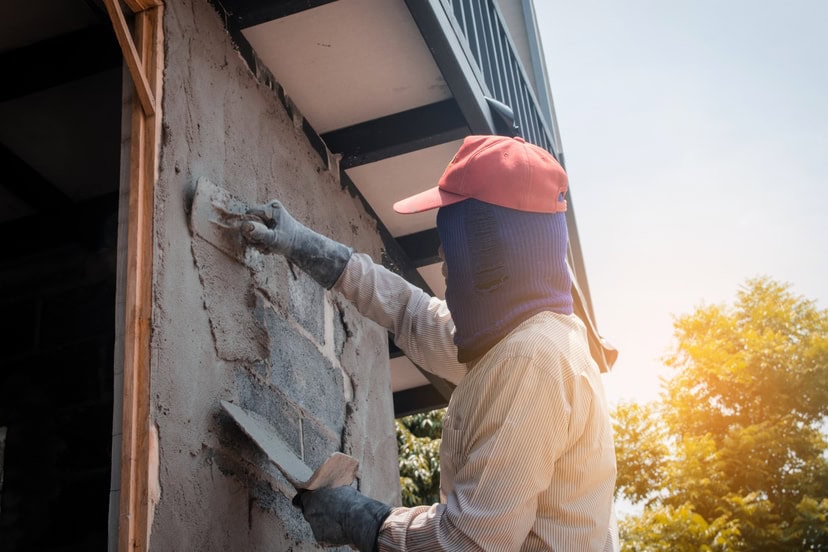
You’ve noticed a crack. Maybe a water stain. Maybe the paint near a window is bubbling and you’re not sure if it’s a cosmetic issue or something worse. You start searching for exterior stucco repair contractors in Orange County, FL and suddenly you’re looking at a dozen companies that all say the same thing — licensed, insured, free estimates, great work, best price.
So how do you actually tell them apart?
The honest answer is that most homeowners can’t — not without knowing what to ask. And the wrong hire doesn’t just waste money. It can mean a patch that fails in six months, hidden water damage that keeps spreading, or a repair that’s structurally sound but looks like a patchwork quilt on your exterior wall. These five questions change that.
Licensing Requirements for Stucco Contractors in Orange County
Florida’s licensing landscape for stucco work is genuinely confusing, and some contractors count on that. Under Florida Statute 489.117, plastering and stuccoing are among the services for which local jurisdictions cannot require a state-level license for surface work alone. That creates a gray zone — and unlicensed operators use it freely.
The distinction that matters is this: cosmetic surface work sits in a gray area, but structural repairs and any work requiring a permit absolutely require a licensed contractor. In Orange County, a permit is required for stucco work exceeding 25 square feet. That covers most real repairs.
Before you call anyone, ask for their Florida DBPR license number. You can verify it in about two minutes at myfloridalicense.com. If a contractor hesitates or can’t produce one, that tells you everything you need to know.
Why Licensing and Insurance Both Matter for Orange County Stucco Repair
Licensing and insurance aren’t the same thing, and you need both. A license tells you the contractor has met Florida’s requirements and can be held accountable through the state’s regulatory system. Insurance — specifically general liability and workers’ compensation — protects you if something goes wrong on your property during the job.
Ask for a certificate of insurance, not just a verbal confirmation. A reputable contractor will have no issue providing it. One that stalls or gets vague about coverage is a contractor you want to cross off your list before the conversation goes any further.
This matters even more in Orange County because of the volume of storm-related work that moves through the market every hurricane season. After a major weather event, the area sees an influx of out-of-area contractors who move quickly, take deposits, and sometimes disappear before the work is finished — or finished properly. It’s a documented pattern in Florida, and the best defense against it is verifying credentials before anyone sets foot on your property.
Beyond the paperwork, ask how long they’ve been doing stucco repair specifically in Central Florida. Not contracting in general — stucco work in this region. The climate here is different from most of the country. Orange County averages 74% relative humidity, and the area gets over 50 inches of rain a year, much of it hitting in intense afternoon bursts from June through September. A contractor who’s been working in this environment for years understands how moisture behaves in Florida stucco systems. One who just relocated from a drier climate may not, even if their license is current.
The combination of verified licensing, active insurance, and genuine local experience is the baseline. It doesn’t make a contractor great, but it does rule out the ones who could make your problem significantly worse.
Are You Fixing the Problem or Just the Surface?
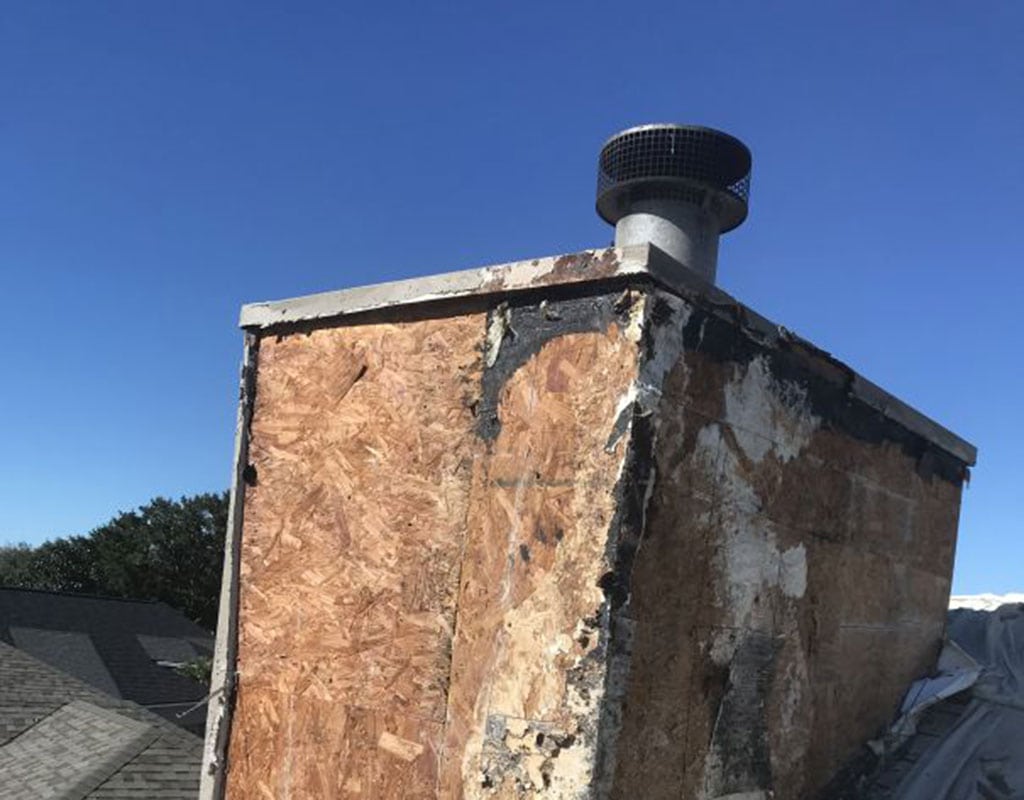
This is the question most homeowners never think to ask — and it’s the one that matters most. A crack in your stucco is a symptom. The cause might be thermal movement, moisture intrusion behind the wall, improper flashing around a window, or a drainage failure in an aging EIFS system. If a contractor patches the visible crack without identifying what caused it, you’ll be back in the same conversation six months from now.
Ask any contractor you’re considering: what caused this damage, and how will you address that before you repair the surface? A contractor who can answer that question specifically — not vaguely, but with a real explanation tied to what they observed on your home — is one who’s actually looking at the problem. One who jumps straight to describing the patch without mentioning the cause is one who’s going to give you a patch.
This is especially relevant in Orange County’s older housing stock. Thousands of homes built in the late 1980s and 1990s have EIFS systems — sometimes called synthetic stucco — that were installed without drainage planes. These systems are now 25 to 35 years old, and they’re failing in ways that look like surface cracks but are actually moisture trapped behind the cladding. Neighborhoods like Dr. Phillips, Maitland, and Winter Park have significant concentrations of homes from that era. If your home was built in that window and you’re seeing persistent bubbling, soft spots, or water stains that keep coming back after painting, there’s a real chance you’re dealing with an EIFS drainage failure, not just a cosmetic crack.
A contractor who knows what EIFS is, understands how those systems were originally installed, and can explain the remediation process is a fundamentally different hire than one who sees stucco and reaches for a patching compound. The root-cause question is how you tell them apart.
Finding the Best Stucco Company for Your Specific Project
“Best” is relative. The best stucco company for a new construction project isn’t necessarily the best one for repairing a 1994 EIFS system on a home in Windermere. The best one for a commercial building in Lake Nona isn’t automatically the right fit for a residential repair in Ocoee. What you’re looking for is the best fit for your specific situation — and the way to find that is by asking the right follow-up questions once a contractor is standing in front of you.
Ask about their experience with your specific type of stucco. Ask whether they’ve worked on homes from the same era as yours. Ask what materials they plan to use and why those materials make sense for your climate. If they can answer those questions clearly and specifically, you’re talking to someone who knows what they’re doing.
What Materials Will You Use, and Why Do They Work in Florida’s Climate?
Material selection is one of the most overlooked parts of a stucco repair conversation, and it’s one of the clearest ways to distinguish a contractor who understands Florida from one who’s applying a generic approach.
In a climate like Orange County’s — high humidity, intense UV exposure, heavy seasonal rainfall, and significant daily temperature swings — the wrong materials fail fast. Ask your contractor what they’re using and why. If they’re recommending an elastomeric coating, for example, ask what stretch ratio it offers. Quality elastomeric coatings can stretch up to 600% without breaking, which matters in a climate where stucco is constantly expanding and contracting with heat cycles. If they’re recommending exterior paint over a repaired surface, ask whether it’s breathable — meaning it allows moisture vapor to escape rather than trap it behind the finish, which leads to bubbling and peeling.
These aren’t trick questions. A contractor who works in Central Florida regularly will have real answers. One who gives you a vague response about “quality materials” or “professional-grade products” without any specifics is telling you something important about how they approach their work.
Also ask about surface preparation. This is where most stucco jobs fail — not in the material itself, but in what happens before it goes on. Proper prep means cleaning the surface, inspecting for moisture damage, addressing any substrate issues, and creating the right conditions for adhesion. Rushing prep to save time is the single most common reason repairs fail within a year or two. A contractor who talks about prep in detail before you even ask is one who takes it seriously.
Finally, if the repair involves matching your existing stucco texture and color — which most partial repairs do — ask how they handle that. A visible patch that doesn’t blend with the surrounding wall is a repair that looks worse than the original crack. We work with cosmetic masonry specialists specifically for this reason. It’s worth asking whether that’s part of their process.
What Does the Estimate Include, and What’s the Timeline?
A free estimate is only useful if it’s specific. Vague estimates — the kind that describe the work in general terms and give you a round number — are how scope creep starts. Before any work begins, you should have a written estimate that tells you exactly what’s being done, what materials are being used, and what the timeline looks like.
Ask what’s included in the price and what isn’t. Ask what happens if they open up the wall and find water damage or wood rot underneath. Ask when they can start and how long the job will take. These aren’t difficult questions, and a contractor who’s done this work for years will have clear, direct answers. One who hedges or gets uncomfortable with specifics is one who hasn’t thought through the job carefully — or who’s planning to figure it out as they go.
Timeline matters more than most homeowners realize. Traditional stucco work has built-in curing requirements. After a new application, the system typically needs 28 to 60 days to cure properly before painting. Rushing that process leads to premature cracking. If a contractor is promising a fast turnaround on a full repair or installation, ask specifically how they’re handling the curing timeline. If they can’t explain it, that’s a red flag.
One more thing worth asking: what does communication look like during the project? Will you hear from them when materials are delivered? If there’s a delay because of weather — which is a real factor during Orange County’s rainy season — will they let you know proactively, or will you be the one chasing them down? The contractors who stand behind their work tend to be the same ones who communicate clearly from the first call to the final walkthrough. That’s not a coincidence.
How to Choose an Exterior Stucco Repair Contractor You Can Trust
The five questions above aren’t complicated, but most homeowners never ask them. That’s not a criticism — it’s just that nobody tells you what to look for until after something has already gone wrong. Knowing to ask about licensing, root-cause diagnosis, material selection, written estimates, and communication puts you in a completely different position than the homeowner who picks the first contractor with decent reviews and a low bid.
Orange County’s stucco market has good contractors and bad ones, and the gap between them isn’t always obvious from a website or a first phone call. What separates them is usually how they answer specific questions — and whether they seem more interested in explaining the problem or just closing the job.
If you’re working through this process and want a straight conversation about what’s actually going on with your stucco, we at CF Stucco and Painting are happy to take a look. We serve Orange County, FL and the surrounding area, we give written estimates after inspection, and we’ll tell you exactly what we find — including when the answer is simpler than you feared.