Most homeowners in Orange County, FL don’t find out they have an EIFS problem until it’s already gotten expensive. A crack near a window, some staining on the wall, a soft spot that shouldn’t be there — and suddenly you’re getting quotes from contractors who all say something different. One tells you it needs a full replacement. Another says a patch will do. A third doesn’t even mention moisture. The problem isn’t just the wall. It’s that EIFS is a specialized system, and most contractors treat it like regular stucco. These five questions will help you figure out who actually knows what they’re doing before you sign anything.
What Makes an EIFS Installer Different From a General Stucco Contractor?
EIFS — exterior insulation and finish system — is a multi-layer building envelope. It’s not a coating you apply over a wall. It’s a system that includes a moisture barrier, rigid foam insulation board, a reinforced base coat, and a finish coat, all working together to manage heat and water. When any part of that system fails, the consequences aren’t just cosmetic.
A general stucco contractor knows how to apply hardcoat stucco. That’s a different material, a different process, and a different failure mode. Treating EIFS like hardcoat stucco — using the wrong repair materials, skipping the moisture assessment, not addressing the drainage plane — can actually trap more water behind the wall and accelerate the damage. So before anything else, you need to know whether the person you’re calling actually understands the system they’re being asked to work on.
How Do You Know If a Contractor Has Real EIFS Experience?
Ask them directly: have they worked on EIFS systems specifically, and how recently? A contractor who’s done EIFS work will be able to speak to the process without prompting — they’ll mention moisture barriers, base coat thickness, drainage planes, and the importance of sealing around penetrations like windows and utility lines. If they jump straight to talking about texture and color matching without addressing what’s happening behind the surface, that’s a sign they’re thinking about this like a cosmetic job.
You can also ask whether they’ve worked on homes built in the 1990s. A large portion of Orange County, FL’s housing stock — communities like Hunters Creek, Meadow Woods, and Windermere — was built during that era, when barrier EIFS was the dominant system being installed. Barrier EIFS has no drainage plane. It relies entirely on a perfect seal to keep moisture out, and in Central Florida’s climate, that seal doesn’t last forever. A contractor familiar with these aging systems will know what to look for, where failures typically originate, and how to assess whether the damage is limited to the surface or has reached the framing behind it.
One more thing worth asking: do they carry proof of insurance, and can they provide their Florida contractor license number? This isn’t a gotcha question — it’s a baseline. Legitimate EIFS work in Florida requires a licensed contractor, and any contractor who hesitates on this should be removed from your list immediately. The Florida DBPR makes license verification easy, and you should use it.
What Should a Proper EIFS Inspection Actually Cover?
A surface inspection isn’t enough. If a contractor walks up, looks at the wall from the driveway, and hands you a quote, that’s a red flag. EIFS moisture intrusion is often invisible from the exterior until the damage behind the wall is already significant. Wood rot can develop for years before you see any sign of it on the surface. Mold can establish itself in as little as 24 to 48 hours once moisture finds its way into the framing cavity.
A proper inspection should include probing for moisture — using a calibrated meter to check moisture levels at vulnerable points like window corners, seams, penetrations, and the base of the wall system. These are the areas where EIFS most commonly fails, because they’re where the seal is most likely to be compromised over time. In Orange County, FL, with roughly 50 to 54 inches of rain per year and humidity that hovers around 74% on average, those vulnerable points take a beating every single season.
The inspection should also assess whether the existing system has a functional drainage plane or whether it’s a barrier system. That distinction matters enormously for what comes next. A barrier system that’s been compromised may need to be converted to a drainage-capable system rather than simply patched — and a contractor who doesn’t raise that question either doesn’t know enough about EIFS or is telling you what you want to hear. Ask what the inspection process looks like before they ever touch the wall, and if they can’t describe it clearly, keep looking.
What Does Quality EIFS Installation Actually Look Like?
Whether you’re dealing with a repair or a full installation, the process matters as much as the materials. EIFS doesn’t forgive shortcuts. A base coat applied too thin, a moisture barrier that wasn’t properly sealed at the edges, insulation board that wasn’t fully adhered — these aren’t minor variations in technique. They’re the reasons why Florida has what amounts to a generational wave of stucco and EIFS failures working through its housing stock right now.
Understanding what the process should look like gives you a way to evaluate what a contractor is actually proposing. It also helps you ask better questions — and notice when someone’s proposal is missing a step.
What Are the Steps of a Proper EIFS Installation?
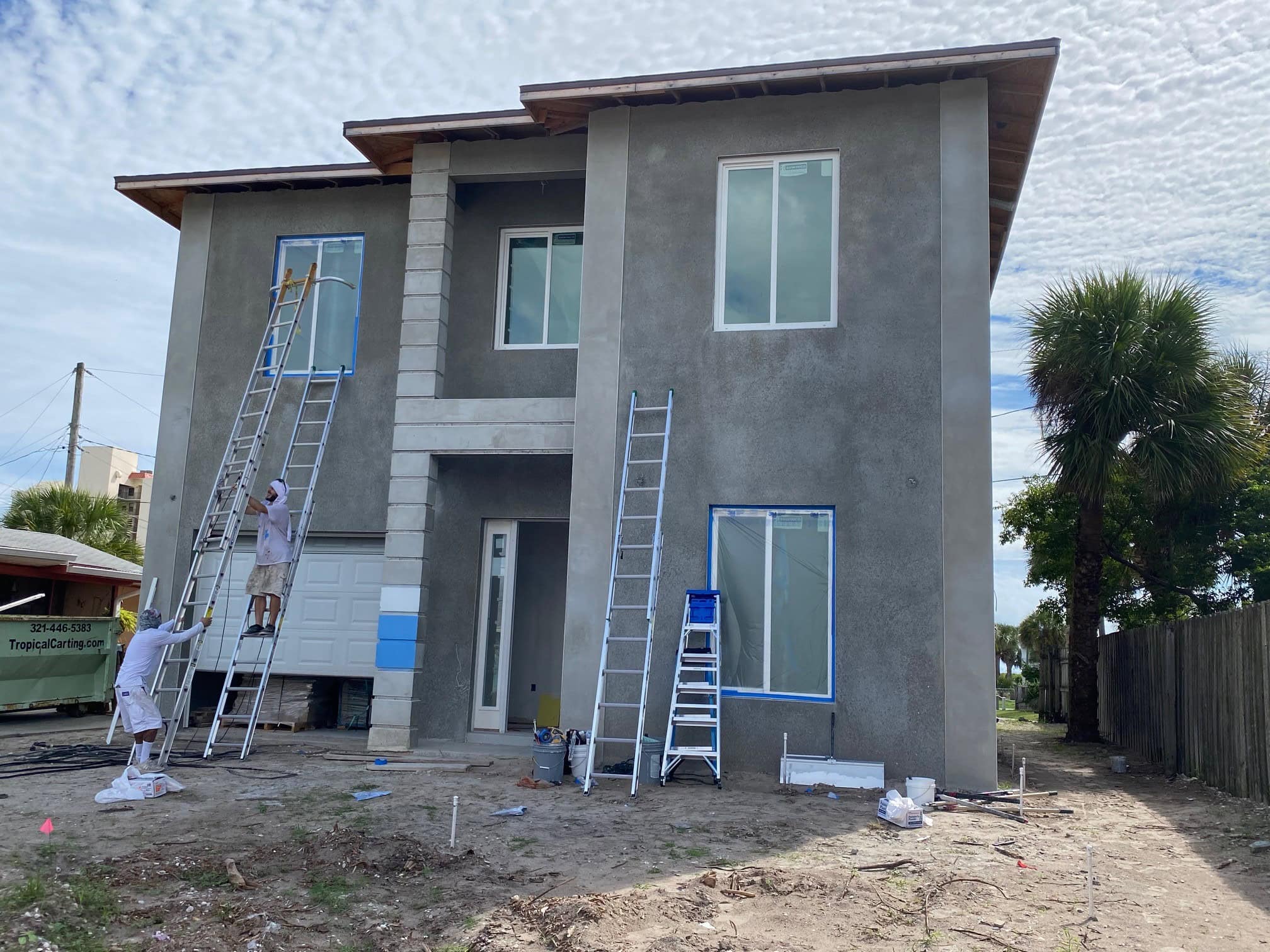
A properly executed EIFS installation starts with the substrate — the wall surface the system will be applied to. That surface needs to be clean, structurally sound, and free of any existing damage. If there’s wood rot or moisture damage underneath the existing cladding, that has to be addressed before anything else goes on the wall. Skipping this step is one of the most common ways a new installation fails prematurely.
Next comes the water-resistive barrier — the membrane that sits between the substrate and the foam insulation board. This is the layer that actually keeps water out of the wall assembly, and it has to be installed correctly at every edge, corner, and penetration point. Windows are the most common failure point. If the WRB isn’t properly integrated with the window flashing, water will find its way in, and it will have nowhere to go.
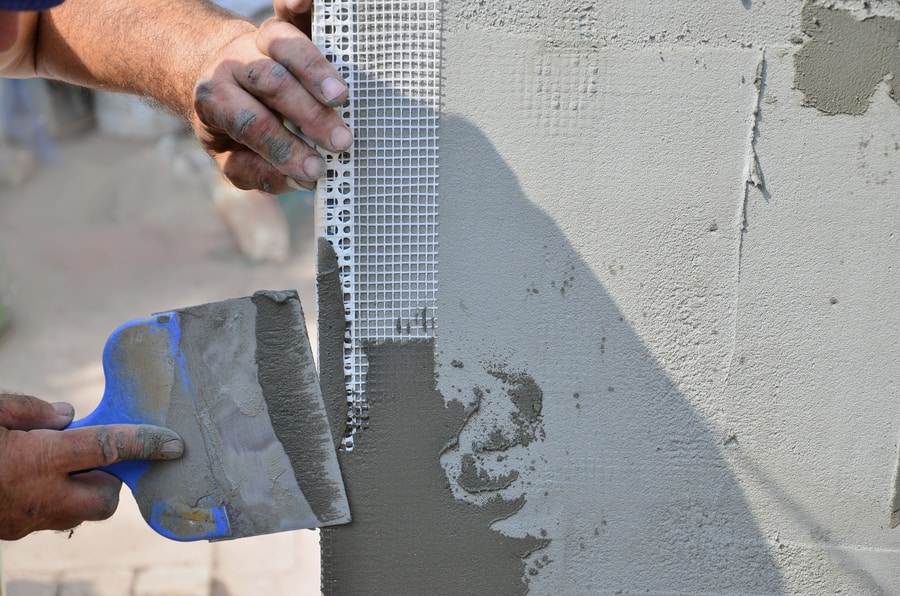
The insulation board is then adhered and, in most cases, mechanically fastened to the substrate. After that comes the base coat — a polymer-modified cement that gets applied over a reinforcing mesh. This is where thickness matters. A thin base coat is more vulnerable to impact damage and cracking, and it’s one of the primary reasons so many Florida homes are dealing with stucco failures today. The base coat needs adequate cure time before the finish coat goes on — rushing that schedule is another shortcut that shows up as a problem later.
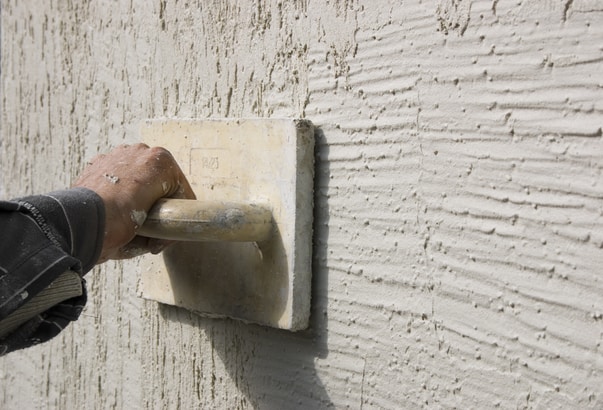
Finally, the finish coat is applied with the appropriate texture and color. For repairs, this is also where color and texture matching becomes critical. A patch that doesn’t blend with the surrounding wall is a visible reminder that something went wrong — and in a real estate market as active as Orange County, FL’s, that matters more than people often realize.
Does EIFS Affect Your Home Insurance or a Future Home Sale?
This is the question most homeowners don’t think to ask until it becomes urgent — usually when they’re trying to sell the house or renew their insurance. The answer is: it can, and it’s worth understanding before you hire anyone.
Some insurance carriers in Florida either exclude EIFS-related damage from their coverage or charge higher premiums for homes with EIFS systems — particularly older barrier systems without drainage. If your home has one of these systems and it hasn’t been properly maintained or documented, that gap in coverage can become a real problem when you need to file a claim. Getting a qualified inspection and keeping documentation of any repairs isn’t just good practice — it’s financial protection.
On the real estate side, some lenders require additional documentation for homes with EIFS before they’ll approve financing. In a market like Orange County, FL, where homes in Lake Nona, Dr. Phillips, and Winter Garden are changing hands regularly, this can slow or derail a transaction if the EIFS system hasn’t been properly assessed. Sellers who’ve had qualified repairs done and can document the work are in a much stronger position than those who patched the surface and hoped for the best.
This is also why it matters that the contractor you hire is genuinely qualified — not just someone who can make it look right from the street. A repair done by an unqualified contractor, without proper moisture assessment and documentation, may actually make the insurance and real estate situation worse rather than better. Ask any contractor you’re considering whether they can provide written documentation of the work performed and what it included. If they can’t, or won’t, that tells you something important.
Find the Right EIFS Contractor in Orange County, FL
The right contractor will be able to answer every one of these questions without hesitation — because they’ve done this work, they understand the system, and they know what’s at stake for a homeowner in Central Florida’s climate. They’ll talk about moisture before they talk about texture. They’ll ask about the age of your system before they give you a number. They’ll be licensed, insured, and willing to put everything in writing.
We’ve been working on EIFS and stucco systems in Orange County, FL for over 20 years, and we’ve seen what happens when these systems age without proper attention — especially the barrier systems installed throughout the county’s 1990s construction boom. We approach every project with a full assessment first, because the surface is rarely the whole story. If you’re dealing with cracking, staining, or anything that doesn’t look right, reach out to CF Stucco and Painting for a straight answer about what’s actually going on and what it would take to fix it properly.