Most homeowners in Orange County who discover wood rot behind their stucco are shocked — not just by the damage, but by how long it had been happening without a single visible clue. The outside wall looked fine. Maybe there was a hairline crack near a window, or a faint stain after a heavy rain. Nothing that screamed emergency. But behind that surface, the wood framing had been absorbing moisture for years.
Orange County’s climate doesn’t give your walls a break. A lot of homes here — especially those built during the 1990s construction boom — are dealing with exactly this problem right now. Here’s what’s actually going on, and what a real fix looks like.
What Causes Wood Rot Behind Stucco in Florida Homes
Stucco is a porous material. It absorbs water — not a little, but a meaningful amount — and in a climate with 74% average humidity and 50-plus inches of rain per year, that matters.
When a stucco system is installed correctly, with a proper water-resistant barrier and drainage details, moisture has a path out. When it isn’t, or when those details fail over time, water gets trapped behind the surface and starts working on whatever is underneath.
In most Orange County homes, that means wood. Wood framing, wood sheathing, the structural skeleton of the wall. Once moisture content in that wood climbs past 30%, rot sets in. And because the stucco exterior stays intact — at least for a while — there’s nothing on the outside to tell you it’s happening.
Why 1990s Homes in Orange County Are Especially Vulnerable
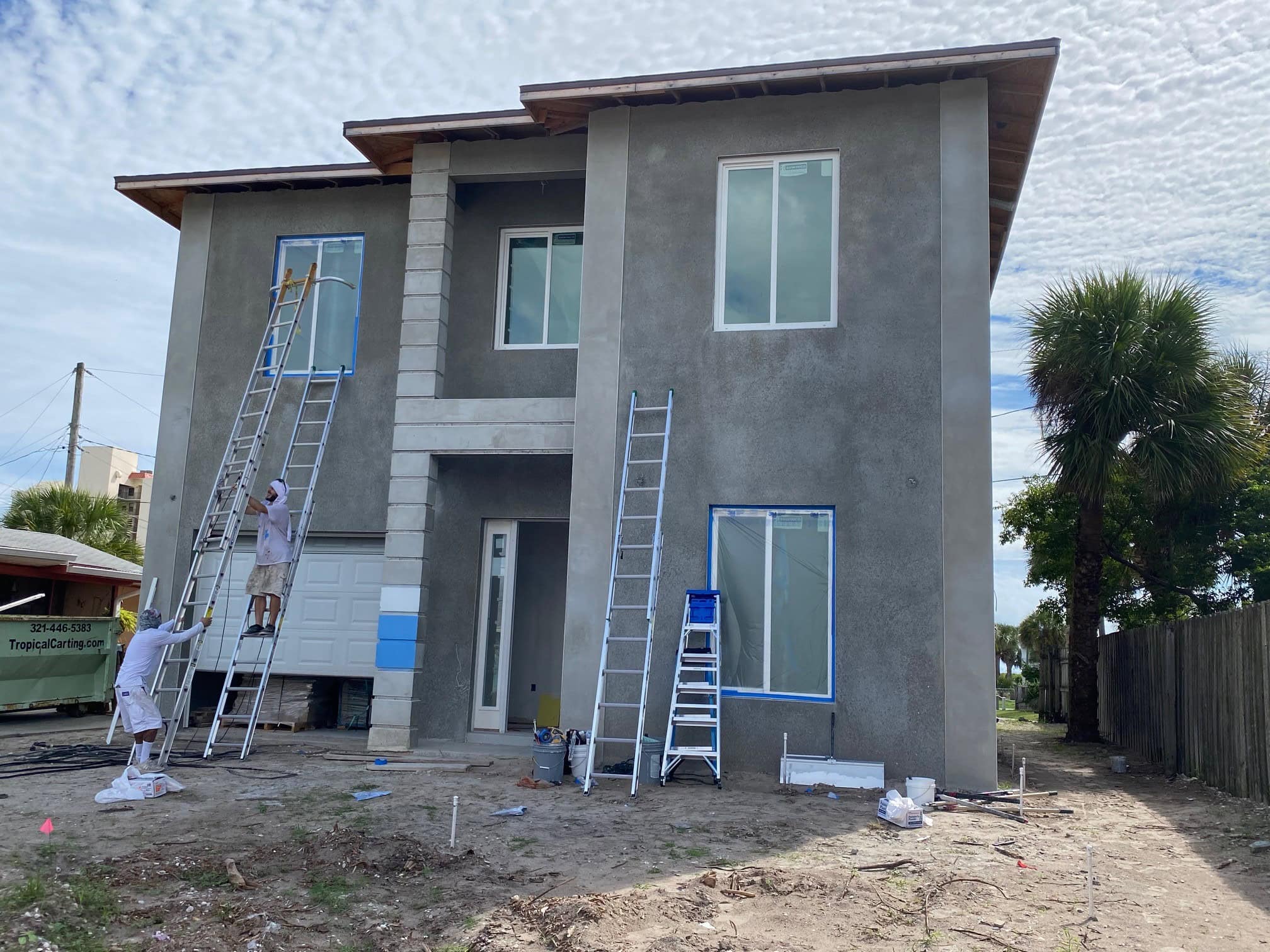
Orange County went through a massive residential construction boom in the 1990s. Communities like MetroWest, Bay Hill, Dr. Phillips, Hunters Creek, and Meadow Woods were largely built during this period, and a significant number of those homes were finished with EIFS — Exterior Insulation and Finish Systems, commonly called synthetic stucco.
EIFS was popular for good reasons. It insulates well, it finishes smoothly, and it looks great when it’s new. The problem is that first-generation EIFS systems, the kind installed before drainage plane requirements became standard, don’t allow moisture to escape. There’s no weep screed, no drainage channel, no way out for water that gets behind the surface.
Water always finds a way in — around window frames, through failing caulk joints, through cracks that open up as the house settles. These homes are now 25 to 35 years old. That’s right in the window when first-generation EIFS systems typically begin to fail in a climate like Central Florida’s.
The moisture that’s been slowly accumulating for years has had time to do real damage. Some of these Orange County homes have significant wood rot behind perfectly smooth, painted stucco walls. The owners have no idea.
If your home was built in the 1990s and has synthetic stucco, it’s not a question of whether your system is aging — it is. The question is what condition the wood behind it is in. That requires a proper moisture assessment, and it’s worth doing before a small problem becomes a structural one.
Orange County also sits in a high termite activity zone, which means moisture-damaged wood is often dealing with two problems at once. Termites are drawn to soft, wet wood. A moisture assessment that doesn’t account for both issues is an incomplete one.
The Warning Signs That Something Is Wrong Behind the Stucco
The tricky part about wood rot behind stucco is that the surface can mask it for a long time. But there are signs, if you know what to look for.
Cracks near windows and doors are worth paying attention to — not because a crack automatically means rot, but because cracks are how water gets in. A crack that opens up every summer as the house expands and contracts in the heat is a crack that’s been letting in moisture for years. The same goes for any area where caulk has dried out, pulled away from the surface, or simply worn down.
Staining is another signal. Dark or rusty streaks on the stucco face, especially below windows or at corners, often indicate that water has been running through the wall assembly and picking up material from the wood or metal lath behind it. It’s not just a cosmetic issue — it’s evidence of a path water has been taking.
Inside the house, pay attention to damp drywall on exterior walls, peeling paint near windows, or a persistent musty smell that you can’t trace to an obvious source. These interior symptoms often appear before any exterior damage is visible, because moisture migrates inward through the wall before it works its way back out through the stucco face.
Soft spots in the stucco — areas that feel slightly hollow or flex when you press on them — indicate that the material behind the stucco has lost its integrity. That’s not a cosmetic repair situation. That’s a sign the wall assembly needs to be opened and assessed.
If your home has had a stucco patch or paint job in the last few years and the problem has returned — new cracks in the same spots, staining coming back, soft spots reappearing — that’s a strong indicator that the original repair addressed the surface without addressing the source.
Water Damage Wall Repair: What Real Remediation Actually Involves
This is where a lot of homeowners get burned. They hire someone to patch the crack or roll on a fresh coat of paint, the problem looks resolved, and six months later it’s back — sometimes worse. That’s because cosmetic repairs don’t fix the underlying moisture problem. In some cases, they make it worse.
Elastomeric paint, for example, is excellent at bridging small cracks and creating a flexible, weather-resistant surface. But if water is already getting behind the stucco through a failing window seal or a gap in the flashing, elastomeric paint acts as a vapor barrier — it seals the moisture inside. The wood behind the wall stays wet, rot continues, and you’ve just paid to hide the problem for another season.
Real water damage wall repair means identifying where the water is coming from, removing the compromised stucco and sheathing to assess the full extent of the damage, replacing any rotted wood, installing a new water-resistant barrier, and re-applying stucco in the proper multi-coat sequence with adequate cure time between coats.
Rot Repair vs. Stucco Patch: Understanding the Difference Before You Hire Anyone
The distinction between a stucco patch and actual rot repair matters more than most homeowners realize when they’re getting quotes. A patch fills a visible defect. Rot repair addresses the structural damage inside the wall. These are not the same scope of work, and they’re not the same price — but if you don’t know to ask, you might not realize which one you’re getting.
Proper rot repair behind stucco involves opening the wall, which means removing stucco in the affected area, pulling back or replacing the lath and water-resistant barrier, and physically inspecting the wood framing and sheathing. What’s found at that stage determines the scope of the repair. In some cases, it’s limited to a section of sheathing. In others, the rot has reached structural framing members, and that changes the conversation significantly.
Our background in foundation repair matters in a real, practical way. Two decades of working alongside engineers on structural problems — before transitioning into stucco and exterior restoration — means we approach what’s inside the wall with a different level of attention than a contractor who’s only ever worked the surface. When rot has reached load-bearing framing, we coordinate with engineers to make sure the repair meets structural requirements. Most stucco contractors don’t offer that. Most don’t even flag it as a consideration.
After the wood is replaced and the moisture barrier is properly tied into the existing system, the stucco goes back on in the correct sequence: scratch coat, brown coat, finish coat — with the appropriate cure time between stages. A proper stucco repair is not a one-day job. If someone is quoting you a same-day fix for what sounds like a significant moisture problem, that’s a flag worth taking seriously.
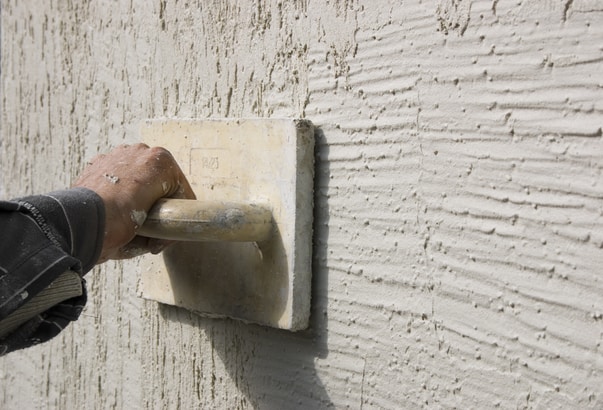
Texture and color matching is the final piece, and it’s harder than it sounds on older homes. We work with cosmetic masonry specialists to match the existing finish as closely as possible, so the repaired area doesn’t stand out against the surrounding wall.
Hurricane Damage Repair and the Wood Rot Connection Orange County Homeowners Often Miss
Hurricane damage repair is usually associated with visible destruction — missing shingles, downed fences, broken windows. But some of the most significant hurricane-related damage to Orange County homes doesn’t show up immediately. It shows up two or three years later, as wood rot.
Here’s why. When a hurricane or a strong tropical system passes through — and Orange County gets meaningful wind and rain from storms making landfall on either coast — it drives water against exterior walls with far more force than a normal rainstorm. That wind-driven rain finds every gap: a slightly open caulk joint, a hairline crack near a window frame, a flashing detail that wasn’t quite right. Under normal rainfall, those gaps might not let in much water. Under sustained wind-driven rain, they become entry points for significant moisture intrusion.
That moisture gets behind the stucco and into the wall assembly. If the water-resistant barrier is intact, it manages it. If it’s compromised — which is common in homes that are 20 or 30 years old — the moisture reaches the wood and stays there. Central Florida’s humidity means it doesn’t dry out quickly. Over the following months and years, rot develops.
Hurricane Irma in 2017 caused widespread wind and water damage across the Orlando metro area. Homes that appeared to come through without major visible damage sometimes had moisture intrusion events that set off slow-developing rot behind stucco walls. By now, some of those homes are showing symptoms. Others aren’t yet — but the damage is there.
If your home took any wind-driven rain during a significant storm in the last several years, and you haven’t had a moisture assessment done since, it’s worth knowing what’s actually inside your walls. Especially if your home has EIFS stucco. Especially if it was built in the 1990s. The combination of aging first-generation EIFS, Florida’s humidity, and hurricane exposure creates exactly the conditions where hidden wood rot develops — and stays hidden until the damage is extensive enough to force itself to the surface.
Most Florida homeowner’s insurance policies don’t cover damage from slow leaks or moisture intrusion that developed over time. That means if this problem has been building since a storm five years ago, the repair cost is likely coming out of pocket. Getting ahead of it — before it reaches structural framing — is almost always less expensive than addressing it after the fact.
What to Do If You Think Your Orange County Home Has Wood Rot Behind Stucco
If something has felt off — a crack that keeps coming back, a stain you can’t explain, a soft spot you noticed when you leaned against the wall — trust that instinct. Wood rot behind stucco doesn’t announce itself loudly. It builds quietly, and by the time it’s obvious, the repair is almost always more involved than it would have been if caught earlier.
The right first step is a proper assessment, not a patch. You need someone who will actually look at what’s behind the surface, not just fill what’s visible and move on. For Orange County homeowners — particularly those in 1990s communities with EIFS stucco — that means finding a contractor who understands how these systems age and fail in Central Florida’s climate, and who has the experience to handle what they find inside the wall.
We serve Orange County and the surrounding area, and this is exactly the kind of work we do at CF Stucco and Painting. If you want to know what’s actually going on with your exterior, reach out and we’ll take a look.