
You noticed something on your exterior wall. Maybe a crack near a window frame, a patch of discoloration that wasn’t there last year, or a section that sounds oddly hollow when you knock on it. You’re not sure if it’s serious. You’re hoping it isn’t.
That uncertainty is exactly where most stucco problems get expensive. The damage you can see is rarely the whole story — and in Orange County, FL’s climate, what’s happening behind the surface can move fast. This guide breaks down seven specific warning signs, what they actually mean, and when it’s time to stop guessing and call someone who can give you a real answer.
Cracks in Stucco: What They’re Telling You
Not every crack is a crisis, but none of them are meaningless either. Stucco cracks because something moved — whether that’s the substrate beneath it shifting, moisture cycling in and out, thermal expansion from Florida’s intense sun, or the natural settling of a home over time. The crack itself is just the visible result of a process that started somewhere else.
The part that matters most is what kind of crack you’re looking at, where it’s located, and how wide it’s gotten. A hairline crack running vertically along a flat wall section is different from a diagonal crack shooting out from the corner of a window. One might be cosmetic. The other might be telling you something is moving that shouldn’t be.
Which Cracks Are Serious and Which Ones Can Wait?
The general threshold most stucco professionals use is 1/8 of an inch. Cracks wider than that need immediate attention — not because the number is magic, but because at that width, water can get in reliably, not just occasionally. In Orange County, FL, where the average humidity sits around 74% year-round and the area gets more than 50 inches of rain annually, water finding its way behind your stucco is not a slow or forgiving process.
Diagonal cracks radiating from the corners of windows and doors are one of the more telling patterns. They often indicate that the structure is experiencing some movement — possibly foundation-related, possibly from soil shifting after heavy rain cycles. Horizontal cracks along the base of a wall near the weep screed can signal that water has been sitting and working its way in for a while. Spiderweb-style cracking spread across a larger surface area is common in aging stucco that’s lost flexibility, but it also creates dozens of small entry points for moisture at once.
What makes Central Florida particularly unforgiving is the daily summer thunderstorm pattern. From June through September, Orange County, FL gets intense, wind-driven rain almost every afternoon. Each storm pushes water against your exterior with force. If your stucco has any cracks at all, those storms are stress-testing them every single day for four straight months. A crack that seemed stable in April can be actively leaking by August.
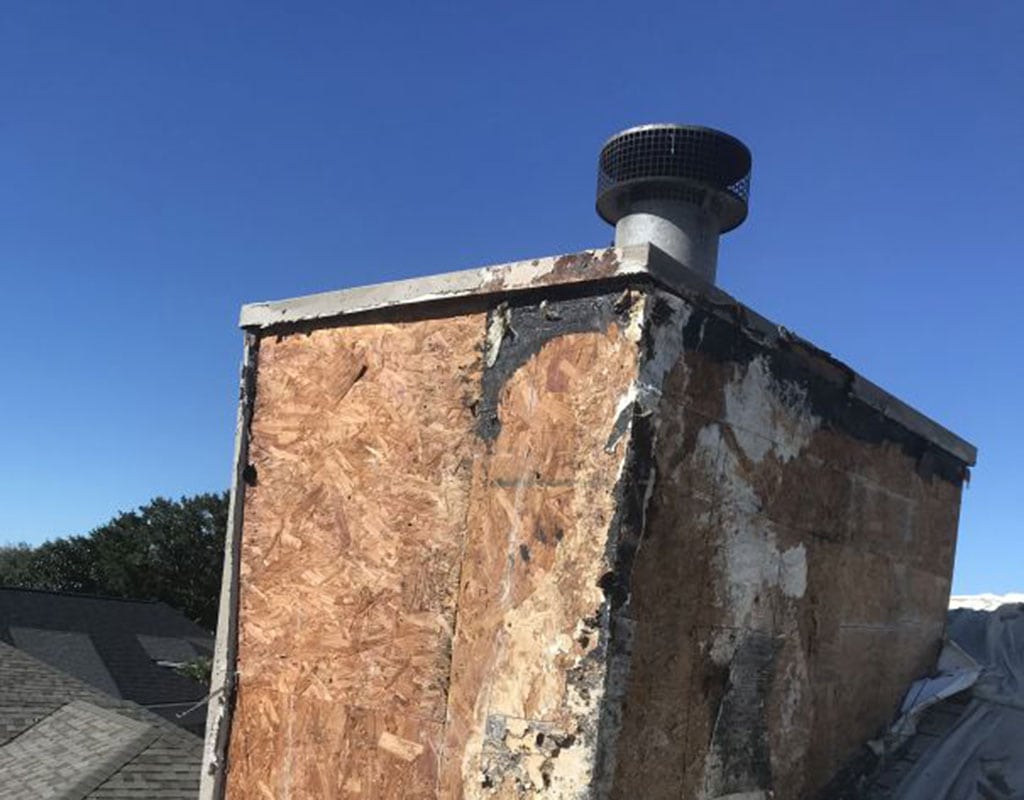
Here’s the part that catches most homeowners off guard: the most expensive damage is usually invisible from the outside. Moisture can penetrate through a hairline crack, saturate the sheathing behind the stucco, begin rotting the wood substrate, and promote mold growth — all while the exterior surface looks mostly intact. By the time you see bubbling, staining, or soft spots, the damage has often been building for months or years.
That’s why a crack is never just a crack in this market. It’s a question worth answering before the answer gets more expensive.
The 7 Warning Signs That Mean It’s Time for a Professional Stucco Inspection
Beyond cracks, there are six other signs that homeowners in Orange County, FL regularly overlook or rationalize away. Together, these seven indicators cover the full range of what a compromised stucco system looks like before it becomes a major repair project.
The first is any crack wider than a hairline, especially near windows, doors, or corners — as covered above. The second is brown streaking or staining on the exterior surface. This usually means water is tracking down the wall and picking up minerals or contaminants along the way. It’s a visible sign of a drainage problem, and it typically means water has been moving through or behind the stucco repeatedly.
Third is bubbling or bulging sections. When stucco loses its bond with the substrate behind it, it can push outward or form visible bumps. This is called delamination, and it almost always involves moisture. The stucco hasn’t failed on its own — something behind it has changed, usually because water got in and the substrate swelled or deteriorated.
Fourth is the hollow sound test. Knock on different sections of your exterior wall. Stucco that’s properly bonded sounds solid and dense. Stucco that has separated from the substrate sounds noticeably hollow or drum-like. That hollow section is no longer protecting what’s behind it, and it’s at risk of cracking or falling away entirely.
Fifth is visible mold or mildew on the exterior surface. Some surface mildew is common in Florida’s humidity and can be pressure-washed away. But mold that keeps coming back, or that appears in patterns suggesting it’s growing from behind the surface outward, is a red flag for moisture intrusion that hasn’t been addressed.
Sixth is stucco that’s visibly pulling away from trim, window frames, or other transition points. Sealants around windows, doors, vents, and electrical boxes are the most common failure points in any stucco system. When those seals break down, water gets in at the exact spots where it can cause the most damage — right at the wall penetrations where moisture has a direct path to the interior framing.
Seventh is interior signs: water stains on interior walls or ceilings near exterior surfaces, soft drywall, or musty odors in rooms that share an exterior wall. By the time damage is showing up inside, the moisture has already moved through the stucco, the sheathing, the moisture barrier, and the framing. That’s a significant repair scope, and it typically means the exterior problem has been present for a long time.
If you’re seeing any one of these signs, it’s worth getting a professional set of eyes on it. If you’re seeing two or more, don’t wait.
Stucco Inspection Cost: What to Expect Before You Call
One of the most common reasons homeowners delay getting an inspection is not knowing what it will cost. The uncertainty itself becomes a reason to put it off. A professional stucco inspection typically runs between $500 and $1,500, with most falling somewhere in the middle depending on the size of your home and the type of inspection required.
That range exists because not every inspection is the same. A basic visual walkthrough is on the lower end. A full invasive inspection — where small probe holes are drilled at strategic points to measure moisture levels inside the wall — is on the higher end. For most Orange County, FL homeowners who have a specific concern, a combination of visual assessment and moisture meter testing lands in the middle of that range.
Cost of Stucco Inspection vs. Cost of Waiting
The more useful number isn’t what an inspection costs — it’s what it costs compared to the alternative. When moisture damage is caught early, repairs in Orange County, FL typically run between $1,000 and $2,500 for standard work. When moisture has been working behind your walls for months or years, that number can climb past $10,000 — and in cases where the sheathing, framing, and interior finishes are all involved, repair bills can reach $30,000 or more.
Florida’s insurance market makes this math even more important. Most homeowners insurance policies in this state do not cover damage from slow leaks or gradual moisture intrusion. If stucco lets water in over time and causes rot or mold, that cost lands entirely on the homeowner. There’s no claim to file, no adjuster to call. It’s out of pocket, and the bill is whatever the damage has had time to become.
An inspection that costs $500 to $1,500 and catches a problem early is one of the most straightforward financial decisions a homeowner can make. You’re not spending money on maintenance — you’re buying information about your largest asset before the cost of that information gets much higher.
It’s also worth understanding what the inspection process actually looks like, because a lot of homeowners imagine something more disruptive than it is. We walk the exterior and document every visible concern — cracks, staining, sealant failures, flashing conditions, weep screed integrity. We use a moisture meter to scan for elevated moisture readings behind the surface without drilling. If those readings indicate a problem, we may recommend probe testing at specific locations — small holes drilled into the stucco, a moisture probe inserted, and then the holes sealed with color-matched caulk when we’re done. The whole process is far less invasive than most homeowners expect, and it produces a clear picture of what’s actually going on behind the surface.
Why Orange County Homes Built in the 1990s Need Attention Now
If your home was built between roughly 1985 and 2005, there’s a specific reason to pay closer attention to your stucco system right now. A large portion of Orange County, FL’s housing stock from that era was clad in EIFS — exterior insulation and finish systems, commonly called synthetic stucco. These systems were widely installed during Central Florida’s rapid growth period, and they’re now 20 to 40 years old.
Early EIFS installations — particularly those from before drainage plane requirements were standardized — were designed in a way that could trap moisture rather than allow it to drain and evaporate. When these systems were installed correctly and have been maintained well, they can perform for decades. But when they weren’t, or when minor maintenance has been deferred over the years, they can be quietly accumulating moisture damage in ways that won’t be obvious from the outside until the problem is significant.
This isn’t a theoretical risk. Homes from this era that have never had a moisture inspection are among the most common sources of large repair findings in the Central Florida market. Homeowners who bought these properties without understanding what EIFS is — or who’ve owned them for years without ever having the system assessed — are often surprised by what an inspection reveals.
We work specifically with EIFS systems, including the aging 1990s installations that are most common in communities across Orange County, FL. Our background in foundation repair means we approach these inspections with an understanding of how the whole exterior assembly works together — not just the surface layer. When a problem is structural rather than cosmetic, we coordinate with engineers rather than guessing. That distinction matters when you’re trying to understand whether a crack is a maintenance issue or something that needs a different level of response.
If your home is in that age range and you’ve never had the stucco system professionally evaluated, that’s the single most useful thing you can do this year to protect what the home is worth.
When Should You Schedule a Stucco Inspection in Orange County?
The honest answer is: before you have a reason to. The best time to get a stucco inspection is before a warning sign appears, not after. For most Orange County, FL homeowners — especially those in homes built in the 1990s or early 2000s — that means now, if it hasn’t been done recently.
If you’re already seeing one or more of the signs covered in this guide, don’t wait for another rainy season to tell you what you already suspect. The cost of getting a clear answer is always lower than the cost of finding out the hard way.
CF Stucco and Painting serves Orange County, FL and the surrounding Central Florida area. We give straightforward estimates after inspection — no vague pricing, no pressure. If you’re ready to find out what’s actually going on with your stucco, reach out and we’ll get back to you within 24 to 48 hours.