You noticed a crack. Or maybe a soft spot. Someone came out, took a look, and told you the whole thing needs to come off. Now you’re staring down a number that makes your stomach drop and wondering if they’re right.
Here’s the honest answer: sometimes they are. And sometimes they’re not.
Full stucco removal is a real solution to a real problem — but it’s not the only solution, and it’s not always the right one. What matters is understanding what’s actually happening behind your walls, not just what’s visible on the surface. That’s where this guide starts.
When Stucco Repair Is Enough — and When It Isn’t
Most stucco problems start small. A hairline crack here, some discoloration there. In a lot of cases, those are cosmetic issues — normal weathering that a proper repair and recoat will handle for years.
If the damage is localized, the surrounding wall feels solid when you tap it, and there’s no sign of moisture behind the finish, repair is almost certainly the right call. The situation changes when moisture has gotten into the system.
Once water reaches the sheathing or framing behind the stucco, patching the surface doesn’t fix the problem — it hides it. The same crack comes back. Or a new one appears nearby. That’s the pattern most homeowners in Orange County describe when they’ve been chasing repairs that won’t hold.
The 30% Rule Most Contractors Use to Make the Call
There’s a rough threshold most experienced stucco professionals work from: if the damaged or failed area covers more than about 30% of a wall plane, full removal and re-application is usually more cost-effective over time than repeated patching.
Not because patching can’t work — it can — but because at that scale, you’re fighting a losing battle with the underlying system. The same logic applies when moisture has reached the wood sheathing. Once the structural material behind your stucco is wet, you can’t seal your way out of it. The wood needs to dry out, be inspected, and in many cases be partially replaced before anything goes back on the wall.
Skipping that step and patching over it is how a $1,500 repair turns into a $15,000 remediation two years later.
What makes this tricky in Orange County is that the damage isn’t always visible. The homes most at risk right now are the ones built in the late 1980s through the late 1990s — particularly in communities like Windermere, Dr. Phillips, Oviedo, and Winter Park. Many of those homes were finished with EIFS, a foam-based synthetic stucco system that was popular at the time.
The early versions of EIFS had no drainage plane at all. Any water that got behind the foam had nowhere to go. It just sat there, against the wood, until the wood started to rot. Those homes are now 25 to 35 years old. The systems are aging.
And because EIFS looks nearly identical to traditional hard-coat stucco from the outside, a lot of homeowners don’t even know which one they have — let alone that theirs might be quietly failing behind a wall that still looks fine. The only way to know for certain is a professional moisture assessment. That means probe testing around windows, doors, and roof-to-wall intersections — the spots where water most reliably finds its way in.
Visual inspection alone isn’t enough.
How to Tell If You Have Traditional Stucco or EIFS
This is one of the most common questions we hear, and it matters more than most people realize. Traditional hard-coat stucco is cement-based. It’s applied directly to masonry or over a metal lath system and cures into a rigid, dense surface.
EIFS — Exterior Insulation and Finish System — is a layered synthetic product built around foam insulation with a polymer finish coat on top. They can look nearly identical from ten feet away. The easiest field test is the knock test. Tap the wall with your knuckle in a few spots.
Traditional stucco over concrete block (which is common in Orange County, FL) sounds solid and dense. EIFS sounds hollow because there’s foam underneath. If you hear a dull, slightly bouncy sound, there’s a reasonable chance you’re dealing with a synthetic system.
That distinction matters enormously for repair decisions. Traditional stucco and EIFS fail in different ways, require different materials to fix, and call for different approaches when removal is necessary. Using the wrong product on an EIFS system — even with good intentions — can accelerate the failure and void any remaining warranty on the system.
There’s also a Florida-specific wrinkle worth knowing: our soil. Orange County sits on Myakka fine sand, which shifts and settles differently than the denser soils you’d find in other parts of the country. That settling can create cracking patterns in stucco that look a lot like moisture damage but are actually driven by foundation movement.
Misreading that distinction leads to the wrong repair — and the problem returns. It’s one of the reasons our background in foundation repair shapes how we approach every diagnostic inspection. Understanding why a wall is cracking changes everything about how you fix it.
Replacing Stucco With Siding: Is It Worth Considering?
Some homeowners reach the stucco removal conversation and start asking a different question: what if I just switch to siding instead? It’s a reasonable thing to wonder, especially if you’ve been dealing with recurring stucco problems and you’re tired of the cycle.
The honest answer is that siding can be a good option in the right circumstances — but it’s not automatically better, and in Florida’s climate, it comes with its own set of considerations. Before you make that call, it’s worth understanding what the switch actually involves and what you’d be trading.
What the Stucco Siding Installation Process Actually Looks Like
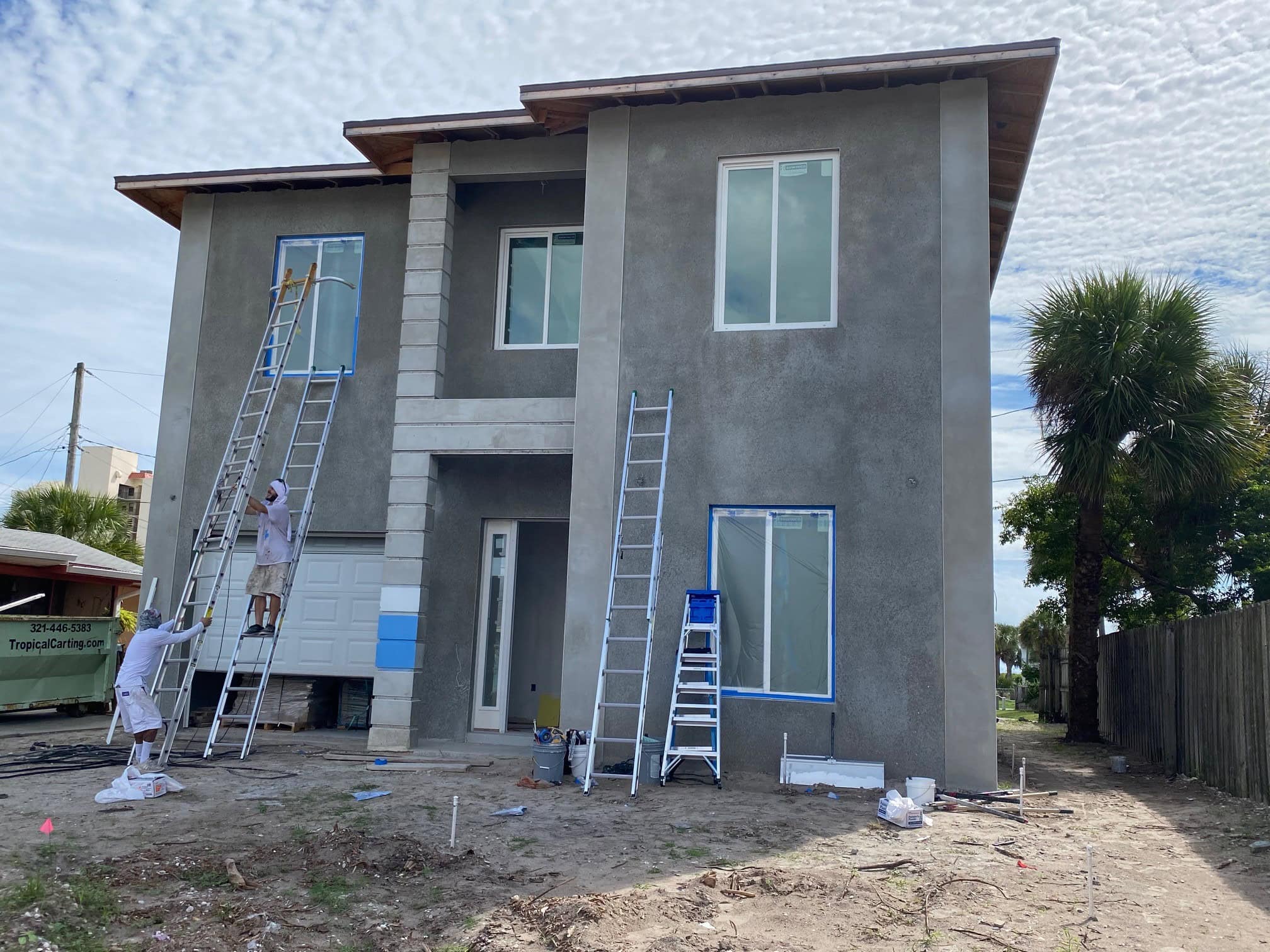
Whether you’re re-stuccoing after removal or switching to a different exterior material, the process starts the same way: with the substrate. Whatever is going back on your walls — new stucco, fiber cement, LP SmartSide — only performs as well as the surface it’s applied to.
That means any damaged sheathing, wood rot, or moisture-compromised framing has to be addressed first. Skipping that step is how new siding fails prematurely on a house that looked fine from the outside.
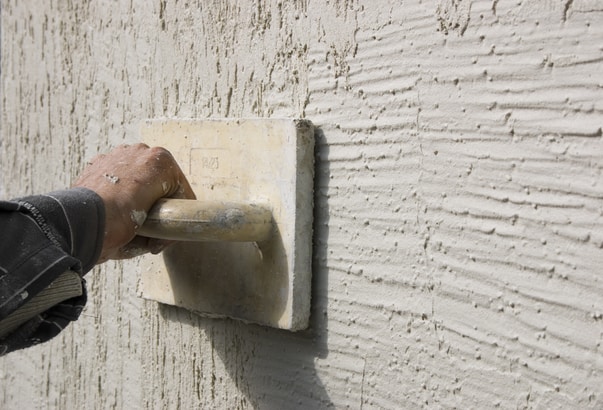
For a traditional three-coat stucco re-application, the process involves installing new lath, applying a scratch coat, a brown coat, and a finish coat — each needing proper cure time before the next layer goes on. Done correctly, a new stucco system on a well-prepared substrate can last 50 years or more. Done in a hurry, or over a substrate that wasn’t fully dried out and repaired, you’re back to the same problems within a few years.
Siding installation after stucco removal follows a similar logic. Once the old stucco is off and the substrate is clean and sound, a proper moisture barrier goes on before any siding material is attached. In Central Florida’s climate — where Orange County averages over 50 inches of rain annually and humidity sits around 74% — that moisture barrier isn’t optional. It’s the difference between a 30-year exterior and a 10-year problem.
One thing that surprises some homeowners: siding doesn’t necessarily eliminate moisture management challenges. In a high-humidity environment like Orange County, FL, the wrong siding product or a rushed installation can trap moisture just as effectively as a failing EIFS system. The material changes, but the underlying principle doesn’t — water has to have somewhere to go, or it finds its own way in.
What we always recommend is a full inspection before any decision is made about replacement materials. Once we know what’s behind the wall and what condition the substrate is in, the right path forward usually becomes clear.
Stucco Siding Contractors: What to Look for Before You Hire Anyone
This is where a lot of homeowners get burned. Stucco removal and re-application isn’t a job for a general handyman or an unlicensed crew offering a low number. In Florida, stucco work is regulated by the Construction Industry Licensing Board, and any project exceeding 25 square feet requires a permit.
Hiring someone who skips the permit doesn’t just put you at risk of a code violation — it can create serious problems if you ever file a homeowner’s insurance claim or try to sell the house.
Beyond licensing, the questions worth asking before you sign anything are specific. Ask whether they’ve worked with EIFS systems before, and what their diagnostic process looks like before they recommend removal. A contractor who walks around your house for five minutes and immediately recommends full removal — without any moisture testing — is telling you something about how they work.
A good contractor will want to open a test section, check the substrate condition, and give you a clear picture of what’s actually happening before any scope of work is finalized. Ask about what happens if they find wood rot or structural damage once the stucco is off. Some contractors handle that in-house; others stop and tell you to find someone else.
For a project where the full scope isn’t known until the walls are open, that matters. We handle wood repair, waterproofing, and re-application under one roof — so if the job gets more complicated mid-project, it doesn’t become your problem to coordinate.
For Orange County homeowners in HOA communities — and there are a lot of them, from the neighborhoods around Lake Nona to the planned communities in Apopka and Winter Garden — exterior work often requires HOA approval on top of county permits. An experienced local contractor knows that process and can help you navigate it without delays. It’s a detail that out-of-market contractors frequently overlook, and it can hold up a project for weeks if it’s not handled upfront.
Finally, ask about texture and color matching. If you’re doing partial removal and re-application rather than a full exterior overhaul, the repaired sections need to blend with the existing finish. That’s not a given — it takes skill and the right materials. We work with cosmetic masonry specialists specifically for this reason, because a repair that’s structurally sound but visually obvious isn’t a finished job.
How to Know If Your Orange County Home Actually Needs Stucco Removed
The short version: you probably can’t tell from the outside, and anyone who tells you otherwise without doing a proper assessment is guessing. What you can do is get a real inspection — moisture testing, substrate evaluation, and an honest read on whether repair or removal is the right path for your specific situation.
If you’re in Orange County and you’ve got stucco that’s been patched before, a home built in the 1990s, or walls you’ve just never been sure about, it’s worth having someone take a closer look before the next rainy season does it for you. The cost of acting early is almost always lower than the cost of waiting.
CF Stucco and Painting works with homeowners across Orange County on exactly these decisions — and we’ll tell you when repair is the right answer just as readily as when it’s not. Reach out for an inspection and we’ll give you a straight answer.