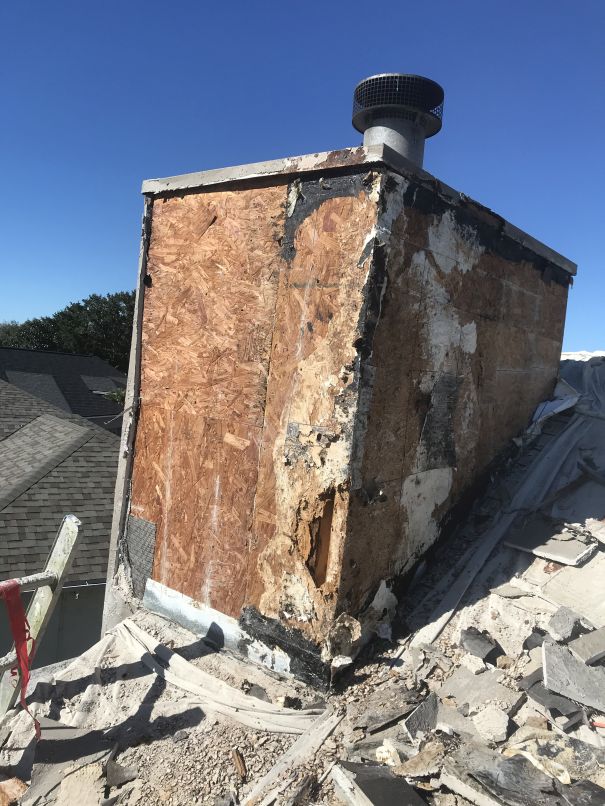
Most homeowners searching for stucco repair companies are thinking about their walls — a crack near a window, a stain running down the exterior after a storm. The chimney rarely comes to mind first. But it probably should. It’s exposed on all four sides, sits at the roofline where water has the easiest path in, and it’s a structural element that can fail independently of the rest of the house. In Orange County, FL’s wet season, a single neglected crack in chimney stucco can quietly become a much larger problem. Here’s what you need to know before you call anyone.
Stucco Inspection Cost: What to Expect Before Any Repair Quote
The inspection is the decision — not the repair. Before any contractor can tell you what fixing your chimney stucco will cost, someone needs to get eyes on it and understand what’s actually happening. A standard stucco inspection typically runs around $500, and that number exists for a reason: it takes time, the right tools, and real expertise to tell the difference between surface-level cracking and moisture damage that’s been sitting behind the stucco for months.
What makes chimney inspections different from a general stucco check is the location. The chimney sits at the roofline, takes rain on every face, and is structurally separate from the main building. That means it settles differently, expands and contracts differently, and fails differently. An inspector who treats it like a wall panel is going to miss things.
The inspection cost also tends to pay for itself quickly. Catching a moisture problem early — before it reaches the wood framing or the interior — is the difference between a $300–$600 repair and something in the thousands. The $500 you spend on a thorough inspection is almost always the cheapest money you’ll spend on the whole job.
What a Thorough Chimney Stucco Inspection Actually Looks For
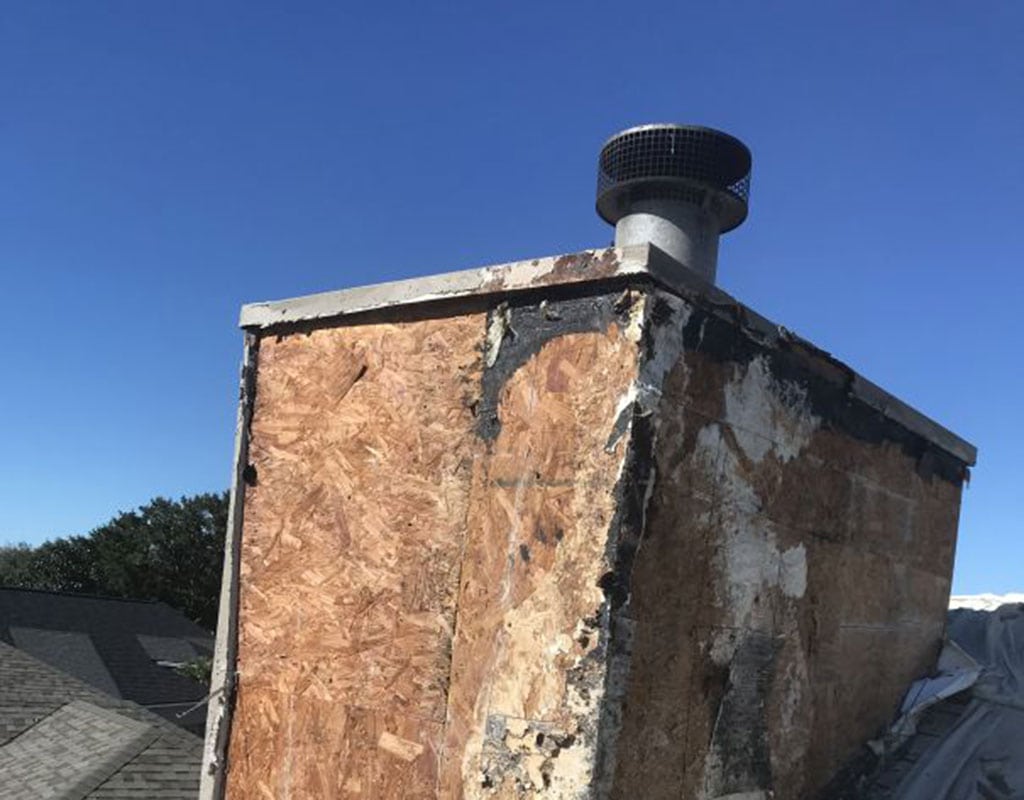
A proper chimney stucco inspection isn’t just a visual once-over from the ground. It starts with a close-up examination of the stucco surface itself — looking for hairline cracks, larger structural cracks, staining, soft or hollow spots, and any signs of efflorescence, which are the white mineral deposits that appear when moisture has been moving through the stucco layer. Each of these tells a different story about what’s happening beneath the surface.
From there, we use moisture meters and, in many cases, thermal imaging to detect water that the eye can’t see. Stucco is deceptive that way. A wall or chimney face can look completely intact while holding significant moisture behind it — moisture that’s been sitting against wood framing, causing rot and mold that won’t become visible until the damage is already extensive. In Orange County, FL, where the average relative humidity hovers around 74% year-round and summer thunderstorms probe every crack and open joint daily from June through September, this is not a theoretical risk. It’s the most common failure pattern we see.
For situations where surface-level tools aren’t enough, an invasive inspection involves drilling small holes to insert moisture probes directly behind the stucco. It’s more accurate, and for a chimney with visible cracking or staining, it’s often the only way to know for certain what you’re dealing with. The holes are patched afterward — it’s a minor trade-off for actually knowing what you’re paying to fix.
One thing worth knowing: a standard home inspection does not cover chimneys or stucco in any meaningful depth. If you bought your home recently and assumed the home inspection covered this, it almost certainly didn’t. Chimneys and fireplaces are consistently among the items excluded from standard inspection scope. That gap is exactly why specialty stucco inspections exist.
EIFS Stucco Systems on Chimneys — A Different Problem Entirely
If your home was built during Orange County, FL’s 1990s construction boom — and a large portion of the county’s housing stock was — there’s a real chance your chimney is clad in EIFS, also called synthetic stucco or Exterior Insulation and Finish Systems. These homes are now 25 to 35 years old, and the EIFS systems installed on them were put in before modern drainage plane requirements became standard practice.
Here’s why that matters specifically for chimneys. EIFS works by layering insulation board, a reinforced base coat, and a finish coat over the substrate. When it’s installed correctly with a drainage plane behind it, moisture that gets in has a path out. When it’s installed without one — which describes most 1990s EIFS applications — moisture gets trapped between the insulation board and the framing. On a chimney, which is exposed to rain on every face and sits at the highest, most vulnerable point of the exterior, that trapped moisture has nowhere to go. It just sits there, working against the wood.
The critical thing to understand is that EIFS and traditional hardcoat stucco require completely different inspection approaches and completely different repair protocols. You cannot patch synthetic stucco with traditional stucco materials — the bond fails, and the repair fails with it. A contractor who doesn’t know the difference between these two systems isn’t equipped to diagnose your chimney correctly, let alone repair it.
We approach chimney inspections with deep experience in aging EIFS systems specifically — not just the cosmetic finish, but the insulation board, the drainage plane, and the substrate underneath. When we inspect a chimney on a 1990s-era home in Orange County, FL, we’re not just looking at the surface. We’re thinking about what that system was designed to do, whether it was installed to do it, and what 30 years of Florida humidity has done to it since.
Local Stucco Repair in Orange County, FL: What the Climate Demands
Orange County, FL isn’t a forgiving environment for exterior stucco. The combination of 74% average humidity, 50-plus inches of annual rainfall concentrated into a four-month wet season, and UV intensity that degrades surface finishes faster than most homeowners expect — that’s a specific set of conditions that requires specific materials and specific expertise.
What this means practically is that a contractor who does solid work in a drier climate, or who uses generic national product recommendations, is likely to produce results that don’t hold up here the way they should. Florida stucco work demands weather-resistant materials selected for humidity and UV exposure, proper moisture barriers installed correctly, and surface preparation that accounts for the fact that moisture will find every shortcut you leave it.
Why Orange County Chimneys Crack — and Where to Look First
Central Florida’s soil is predominantly Myakka fine sand. It drains quickly, which is good for flooding, but it also means buildings settle unevenly over time. Chimneys, which are structurally separate from the main building, are especially prone to differential settlement — meaning the chimney shifts at a slightly different rate than the house it’s attached to. That movement shows up as cracking at the joint where the chimney meets the main wall, at corners, and along any horizontal line in the stucco finish.
This is different from the surface cracking you might see on a flat wall section, and it’s worth understanding because the repair approach is different too. A crack caused by settlement isn’t just a surface problem — it’s a sign that the structure is moving, and patching over it without addressing the underlying cause will result in the crack reopening. In some cases, structural movement warrants bringing an engineer into the conversation before any repair work begins.
We coordinate with engineers for exactly these situations. It’s not common, but when a chimney inspection reveals cracking patterns that suggest more than normal thermal expansion, having an engineer assess it before we start is the right call — for the homeowner’s safety and for the longevity of the repair. Most stucco contractors don’t offer this, and most homeowners don’t know to ask for it.
Beyond settlement, the other primary cause of chimney stucco cracking in Orange County, FL is thermal cycling. Florida doesn’t have freeze-thaw cycles like northern states, but the swing between a 45-degree winter night and a 95-degree summer afternoon puts real stress on rigid stucco systems. Over years, that stress accumulates. Older homes in neighborhoods like College Park, Winter Park, and Dr. Phillips — where stucco chimneys have been through decades of Orange County summers — often show this kind of fatigue cracking across the finish coat.
How to Choose a Stucco Repair Company That’s Actually Qualified
There’s a wide range of contractors who will show up and give you a quote for chimney stucco repair. The price variance between them can be significant — sometimes several times apart for what looks like the same scope of work. Understanding why that variance exists is the most useful thing you can do before you hire anyone.
Florida requires a specialty contractor license for stucco work. A general contractor license does not automatically cover stucco application in this state. That distinction matters because it affects both legal compliance and the quality of work you can expect. Before you hire anyone, you can verify their license at MyFloridaLicense.com. It takes two minutes and tells you whether the person standing in your driveway is actually qualified to do what they’re quoting.
Beyond licensing, look for a contractor who insists on inspecting before quoting. A contractor who gives you a price over the phone or from a photo hasn’t seen what’s behind your stucco, and that means their number is essentially a guess. The ones who want to look at it first — who want to understand what they’re actually dealing with before committing to a scope — are the ones who will give you an accurate estimate and deliver on it.
Ask specifically whether they have experience with EIFS systems if your home was built before 2000. Ask how they handle texture and color matching on repairs. Ask whether they pull permits for structural work, because in Orange County, FL, structural stucco repairs require permits and inspections — a contractor who skips that step either doesn’t know the code or knows their work won’t pass.
We start every chimney job with a detailed inspection. We look at the stucco surface, the substrate, the flashing, the cap, and the drainage — the whole system, not just the visible crack. We give you a clear, itemized estimate based on what’s actually there. And we’re upfront about what we find, even when it’s more than you were hoping to hear. That’s not a sales approach. It’s just how you do the job right.
Finding the Right Stucco Repair Company in Orange County, FL
A chimney stucco inspection isn’t a complicated concept, but it requires the right contractor to be worth anything. The inspection has to be thorough enough to catch what’s hidden, the contractor has to understand the difference between EIFS and traditional stucco, and the repair has to be built for what Florida’s climate actually does to exterior surfaces over time.
If you’re in Orange County, FL and you’ve noticed cracking, staining, soft spots, or anything else on your chimney stucco that doesn’t look right, the best next step is a real inspection — not a phone quote, not a patch-and-hope approach. Get eyes on it from someone who understands the whole system.
CF Stucco and Painting serves Orange County, FL and the surrounding Central Florida area. Reach out for a quote and we’ll get back to you within 24 to 48 hours.