
Most homeowners in Orange County, FL come to this question after something goes wrong. A paint job that started peeling in year three. A repair patch that doesn’t quite match. A contractor who recommended one thing while the internet says another. Whatever brought you here, the short answer is: both options can work — but not equally well in every situation, and not without understanding what you’re actually committing to.
Florida’s climate changes the math on this decision in ways that most comparison guides don’t address. This page will.
Colored Stucco vs Paint: The Core Difference
The difference comes down to where the color lives. With integral-color stucco, pigment is mixed directly into the finish coat during application. The color goes all the way through the material, not just across the surface. With paint — whether standard acrylic latex or an elastomeric coating — the color sits on top of the stucco as a film.
That distinction matters more than most people realize. When integral-color stucco chips or weathers, the color underneath is the same as the color on top. When painted stucco chips, you see the gray substrate underneath. In Orange County’s UV environment, that surface film also fades faster than a color that runs through the material itself.
Why Painted Stucco Locks You Into a Permanent Maintenance Cycle
Here’s something most homeowners don’t find out until it’s too late: once you paint stucco, you’ve made a permanent commitment to paint maintenance. If you ever want to apply a color coat or integral-color finish down the road, the painted surface has to be completely stripped first. That’s a significant labor cost — and it’s not optional. Color coatings are cement-based and need bare stucco to bond to properly.
What this means practically is that the first time you paint your stucco, you’re setting the maintenance path for the life of the exterior. Every future repair, every color refresh, every stucco patch — all of it will need to be handled with paint rather than integral-color material.
When painted stucco is patched, the repair has to be color-matched with paint. Stucco color shifts as it ages and weathers, which means a fresh patch rarely blends seamlessly with surrounding paint that’s been on the wall for five or six years. You end up with a visible repair even if the work was done well.
Orange County’s humidity compounds this. At an average of 74% relative humidity, exterior paint here faces constant moisture pressure. Standard acrylic latex on Florida stucco typically lasts five to seven years before it needs recoating. Even with a quality elastomeric coating — which stretches up to 600% without cracking and provides a much thicker moisture barrier — you’re looking at seven to ten years between repaint cycles. That’s a real maintenance commitment, especially on a larger home.
What Colored Stucco Actually Requires in Florida’s Climate
Integral-color stucco has a reputation for being low-maintenance, and in many climates, that’s accurate. In Orange County, FL, it’s more complicated. Unpainted stucco is a porous material, and with over 50 inches of annual rainfall concentrated in a June-through-September rainy season, that porosity has real consequences.
Water staining is the most common issue. When rainwater consistently hits the same areas — around window sills, along horizontal surfaces, near the roofline — it can leave mineral deposits and discoloration on the stucco face. Efflorescence, the white chalky residue that forms when water pulls salts through the material, is also common on unpainted stucco in humid climates. Neither is a structural problem, but both affect how the exterior looks, and they can be stubborn to remove once they’ve set.
The other consideration is color permanence. With integral-color stucco, what you choose at installation is what you’re living with for a long time. Portland cement-based color coatings can last 15 or more years. That longevity is one of the main selling points — but it’s also the main objection. Homeowners who aren’t confident in their color choice, or who anticipate wanting to change the look of their home in the next decade, often find that flexibility tilts them toward paint.
There’s also a UV fading factor specific to Central Florida. Florida’s UV index is among the highest in the country, and while integral-color stucco resists surface fading better than paint, it’s not immune. Over time, even integral-color finishes can develop chalking or uneven discoloration from sun exposure. Regular cleaning and sealing extend the life of the finish significantly — but it’s not a set-it-and-forget-it system.
One factor that’s specific to Orange County and the surrounding area is the prevalence of HOA communities. Neighborhoods throughout Windermere, Lake Nona, Winter Park, and similar areas often have specific requirements for exterior finish types and approved color palettes. Some HOAs actually require elastomeric coatings rather than standard paint. Before making any finish decision, it’s worth confirming what your HOA allows — because the choice may already be partially made for you.
How to Match Stucco Color After a Repair in Orange County
Whether you choose colored stucco or paint, repairs are eventually going to happen. Cracks form, sections get damaged, stucco fails around windows or at the base of walls. And when they do, the question of how to match stucco color becomes one of the most frustrating parts of the whole process.
This is where a lot of homeowners get burned by contractors who treat stucco color matching like a paint store transaction. It isn’t. Stucco color changes chemically over time, fades under UV exposure, and looks completely different wet versus dry. Getting a repair to blend with the surrounding finish requires a different approach than picking a color off a chart.
The Process That Actually Works for Stucco Color Matching
The most reliable way to match existing stucco color is to start with a physical sample. That means cutting a small section from a less visible area of the wall — behind a downspout, inside a soffit, near a foundation planting — and bringing that sample to a stucco supplier who can work backward from the material itself. This is different from bringing a paint chip to a hardware store. Stucco color matching requires someone who understands how cement-based pigments behave, how they cure, and how they change over time.
One detail that trips up a lot of repairs is the wet-versus-dry problem. Fresh stucco runs three to four shades darker than it will look once it’s fully cured. A patch that looks like a perfect match the day it’s applied will often look noticeably lighter a week later. Accounting for this shift is part of getting a match right — and it’s something that only comes with experience working specifically with stucco.
Texture matters just as much as color. Stucco finishes vary in aggregate size, float technique, and surface profile. A sand float finish, a smooth finish, and a dash texture all reflect light differently, which means even a perfect color match can look wrong if the texture doesn’t align. Feathering the edges of a repair — gradually thinning the new material so it blends into the surrounding surface rather than ending abruptly — is one of the techniques that separates a visible patch from a seamless one.
For larger repairs or situations where the existing stucco has faded significantly, a fog coat is often the most effective solution. A fog coat is a cement-based colorant that’s sprayed over the wall and absorbed into the stucco surface rather than sitting on top of it. Because it penetrates the material, it keeps the stucco breathable while blending the repair into the surrounding finish. It’s the industry standard for unifying a wall that has visible patching or uneven color from weathering.
When the Surface Problem Is Actually a Substrate Problem
One of the most important things to understand about stucco and paint repair is that the finish you see on the outside is rarely where the real problem lives. Water intrusion causes roughly 60% of stucco failures in Central Florida. That means the crack you’re looking at, the paint that’s peeling, the stain that keeps coming back — in most cases, those are symptoms of something happening behind the surface, not the surface itself.
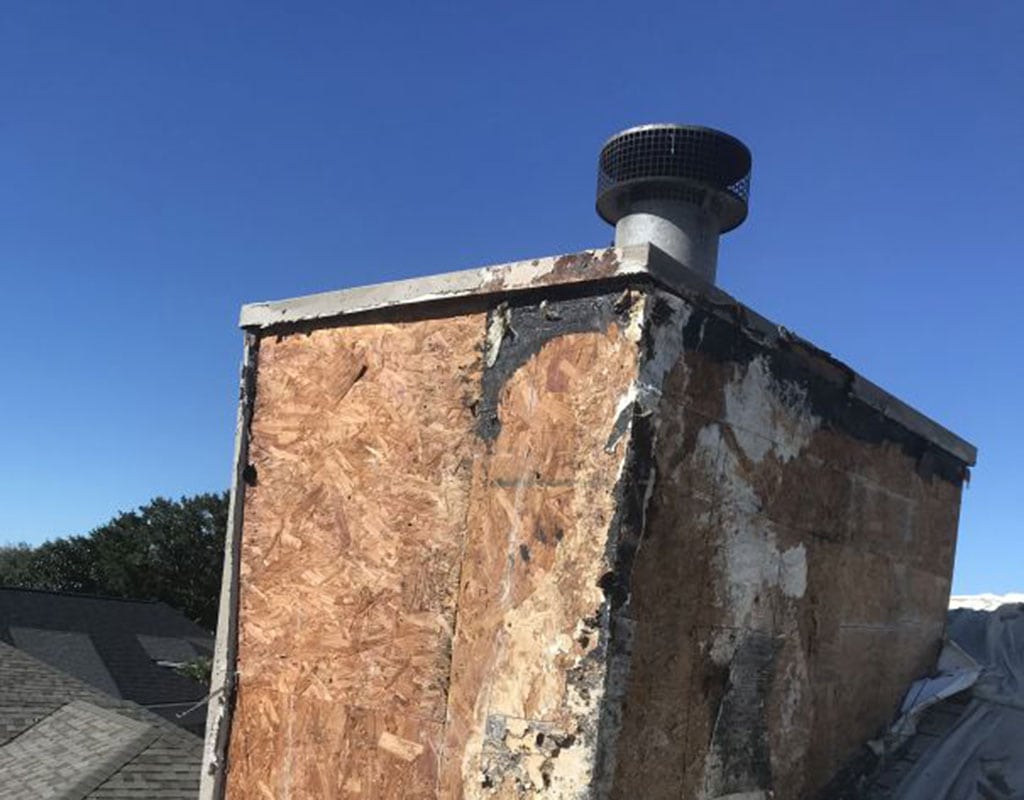
Painting over a crack without repairing the stucco underneath is the most common way a cosmetic fix becomes an expensive remediation. The paint bridges the crack temporarily, moisture continues to work its way through, and a year or two later you’re dealing with a larger failure that now involves the substrate, the building paper, or the framing. In Orange County’s climate — where afternoon thunderstorms are a near-daily occurrence from June through September — that moisture cycle is relentless.
This is especially relevant for homes built in the 1990s in communities like Metrowest, Dr. Phillips, and other planned subdivisions that were constructed during the decade when EIFS systems were widely installed. Those systems are now 25 to 30 years old and are at or past their expected service life. When an EIFS system fails, the finish decision — colored stucco or paint — gets made fresh during remediation. That’s actually an opportunity, because you’re starting with a clean substrate and can choose the right system from the beginning rather than layering over an existing one.
The repair sequence matters regardless of which finish you’re working with. Stucco problems need to be diagnosed before any coating is applied. That means identifying why the damage happened — whether it’s a crack from thermal movement, moisture intrusion from a failed window seal, or delamination from a substrate issue — and addressing the underlying cause before touching the surface. A finish system applied over an unresolved problem is just a delay. It will fail again, usually faster the second time.
Our background in foundation repair shapes how we approach this. Spending two decades working alongside engineers to diagnose structural failures teaches you to look at what’s causing a problem, not just what it looks like on the surface. That same diagnostic approach applies to stucco. We don’t recommend a finish system until we understand what’s happening underneath.
Which Stucco Finish Is Right for Your Orange County Home?
If you want color flexibility and don’t mind a repaint cycle every seven to ten years, a quality elastomeric coating on well-prepared stucco is a solid choice for most Orange County homes. If you want longevity and are confident in your color, integral-color stucco or a Portland cement color coat will outlast paint and hold up better against Florida’s UV load — provided you’re prepared to maintain it properly and address cracks promptly.
What neither option can do is fix a stucco problem that hasn’t been properly diagnosed. The finish is the last step, not the first. Getting that sequence right — substrate, repair, then finish — is what separates a result that lasts from one that looks good for a season and fails quietly behind the surface.
If you’re working through this decision for a home in Orange County, FL and want a straight answer based on what’s actually going on with your exterior, we’re happy to take a look and give you an honest assessment before you commit to anything.