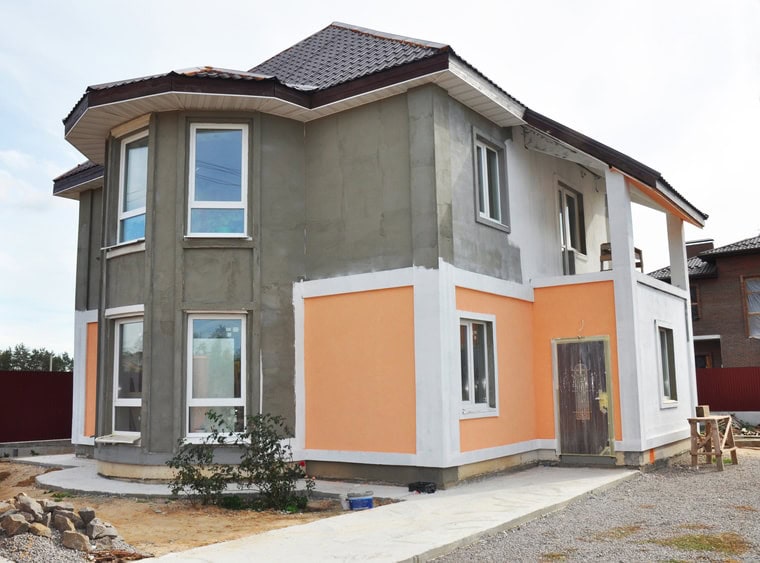
Here’s something most homeowners in Orange County don’t know: the median construction year for homes in this county is 1992. That puts the statistical center of the local housing stock right in the middle of one of the most documented exterior cladding failures in American residential construction history — a product called EIFS.
If you’ve noticed staining around your windows, cracks that keep coming back no matter how many times they’ve been patched, or a soft spot in the wall that doesn’t make sense, there’s a real chance you’re looking at a symptom of something bigger. This guide explains what EIFS is, why 1990s homes in Orange County are the highest-risk cohort, and what stucco remediation actually means when the problem runs deeper than the surface.
What Is EIFS and Why Do 1990s Orange County Homes Have It?
EIFS stands for Exterior Insulation and Finish System. It’s a multi-layer cladding product — sometimes called synthetic stucco or sold under brand names like Dryvit — that was widely adopted in residential construction throughout the late 1980s and 1990s. Builders liked it because it installed quickly, insulated well, and looked like traditional stucco at a lower cost.
The problem wasn’t the product itself. It was how it was designed. Early EIFS installations used what the industry calls a “barrier system” — meaning the exterior finish coat was expected to be the sole line of defense against water intrusion. There was no drainage plane, no path for water to escape if it got behind the finish. And water always finds a way in, especially around windows, doors, pipe penetrations, and anywhere two surfaces meet.
In Central Florida, where Orange County averages over 50 inches of rain annually and humidity stays above 70 percent for most of the year, that design flaw becomes a serious liability. The afternoon thunderstorms that roll through every summer aren’t just inconvenient — they’re repeated stress tests on every seal and joint in your home’s exterior.
What Happens When Water Gets Behind EIFS?
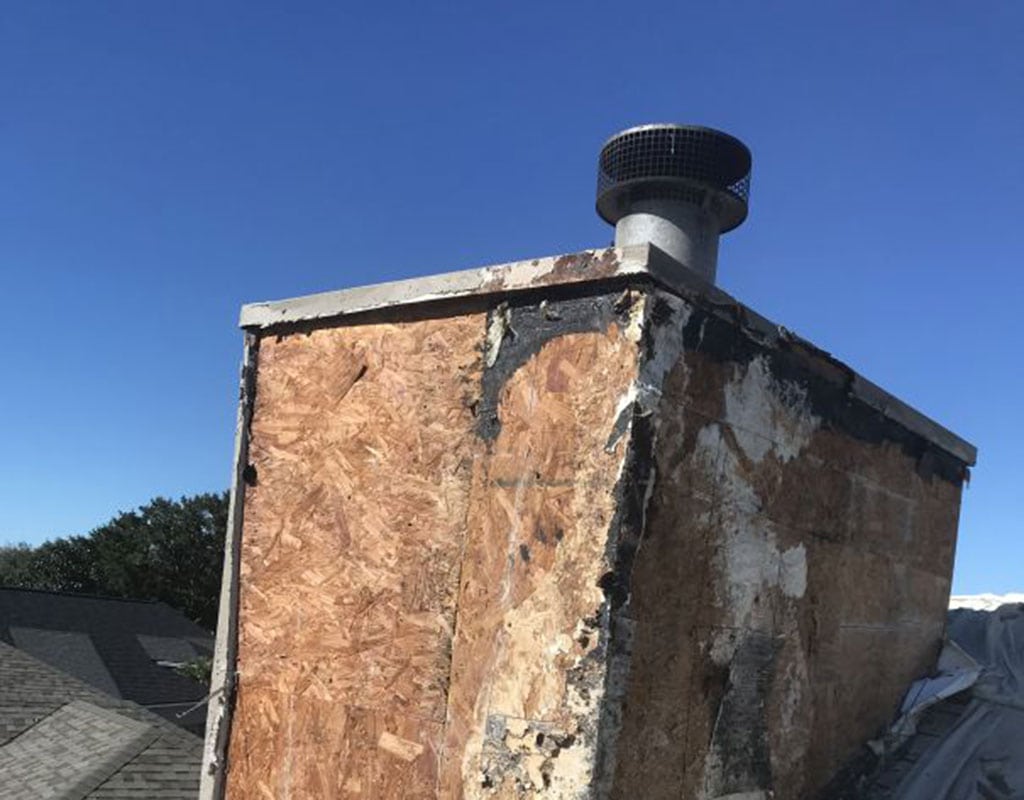
When water infiltrates behind a barrier EIFS system, it has nowhere to go. It sits against the wood sheathing — typically oriented strand board, or OSB — and stays there. Wood begins to rot when its moisture content reaches around 30 percent. In Orange County’s climate, a compromised EIFS installation can push sheathing well past that threshold within a few years of the initial failure.
The deceptive part is that the exterior surface can look completely intact while the wall behind it is actively deteriorating. There’s no visible crack, no obvious damage — just a finish coat doing its job on the outside while the structure behind it quietly breaks down. This is why EIFS problems in 1990s homes gained national attention. NBC’s Dateline covered the issue in 1999, and thousands of homeowners across the country discovered their walls had been rotting for years without any outward sign.
By the time visible symptoms appear — brown staining around window frames, bubbling or soft spots in the wall surface, or cracks that keep reopening after being patched — the damage has usually been building for a while. The staining you see around a window surround isn’t just cosmetic. It’s moisture that has been moving through the system long enough to leave a trace on the outside.
This is also why patching visible cracks doesn’t fix the underlying problem. If water is already behind the finish coat, sealing the surface just traps it further. The crack came back because the cause was never addressed — and it will keep coming back until it is.
For homeowners in neighborhoods like Dr. Phillips, Windermere, or Winter Park — areas with significant concentrations of 1990s-era executive homes — this isn’t a hypothetical. It’s a real risk that a walk around the perimeter and a moisture meter can either confirm or rule out.
How Do You Know If Your Home Has EIFS?
A lot of homeowners don’t actually know what their exterior cladding is made of. If your home was built between roughly 1985 and 2000, there are a few quick ways to check.
Traditional hardcoat stucco is cement-based and applied over masonry or metal lath. It’s dense, hard to the touch, and makes a solid sound when you knock on it. EIFS, by contrast, feels lighter and slightly flexible. If you knock on it, it sounds hollow. The surface often has a smoother, more uniform texture than traditional stucco, and if you look at the base of the wall near the foundation, traditional stucco typically has a visible termination edge while EIFS often runs closer to grade without a clear drainage point at the bottom.
If you’re still not sure, look at the window and door surrounds. EIFS systems often have a foam trim profile around openings — slightly raised, with clean geometric edges. Traditional stucco trim tends to be flatter and harder.
The only way to know for certain — and more importantly, to know whether moisture has already infiltrated — is a professional inspection with a moisture meter. A probe inserted into the wall at key points around windows, doors, and penetrations will tell you what the surface can’t. If moisture levels are elevated, that’s the beginning of a conversation about what comes next.
In Orange County, where the housing stock is concentrated in the 1990s construction window, getting that answer before it shows up on a home inspection report — or before you’re mid-sale and under time pressure — is worth the call.
EIFS Repair vs. Stucco Remediation: What’s the Difference?
These two terms get used interchangeably, but they describe very different scopes of work. Understanding the difference matters, because choosing the wrong approach is how a problem gets fixed on the surface and then comes back six months later.
Stucco repair addresses what’s visible — filling a crack, patching a chip, resealing around a window. It’s appropriate when the damage is genuinely surface-level and there’s no moisture intrusion behind the finish coat. Stucco remediation is the process of fixing the underlying defect. That typically means removing compromised sections of the EIFS system down to the substrate, assessing and repairing any damage to the sheathing or framing, correcting the installation deficiency that caused the failure, and reapplying the system using modern materials and techniques.
What Does the Stucco Remediation Process Actually Involve?
The process starts before anyone picks up a tool. A proper remediation begins with a moisture assessment — using a probe meter to test the wall at all the high-risk points: window corners, door frames, pipe penetrations, areas where two surfaces meet. This tells you whether the problem is contained or widespread, and it shapes everything about the scope and cost of the repair.
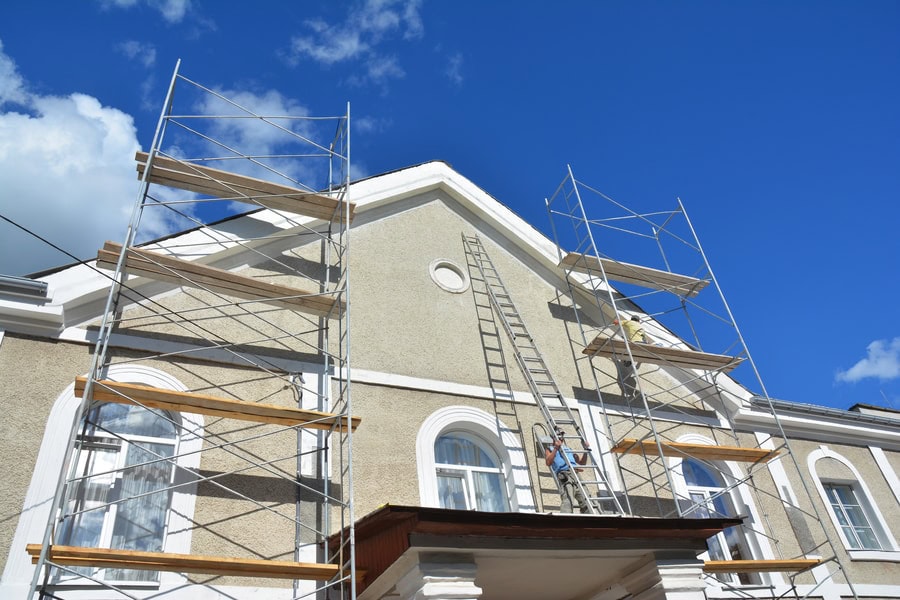
Once the assessment is complete and the affected areas are identified, the compromised sections of the EIFS system are carefully removed. This isn’t a whole-house demolition — it’s targeted work focused on the areas where moisture has infiltrated. When the finish layers come off, the actual condition of the sheathing becomes visible for the first time. If there’s rot, it gets addressed directly. If the framing has been compromised, that’s assessed and repaired before anything goes back on the wall.
After the substrate is clean, dry, and structurally sound, the system is rebuilt using current materials and installation standards. Modern drainable EIFS systems — the standard since the early 2000s — include a drainage plane that gives water a path out of the wall cavity rather than trapping it against the sheathing. When properly installed, these systems have moisture failure rates below one percent. That’s a significant improvement over the barrier systems that came standard in 1990s construction.
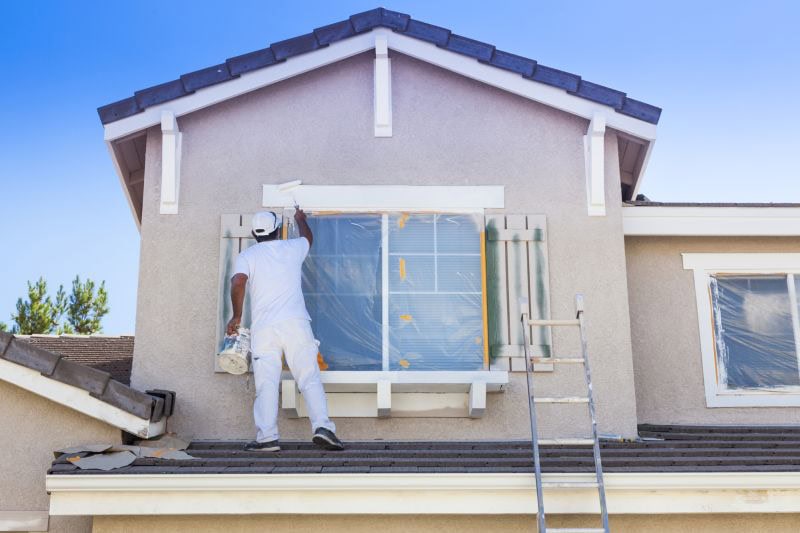
The final step involves matching the texture and color of the surrounding finish so the repair integrates seamlessly. For a 1990s home in an Orange County neighborhood where curb appeal affects resale value, a visible patch is its own kind of problem. Getting the texture and color right isn’t cosmetic vanity — it’s part of doing the job completely.
When the structural damage is significant, we coordinate with engineers to make sure the repair is calibrated to the actual structural need. That matters not just for the integrity of the fix, but for documentation purposes — if you ever need to demonstrate to an insurer or a future buyer that the repair was done correctly, having that professional oversight on record is worth something.
How to Choose the Right Stucco Remediation Contractors in Orange County
This is where a lot of homeowners get burned. They get three quotes that are wildly different in scope and price, have no framework for evaluating them, and either go with the cheapest option or delay the decision entirely. Neither tends to end well.
A few things to look for when evaluating contractors for EIFS remediation work in Orange County. First, Florida requires stucco contractors to hold a license through the state’s Department of Business and Professional Regulation. This isn’t just a formality — it means the contractor has passed state examinations, carries required insurance, and is accountable to a regulatory body. You can verify a license directly on the DBPR website. An unlicensed contractor doing structural work on your home creates liability that falls back on you.
Second, EIFS-specific experience matters in a way that general stucco experience doesn’t fully cover. EIFS requires specific materials, specific installation techniques, and a diagnostic approach that starts with moisture assessment rather than surface observation. A contractor who treats EIFS the same as hardcoat stucco will miss the root cause of the problem. Ask directly whether they’ve worked on 1990s barrier EIFS systems and what their inspection process looks like before any work begins.
Third, pay attention to how the estimate is structured. A written, itemized estimate that holds — with no surprise additions after work starts — is a basic standard of professional practice, but it’s not universal in this market. If a contractor gives you a verbal ballpark and moves straight to scheduling, that’s a sign to slow down.
We’ve been working on Central Florida’s aging EIFS stock for years. Our owner came up through foundation repair — 20 years of understanding how structures move, how water travels through building envelopes, and what it actually takes to fix a wall system that’s failing from the inside out. That background shapes how we approach every inspection and every remediation scope. We serve Orange County and five surrounding counties, and we offer online quote requests with a callback within 24 to 48 hours so you’re not left waiting when you’ve already found something that concerns you.
We also offer discounts for military members, first responders, and seniors — because those communities deserve straightforward, honest service as much as anyone.
What Orange County Homeowners Should Do Next
If your home was built in the 1990s and you’ve never had the exterior inspected for moisture intrusion, that’s the starting point. Not a patch, not a paint job — an actual assessment of what’s behind the finish coat. In Orange County, where the median construction year sits squarely in the EIFS era and the climate puts constant pressure on every exterior seal, the question isn’t whether 1990s homes are at risk. It’s whether yours has already crossed the line from a manageable repair into something more serious.
The good news is that early-stage remediation is targeted, far less disruptive than homeowners typically fear, and far less costly than deferred action. A problem caught before the sheathing is compromised is a different conversation than one discovered during a home sale or after a wet season’s worth of additional damage.
If you’ve seen staining around windows, cracks that keep coming back, or anything that made you stop and wonder — that’s worth following up on. We work with homeowners across Orange County and the surrounding area, and we’re straightforward about what we find and what it actually takes to fix it. Reach out for a moisture assessment, and let’s get you answers.