If your home was built in Orange County sometime between 1990 and 2005, there’s a reasonable chance the exterior isn’t traditional stucco — it’s EIFS. Maybe you knew that. Maybe you didn’t. Either way, if you’re noticing cracks near your windows, water stains inside after a hard rain, or soft spots when you press on the wall, you’re in the right place.
EIFS — and Dryvit specifically — isn’t inherently bad. But it does fail in specific, predictable ways, and when it does, most general contractors aren’t equipped to fix it correctly. This guide covers what EIFS actually is, how to spot problems early, what proper repair looks like, and what you should expect to pay in Orange County.
What Are Cracks in Stucco Actually Telling You?
Not every crack is an emergency, but in EIFS, no crack is truly cosmetic — especially around windows, doors, or any place where a pipe, outlet, or fixture penetrates the wall. Those are the spots where water gets in.
Traditional cement stucco can develop hairline cracks that stay dry and stable for years. EIFS is different. The system relies on sealed joints to keep moisture out, and once a joint fails, water has a direct path into the foam insulation board behind the finish coat.
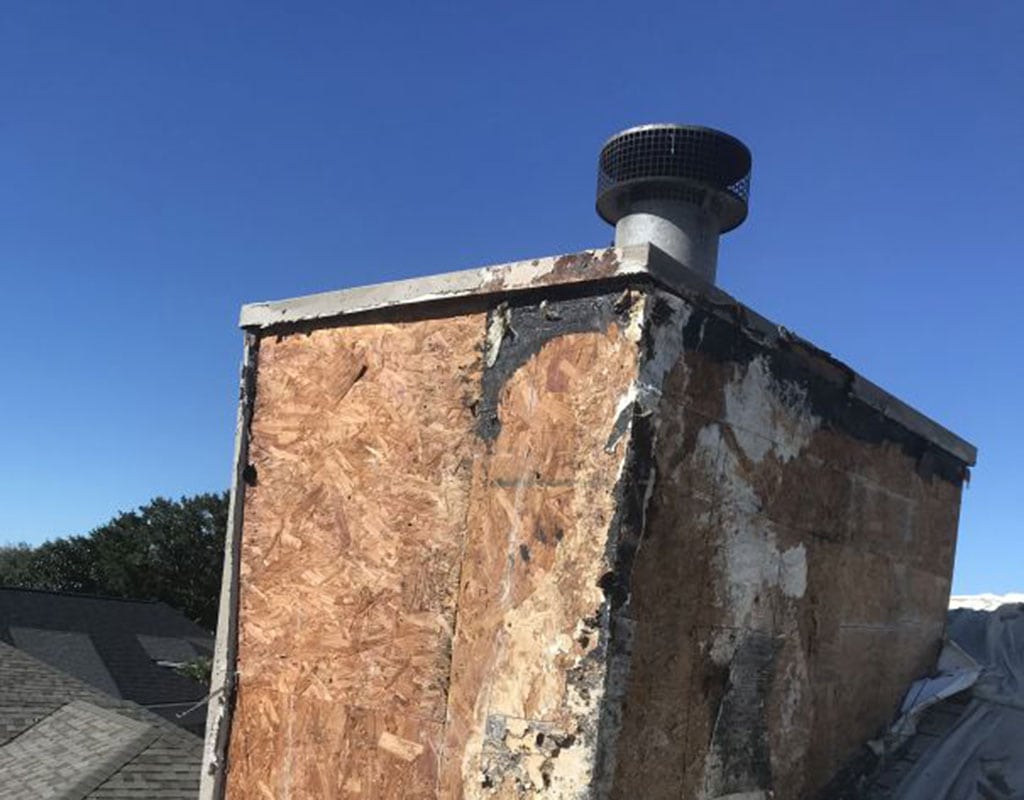
What makes this particularly frustrating for homeowners is that the exterior can look completely fine while rot is quietly spreading through the OSB sheathing behind the wall. By the time you see visible staining or feel a soft spot, the damage has often already moved beyond a simple repair. That’s not meant to alarm you — it’s just the reality of how barrier EIFS systems fail, and knowing it early is the whole point.
Stair-Step Cracks in Stucco: What They Mean for Orange County Homes
Stair-step cracks — those diagonal cracks that follow the mortar joints in a staircase pattern — are one of the more common things we see on homes throughout Orange County, and they’re worth taking seriously. They’re not random. They follow the path of least resistance through the wall system, and they almost always indicate movement in the structure beneath.
Central Florida is built largely on Myakka fine sand soil, which has low bearing capacity and is prone to settlement over time. When a foundation shifts — even slightly — it telegraphs that movement up through the wall. The stucco or EIFS cracks where the stress concentrates, and stair-step patterns at window corners or along wall sections are a reliable sign that something structural is driving the cracking, not just surface shrinkage.
This is actually one area where our background gives us a distinct advantage. Our owner spent 20 years in foundation repair before starting CF Stucco and Painting, which means when we see stair-step cracks, we’re not just looking at the surface — we’re thinking about what’s happening underneath. A contractor who only knows stucco might patch the crack and call it done. We want to understand why it cracked before we repair it, because a patch over an active structural issue won’t last.
For homes in communities like Windermere, Dr. Phillips, or Baldwin Park — areas built during the height of Orange County’s 1990s and early 2000s construction boom — stair-step cracking is particularly common. The soil conditions are consistent across much of the county, and those homes are now old enough that original sealants have degraded and any minor foundation movement has had years to express itself in the exterior cladding.
If you’re seeing stair-step cracks, get them looked at. Not because it’s definitely a structural catastrophe — it often isn’t — but because the difference between a $300–$800 crack repair and a multi-thousand-dollar remediation is usually how long you waited.
Stucco Cracks: When to Worry and When to Watch
The honest answer is that the location of a crack matters more than the size of it. A hairline crack in the middle of a flat wall section is usually low priority. A crack at the corner of a window frame — even a small one — is a different conversation entirely, because that’s exactly where wind-driven rain enters during Orange County’s summer storm season.
From June through September, Central Florida gets daily afternoon thunderstorms. That’s not hyperbole — it’s the regional weather pattern. When those storms hit, they drive rain horizontally against your exterior walls. If there’s any gap in the sealant at a window corner, around a dryer vent, or where a pipe exits the wall, water follows it in. The EIFS foam board absorbs that moisture, and because barrier EIFS systems — the kind installed on most homes built before about 2003 — have no drainage plane, that water has nowhere to go.
The rule of thumb we use: if a crack is at or near any penetration in the wall (windows, doors, outlets, fixtures, hose bibs), treat it as a potential water entry point until proven otherwise. That means an inspection, not a tube of caulk from the hardware store. DIY repairs on EIFS systems almost always fail because they don’t address the underlying moisture issue and often use incompatible materials that can actually trap water rather than let it escape.
Dryvit itself — the manufacturer — recommends that all EIFS repairs be performed by a professional contractor experienced specifically with EIFS application. That’s not a sales pitch; it’s in their own documentation.
EIFS Stucco Repair: Why It’s Not the Same as Regular Stucco
This is the part most homeowners don’t know until they’ve already had a bad experience. EIFS is a multi-layer system — water-resistive barrier, foam insulation board, base coat with fiberglass mesh reinforcement, finish coat — and repairing it correctly means understanding how all those layers interact. You can’t just skim-coat over a damaged section with a cement mix and expect it to hold.
The materials are different. The techniques are different. And critically, the moisture assessment that needs to happen before any repair work begins is different. A contractor who approaches EIFS like traditional stucco will either trap moisture in the repair or create a bond failure that shows up six months later. We’ve seen it happen on homes across Orange County, and it’s almost always more expensive to fix a bad repair than it would have been to do it right the first time.
EIFS Inspection: What a Proper Assessment Actually Involves
An EIFS inspection isn’t a visual once-over. The whole problem with these systems is that the damage hides. A proper inspection involves more than looking at the surface — it requires testing the moisture content of the underlying sheathing, typically using a pin probe at suspect locations around windows, doors, and penetrations.
The threshold that matters: a moisture reading of 19% or higher in the OSB sheathing indicates active water intrusion and potential structural damage. Below that, you may have a sealant issue that’s caught early. Above it, you’re likely looking at rot in the sheathing and possibly the framing behind it. That distinction changes the scope and cost of the repair significantly.
A good EIFS inspection also looks at the condition of all sealant joints — the caulk lines around every window, door, and penetration. Sealant has a service life. On homes built in the 1990s and early 2000s in communities like Celebration, Lake Nona, or Ocoee, that original sealant is now 20 to 30 years old. It cracks, shrinks, and separates from the substrate over time, and those gaps are where the moisture story begins. Industry guidance recommends annual visual checks of sealant condition on barrier EIFS systems — most homeowners have never done one.
The inspection also needs to identify what type of EIFS system you have. Barrier EIFS — the dominant system installed through most of the 1990s — has no drainage plane. Modern drainable or water-managed EIFS systems do. If you have a barrier system that’s showing moisture intrusion, the right repair often involves upgrading to a drainable configuration, not just patching the surface. That’s a bigger conversation, but it’s the one that actually solves the problem long-term rather than postponing it.
The cost of stucco inspection for this kind of assessment varies based on the size of the home and the number of suspect locations, but it’s a fraction of what a full remediation costs if moisture damage goes undetected. Getting an inspection before you see visible damage is always the cheaper path.
EIFS Repair Costs and Rot Repair in Orange County
Let’s talk numbers, because vague pricing is one of the most frustrating things about this industry. Here’s what the ranges actually look like for EIFS stucco repair in Orange County.
Minor crack repairs — sealant joint failures caught early, no moisture intrusion into the sheathing — typically run $300 to $800. Small repairs involving limited damaged sections but no underlying rot generally fall in the $8 to $15 per square foot range. Once water damage enters the picture, costs move to $40 to $50 per square foot, because now you’re not just replacing the EIFS finish — you’re removing damaged sections, drying out or replacing the OSB sheathing, addressing any rot or mold in the framing, and then rebuilding the full system from the substrate out. Large repairs involving multiple wall sections or significant water intrusion can reach several thousand dollars or more.
The wood rot piece is worth understanding on its own. When moisture sits in EIFS foam board long enough, it reaches the sheathing. OSB — the oriented strand board used as wall sheathing on most homes built in this era — is particularly vulnerable to moisture damage. Once it starts to rot, it loses structural integrity and has to be replaced before any new EIFS system can be installed over it. We handle that substrate repair as part of our scope, which matters because a contractor who only does the stucco finish and leaves compromised sheathing in place is setting you up for the same problem again in a few years.
Water damage wall repair that involves structural framing — not just sheathing — is a more serious escalation, and for those situations we coordinate with engineers to make sure the repair meets Florida Building Code requirements. Orange County requires permits for structural stucco repairs, and those permits exist for good reason. Any contractor who suggests skipping that step on a structural repair is not someone you want on your house.
For context on the replace-versus-repair decision: full EIFS replacement on two walls can reach $5,000. Replacing stucco with siding (like HardiePlank) runs higher and involves a completely different scope of work, including permitting, sheathing inspection, and new weather-resistant barrier installation. Fiber cement lasts 50 or more years, which makes it a legitimate long-term option for homes with severely compromised EIFS — but it’s not always necessary, and a properly repaired and upgraded drainable EIFS system can perform well for decades. The right answer depends on the extent of the damage, not just a preference for one material over another.
Match Stucco Color and Texture After Repair
Color matching on EIFS finish coats is part science, part experience. The finish coat is an acrylic material that can be tinted, but the challenge is that existing coatings fade over time — especially in Orange County’s intense UV exposure. A good contractor will work from the original color specification if it’s available, or sample the existing finish and work with cosmetic masonry specialists to get as close as possible.
Texture matching requires applying the finish coat with the same technique used originally — whether that’s a dash, float, skip trowel, or another pattern. It’s not something you can approximate with a different method and expect it to look right. We work with cosmetic masonry specialists for texture matching on EIFS repairs, which is how we get seamless results rather than a visible patch.
Finding a Licensed Stucco Contractor in Orange County for EIFS Repair
The most important thing to know when hiring for EIFS work in Florida is that not every licensed contractor is qualified for it. Florida’s DBPR licensing covers stucco work under certified general or residential contractor classifications, but a general contractor license doesn’t automatically mean someone understands EIFS systems, moisture dynamics, or the specific failure patterns common to 1990s-era construction in Central Florida.
Ask directly: have you repaired EIFS systems specifically? Do you assess moisture before starting work? Do you handle the underlying rot if you find it? Those questions separate contractors who understand the system from those who’ll patch the surface and move on.
If you’re in Orange County and you’re dealing with cracks, soft spots, water stains, or you just want to know what you’re actually working with before a home sale or HOA inspection, CF Stucco and Painting is worth a call. We offer upfront estimates after inspection, transparent pricing with no hidden fees, and we handle the full scope — from moisture assessment through substrate repair, EIFS restoration, texture and color matching, and exterior painting. Reach out to our stucco repair team online and we’ll get back to you within 24 to 48 hours.
—
FREQUENTLY ASKED QUESTIONS