You’ve probably noticed a crack in your stucco and wondered whether a coat of elastomeric paint would just take care of it. It’s a reasonable assumption — elastomeric products are marketed as flexible, crack-bridging, waterproof. But here’s the thing: elastomeric coatings don’t repair existing cracks. They protect against new ones forming after the repair is done.
That distinction matters a lot in Orange County, where the combination of heat, humidity, and afternoon downpours means a crack that looks minor in April can be wicking moisture into your walls by July. Understanding how elastomeric stucco crack repair actually works — and what has to happen before any coating goes on — is the difference between a repair that lasts and one you’re redoing in a year.
What Elastomeric Stucco Crack Repair Actually Does
Elastomeric patching compounds and coatings are acrylic-based materials that stay permanently flexible after they cure. Professional-grade elastomeric coatings can stretch anywhere from 200 to 600 percent of their original size without fracturing — which is why they handle the daily thermal expansion and contraction that Florida’s heat cycles put stucco through. Think of it as a rubber membrane bonded to the surface of your wall.
What they cannot do is seal a crack that’s already open. Applying elastomeric paint over an existing crack traps moisture inside the wall rather than keeping it out. The coating bridges the surface while water continues to move through the crack underneath — and in Orange County’s humidity, that moisture doesn’t evaporate. It sits there, and over time it leads to mold, delamination, and wood rot behind the stucco.
The correct sequence is: repair the crack first, address whatever caused it, then apply the elastomeric topcoat. That order isn’t optional — it’s actually a standard requirement from coating manufacturers for their warranties to apply.
Concrete Stucco Repair: How the Crack Type Determines the Method
Not all stucco cracks are treated the same way, and the material used depends on what kind of crack you’re dealing with. Most homes in Orange County are CBS construction — concrete block structure — with hardcoat stucco applied over the block. This is traditional Portland cement stucco, and it cracks in predictable patterns based on thermal movement, settling, and moisture cycling.
For small, static hairline cracks, we work a brush-grade acrylic elastomeric patching compound into the crack and feather it out at the edges. The goal is to fill the crack completely, blend the edges into the surrounding surface, and create a flexible bond that moves with the stucco rather than against it.
For larger static cracks — anything with meaningful width — the crack gets raked out first to form a V-shaped groove. This gives the knife-grade patching compound something to grip. You’re not just filling a gap; you’re creating a mechanical bond that holds even as the stucco continues to move seasonally.
Dynamic cracks are a different situation entirely. These are cracks that are still moving — caused by ongoing settlement, structural shifting, or a foundation issue that hasn’t stabilized. For dynamic cracks wider than 1/16 of an inch, polyurethane sealant is the correct fill material. It stays flexible enough to accommodate movement without tearing away from the edges. Using a rigid cement patch on a dynamic crack is one of the main reasons repairs fail and cracks reopen within months.
This is where our background in foundation repair becomes relevant. Before starting CF Stucco and Painting, our owner spent 20 years in foundation work. He understands the difference between a crack caused by normal thermal cycling and one that’s telling you something is moving underneath. That diagnostic step — identifying why the crack is there — is what separates a repair that holds from one that’s just cosmetic.
Why Orange County Stucco Cracks Keep Coming Back
The most common complaint we hear from homeowners across Orange County — from College Park to Windermere to the newer communities in Lake Nona and Horizon West — is that their stucco cracks were repaired and came back within a year. Sometimes faster. The crack gets patched, the wall gets painted, and by the next rainy season it’s open again.
The reason is almost always the same: the surface was treated without addressing the cause.
Orange County sits on Myakka fine sand soil, which is loose, poorly draining, and prone to settling. Homes built during the 1990s and early 2000s — and there are a lot of them in established neighborhoods like MetroWest, Thornton Park, and Winter Park — are now 25 to 35 years into their lifecycle, and the stucco systems on many of them were never designed with proper moisture management in mind. Flashing around windows was done wrong, drainage planes were skipped, and moisture barriers were either absent or have since degraded.
When moisture gets behind the stucco, it doesn’t just stay there. It moves. It expands when it heats up and contracts when it cools, and it takes the stucco with it. That’s what creates the crack in the first place. Patching the surface without fixing the moisture pathway means the same force that opened the crack the first time is still at work. The patch fails. The crack returns.
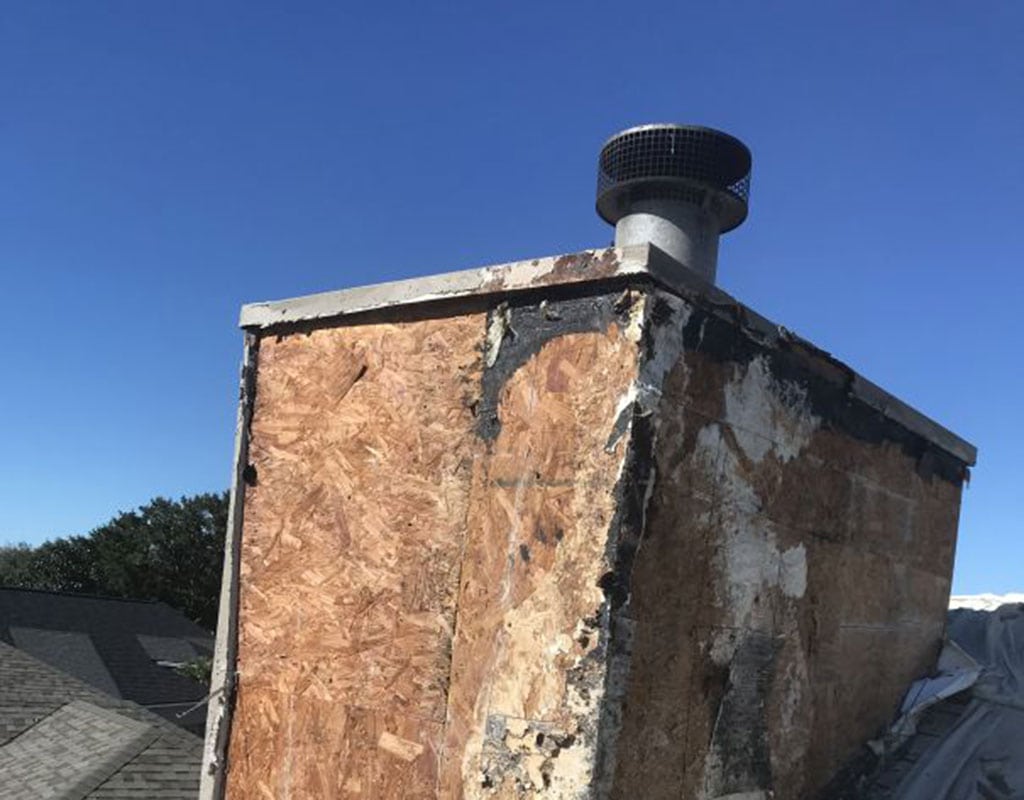
The 1990s EIFS systems common across Orange County, Seminole, and Volusia Counties are especially prone to this. EIFS — Exterior Insulation and Finish System, sometimes called synthetic stucco — was installed widely during the building boom of that era. Older installations were designed to be waterproof from the outside, but they didn’t allow moisture that got in to escape. That trapped moisture has been degrading these systems from the inside for decades. By now, many of them are failing in ways that look like simple surface cracks but are actually signs of deeper moisture damage behind the substrate.
Repairing an EIFS failure the same way you’d repair a hairline crack in hardcoat stucco is a mistake that leads to the same outcome: the repair fails, the damage continues, and the homeowner is back to square one.
Stucco and Paint Repair: Getting the Sequence Right
One of the most common points of confusion for homeowners is whether stucco crack repair and exterior painting are separate jobs or part of the same process. The short answer is: they’re connected, and the sequence matters.
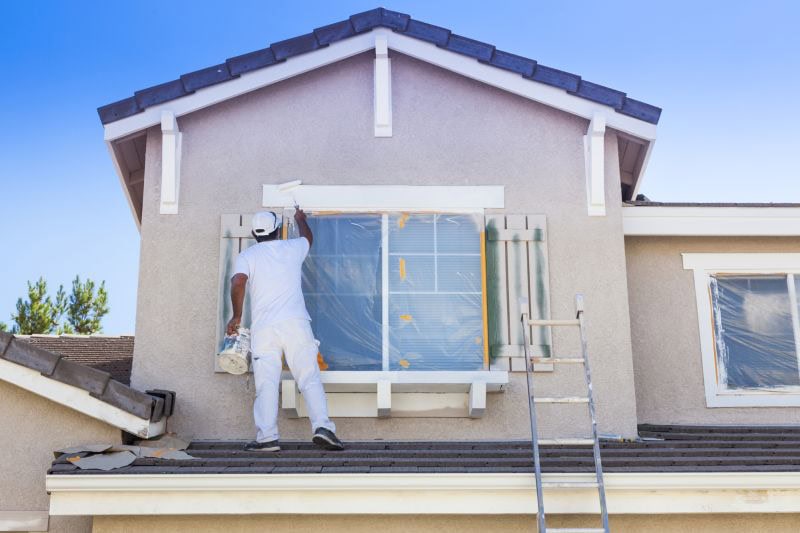
Painting before repairing is the single most common mistake. It seals moisture into the wall, prevents proper adhesion of the patching compound, and guarantees the repair will fail. The correct order is diagnose, repair, prime, then coat — and each step depends on the one before it being done right.
The elastomeric topcoat is the final layer, not a shortcut to skip the repair work. Once the cracks are properly filled, feathered, and cured, a high-quality acrylic primer unifies the surface porosity so the topcoat adheres evenly. Then the elastomeric coating goes on — and from that point forward, it does its job: bridging any new hairline cracks that form from thermal movement, resisting wind-driven rain, and creating a breathable membrane that lets moisture vapor escape from inside the wall without letting water in from outside.
How to Match Stucco Texture After Repair
This is the question that comes up on almost every job, and it’s worth being honest about: stucco texture matching is genuinely difficult, and anyone who tells you it’s always perfect isn’t being straight with you.
The challenge is that stucco texture is created by hand. The aggregate size, the application technique, the tool used, and even the humidity on the day it was applied all affect the final look. When you repair a section of stucco that was applied 20 or 30 years ago, you’re trying to replicate conditions that no longer exist. The existing stucco has also faded and weathered in ways that fresh material simply won’t match right away.
That said, a professional repair should get close enough that you’re not looking at an obvious patchwork wall. The key is in the feathering — blending the edges of the repair smoothly into the surrounding surface before the compound cures, using a flexible trowel to avoid hard lines. After the repair dries, the primer coat helps unify the porosity between the old stucco and the new material, which makes a significant difference in how the final paint coat looks.
For homeowners in Orange County’s many HOA communities — Laureate Park, Horizon West, and the established neighborhoods around Winter Garden and Oviedo — a visible patch line can still trigger a compliance notice even after a repair. We work with cosmetic masonry specialists specifically for texture and color matching on these jobs, because it requires a different skill set than the structural repair work.
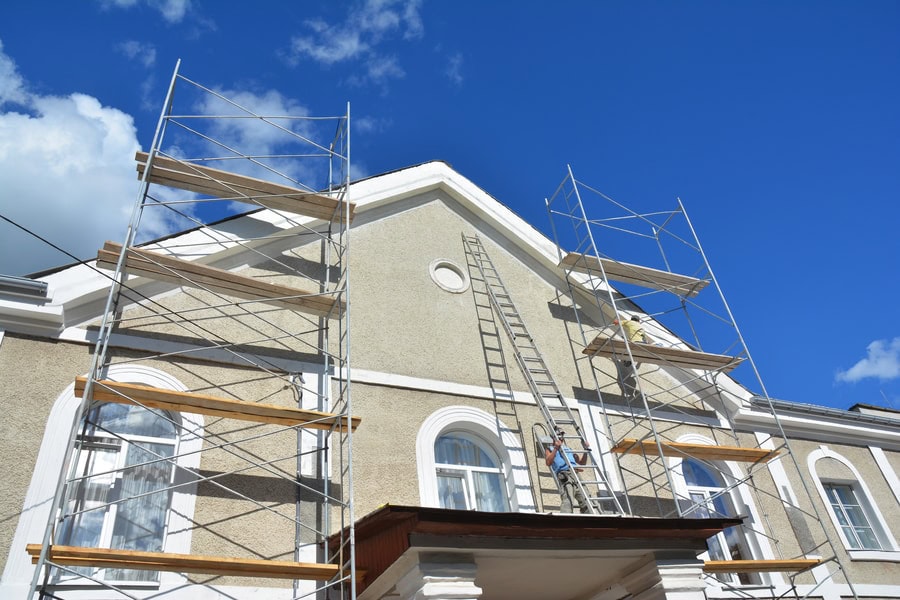
When the existing stucco is in rough overall condition — heavily weathered, inconsistent texture across the wall, or patched multiple times over the years — the most honest answer is sometimes that a full repaint is the only way to achieve a result that looks intentional. A full exterior repaint with elastomeric coating unifies everything under a single consistent finish, which eliminates the texture-matching problem entirely. It’s not always the right call, but it’s worth discussing before you commit to a patch-and-paint approach on a wall that’s seen better days.
What to Ask Before Hiring a Stucco Crack Repair Contractor in Orange County, FL
If you’ve had a stucco repair fail before, or if you’re dealing with cracks that keep coming back, the questions you ask before hiring matter more than the price on the estimate.
The first thing to verify is licensing. In Florida, stucco work falls under the Plastering and Stucco specialty contractor category administered by the DBPR — the Department of Business and Professional Regulation. Ask for the license type and number, then look it up through the DBPR portal before you agree to anything. Also ask for a Certificate of Insurance that shows both general liability and workers’ compensation coverage. A contractor who hesitates on either of those is a contractor worth walking away from.
Beyond credentials, ask how they determine what caused the crack. A contractor who can only describe what they’ll do to the surface — fill it, paint it — without discussing why the crack is there isn’t giving you a complete picture. The cause matters, especially in Orange County, FL, where soil conditions, aging EIFS systems, and moisture management failures are all common contributors. A repair that doesn’t address the cause is a repair you’ll be paying for again.
Ask specifically about crack type. There’s a real difference between a static hairline crack from thermal movement, a wider static crack that needs a V-groove and knife-grade compound, and a dynamic crack that requires polyurethane sealant and possibly a structural assessment. If the contractor treats all three the same way, that’s a red flag.
Ask about texture matching, especially if you’re in a neighborhood with an active HOA. Find out whether they’ll be feathering the repair into the surrounding stucco, what primer they use before the topcoat, and whether a full repaint might be a better option given the condition of your exterior.
And ask about the timeline — not just when they can start, but how long the repair and cure process takes before painting. Rushing through cure time is another common reason repairs fail. In Orange County’s humidity, proper cure time matters more than it would in a drier climate.
Getting Elastomeric Stucco Crack Repair Right in Orange County, FL
Elastomeric stucco crack repair works — when it’s done in the right order, with the right materials for the crack type, and with the underlying cause addressed rather than painted over. In Orange County’s climate, where 74% average humidity and 50-plus inches of annual rainfall mean moisture is always looking for a way in, the difference between a repair that holds and one that fails usually comes down to that diagnostic step.
Whether you’re dealing with hairline cracks from daily thermal cycling, aging EIFS on a 1990s home, or cracks near windows and doors that suggest something deeper is going on, the repair process needs to match the actual problem — not just the surface symptom.
If you’re ready to stop guessing and get a clear answer on what your stucco actually needs, CF Stucco and Painting serves Orange County, FL and the surrounding region with the kind of straightforward, thorough approach that makes repairs last. Reach out for an inspection and upfront estimate — no surprises, no pressure, just an honest look at what’s going on with your exterior.