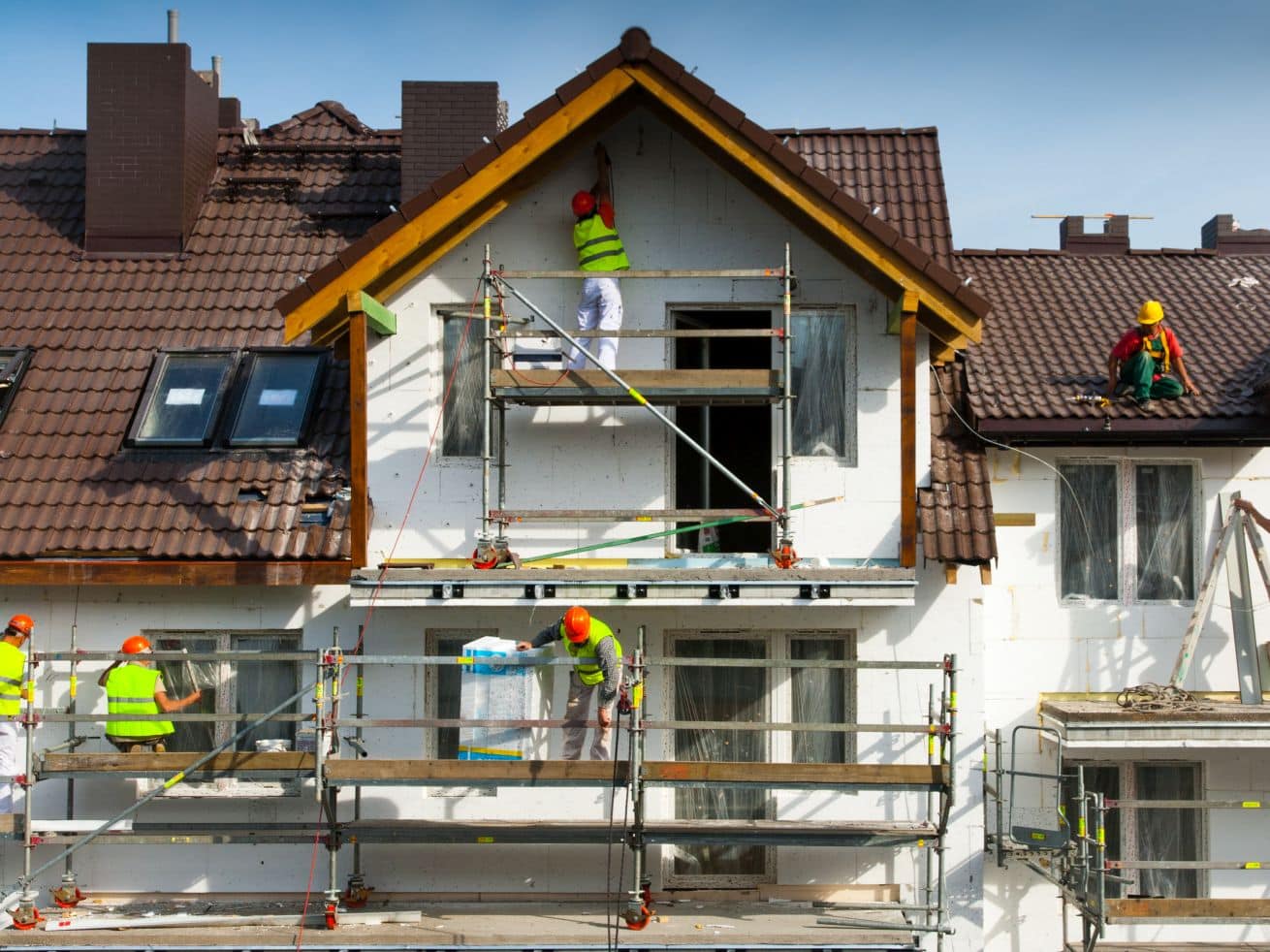
You’re standing in your driveway, looking at peeling paint and faded siding, doing the math in your head. Paint, brushes, maybe rent a sprayer. Feels doable. Feels cheaper than hiring someone. And maybe it is—if everything goes perfectly.
But here’s the thing—most homeowners who go that route end up repainting sooner, spending more, or calling a professional to fix what went wrong. Not because they’re incapable, but because exterior painting in Florida is a different animal. The humidity alone will humble you. The afternoon storms don’t care about your schedule. And cheap paint? It’ll show you exactly why it was cheap.
This isn’t about scaring you away from DIY. It’s about giving you the full picture so you can make the right call for your home, your schedule, and your wallet. Let’s talk about what really separates a solid paint job from one that fails in two years.
DIY Exterior Painting: What It Actually Costs
Most people think DIY means saving money. And on paper, it does. You’re cutting out labor, which is usually 75% to 95% of a professional quote. That’s real savings.
Until you start adding it up. Paint runs $50 to $100 per gallon, and you’ll need 15 to 30 gallons depending on your home size. Brushes, rollers, drop cloths, painter’s tape, caulk, sandpaper, primer. Then there’s the ladder situation—if you don’t own a good extension ladder, you’re renting or buying. Same goes for a sprayer if you want even coverage.
By the time you’re done, you’re looking at $500 to $2,000 in materials. That’s the number people see and think they’re winning. But there’s another cost nobody talks about until it’s too late: your time.
The Hidden Cost of Your Time and Mistakes
Let’s say you make $25 an hour at your day job. A DIY exterior paint project takes most homeowners 80 to 96 hours—spread across four to six weekends. That’s $2,000 to $2,400 in lost earning potential, even if you’re not actually working those weekends.
And that’s assuming everything goes smoothly. No weather delays. No trips back to the store for more paint or the right primer. No realizing halfway through that you didn’t prep the surface correctly and now the paint’s already bubbling.
Mistakes are expensive. Bought the wrong sheen? That’s another $200. Didn’t clean the surface well enough and paint’s peeling after three months? Now you’re either living with it or redoing the whole thing. And if you’re redoing it, you’ve just doubled your material cost and added another month of weekends.
Then there’s the stuff that’s genuinely hard to do without experience. Cutting in around windows and trim. Getting even coverage on textured stucco. Knowing when humidity is too high to paint—spoiler: in Florida, that’s most of the time. These aren’t things you learn from a YouTube video. They’re things professional painters get right because we’ve done it a thousand times.
The real cost of DIY isn’t just materials. It’s the time you won’t get back, the mistakes you’ll pay for twice, and the chance that in two years, you’ll be hiring someone to fix it anyway.
Florida’s Climate Makes DIY Even Harder
If you lived in Colorado or Michigan, DIY exterior painting would be a different conversation. But you’re in Central Florida, where the weather is actively working against you.
Humidity here regularly sits above 70%, spiking past 80% in summer. Paint needs to dry and cure properly, and when there’s that much moisture in the air, it doesn’t. The result? Bubbling, streaking, and peeling within months. Experienced painters know to work in the early morning or late fall through early spring when humidity drops closer to 40% to 60%. Most DIYers don’t.
Then there’s the afternoon storms. You can start painting at 10 a.m. under clear skies and have rain rolling in by 2 p.m. If you’ve just finished a section and it’s not fully dry, that rain just ruined hours of work. We plan around weather patterns. We know the forecast. We know how long paint needs before it can handle moisture.
And let’s talk about the sun. Florida’s UV exposure is brutal. It fades paint faster than almost anywhere else in the country, which means you need UV-resistant formulas and proper application to make it last. Cheap paint or the wrong type won’t hold up. Within a year, you’re looking at chalking—that powdery residue that means your paint is breaking down.
Coastal areas add another layer. Salt in the air accelerates corrosion and damages paint films, especially on metal surfaces. If you’re near the coast and you don’t account for that, your paint job has an expiration date you didn’t plan for.
Florida’s climate isn’t just a minor inconvenience. It’s the reason homes here need repainting every five to seven years instead of every ten. And it’s the reason DIY jobs often fail faster than professional ones. The conditions demand expertise, not just effort.
What Professional Home Painters Actually Bring to the Table
Hiring a professional isn’t just about paying someone to hold a brush. It’s about getting the job done right the first time, with materials and methods that actually hold up in Florida’s climate.
We understand the timing. We know not to paint during peak humidity, not to work right after rain, and not to apply paint when dew is forming. We use moisture-resistant primers, acrylic latex paints designed for high humidity, and UV-resistant formulas that won’t fade in six months.
We also know how to prep. And prep is everything. We’ll pressure wash, scrape loose paint, sand rough spots, fill cracks, and prime properly. That’s the foundation of a paint job that lasts seven to ten years instead of two. DIYers often skip or rush prep because it’s tedious and time-consuming. We don’t, because we know what happens when you do.
Best Exterior House Painters Know How to Handle Florida Homes
Not all painters are created equal, and in Florida, that matters more than you think. The best exterior house painters aren’t just experienced—we’re experienced with the specific challenges Central Florida throws at us.
Stucco is everywhere here, and it’s not easy to paint. It’s porous, textured, and prone to cracking. We know how to repair those cracks, seal them properly, and apply elastomeric paint that flexes with the material instead of cracking over it. We know that stucco needs breathable paint so trapped moisture can escape without causing blistering.
Wood siding is another story. In Florida’s humidity, wood expands and contracts constantly. Paint that’s too rigid will crack. Paint that’s not applied over a proper sealant will let moisture in, leading to rot. We know which products work and which don’t. We’ve seen what fails, and we don’t repeat it.
Then there’s the detail work—trim, soffits, fascia, gutters. These areas take time and precision. A sloppy job shows immediately, and it doesn’t just look bad. It leaves gaps where water can get in. We treat these areas with the same care as the main surfaces because we know how much damage a small oversight can cause.
And here’s something most people don’t think about: safety. Painting a two-story home means spending hours on a ladder, often at awkward angles, carrying equipment. Ladder falls send 500,000 people to the ER every year. We have the training, the equipment, and the insurance to do that work safely. You don’t.
We also communicate. We walk you through the process, explain what we’re doing and why, and give you a timeline you can count on. We don’t disappear for days or leave you guessing. And when the job’s done, we clean up. No paint cans in your yard, no tape stuck to your windows, no mess left behind.
That’s the difference between someone who paints houses and someone who’s actually good at it.
What to Look for When Hiring Professional Painters
If you’re going to hire someone, hire the right someone. Not the cheapest quote. Not the guy who can start tomorrow. The right one.
Start with licensing and insurance. In Florida, painters should be licensed for the county where they’re working. That license means they’ve met certain standards and can legally operate. More importantly, they should carry general liability insurance and workers’ compensation. If someone gets hurt on your property and they’re not insured, you could be on the hook for medical bills and legal fees. Always ask to see current certificates. Not expired ones. Current.
Experience matters, especially with Florida-specific work. Ask how long they’ve been painting in Central Florida. Ask if they’ve worked with stucco, with wood siding, with homes near the coast. Ask for references and actually call them. Look at their portfolio. If they can’t show you past work or give you names to contact, that’s a red flag.
Get everything in writing. The estimate should be detailed—not just a total number, but a breakdown of prep work, materials, labor, and timeline. If something’s vague, ask. If they’re dodging questions, walk away. A good contractor wants you to understand exactly what you’re paying for.
Ask about the paint they use. Are they using quality acrylic latex designed for Florida’s climate? Are they applying primer? How many coats? What’s the warranty? If they’re planning to slap one coat of cheap paint over dirty siding, you’re going to regret it in a year.
And pay attention to communication. If they’re hard to reach now, they’ll be hard to reach when there’s a problem. If they’re pushy or dismissive, that’s not going to get better. You want someone who listens, explains, and treats your home like it matters.
Finding the right contractor doesn’t have to be complicated if you know what questions to ask and what answers matter.
Common Questions About Hiring Local Home Painters
When you’re comparing options, a few questions come up over and over. Here’s what most homeowners in Orange County, FL want to know before making a decision.
How much does professional exterior painting actually cost? For most homes in Central Florida, you’re looking at $3,000 to $7,000 depending on size, condition, and materials. That includes prep work, quality paint, and labor. DIY might cost $500 to $2,000 in materials, but when you factor in your time and the risk of mistakes, the gap closes fast.
How long does a professional paint job last? With the right prep and quality materials, a professional exterior paint job in Florida should last seven to ten years. DIY jobs, especially if prep was rushed or the wrong paint was used, often start showing problems in two to three years.
Do I really need to hire local home painters, or can any painter do the job? Local experience matters. Painters who work in Central Florida regularly understand the humidity, the storms, the UV exposure, and the materials that hold up here. Someone from out of state or out of area might not know those details, and that shows up in how long the job lasts.
What’s the difference between a cheap quote and a fair quote? A cheap quote usually means corners are being cut somewhere—less prep, cheaper paint, fewer coats, or no insurance. A fair quote reflects the actual work required to do the job right. If one estimate is way lower than the others, ask why. The answer will tell you what you need to know.
Can I paint over old paint, or does it need to be removed? It depends on the condition. If the old paint is in good shape—no peeling, cracking, or bubbling—you can usually paint over it after cleaning and light sanding. If it’s failing, it needs to be scraped off. Painting over bad paint just means the new paint will fail too.
Making the Right Choice for Your Home
DIY exterior painting can work. For small projects, single-story homes, or homeowners who genuinely enjoy the work and have the time, it’s a viable option. But for most people, especially in Florida, the math doesn’t add up the way they think it will.
The upfront savings disappear when you factor in time, mistakes, and the reality that a DIY job in this climate often needs redoing in half the time a professional job would. And if you’re dealing with a multi-story home, stucco, or any kind of surface damage, DIY stops being a smart choice and starts being a gamble.
We’re not just charging you for labor. We’re charging you for expertise, efficiency, and results that last. We’re saving you from spending your weekends on a ladder, from buying tools you’ll use once, and from repainting in three years because the first attempt didn’t hold up.
If you’re in Orange County, FL or anywhere in Central Florida and you’re weighing your options, we’ve been doing this for over 20 years at CF Stucco and Painting. We know the climate, the materials, and the prep work that actually makes a difference. Free estimates, clear communication, and a track record that speaks for itself. Sometimes the right call is just letting the pros handle it.