The storm passed. Your house looks mostly fine. Maybe there’s a crack near a window you didn’t notice before, or a section of stucco that looks a little off. It’s tempting to chalk it up to cosmetic wear and move on.
Here’s the problem: in Orange County, Florida, “mostly fine” can become genuinely expensive within a matter of days. The combination of 74% average humidity and 50-plus inches of annual rainfall means that once water finds a way behind your stucco, it doesn’t just sit there — it moves, it soaks, and it creates conditions where mold can start growing within 24 to 48 hours of intrusion.
This guide will help you understand what you’re actually looking at after a storm, what warrants immediate attention, and why the first 48 hours matter more here than almost anywhere else in the country.
How to Tell If Your Stucco Is Actually Damaged After a Storm
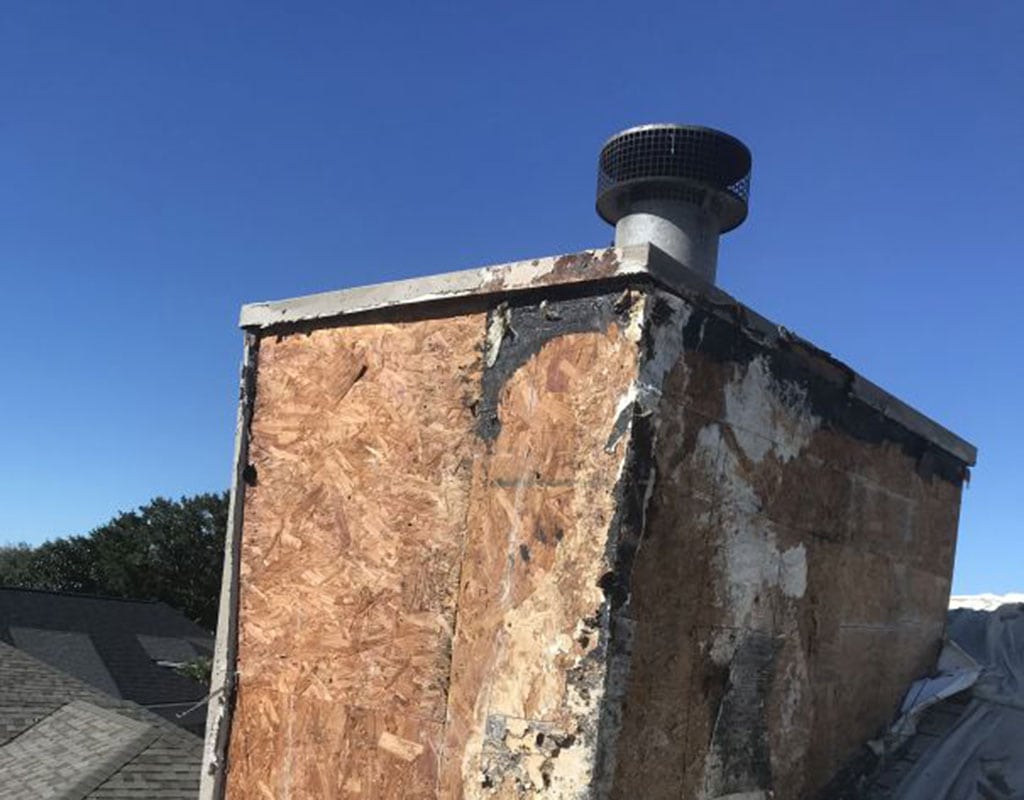
Start outside. Do a slow walk around the full perimeter of your home while the light is good — ideally within the first day after a storm. You’re looking for cracks that weren’t there before, sections that look discolored or water-stained, areas where the surface looks like it’s separating or bubbling away from the wall, and any spots where the stucco sounds hollow when you knock on it with your knuckle.
That last one matters more than most people realize. A hollow sound means the stucco has physically separated from what it’s supposed to be attached to. That’s not a surface problem — it’s a structural failure, and patching over it without addressing the separation underneath will only delay a bigger repair.
Pay close attention around windows, doors, and anywhere the roofline meets an exterior wall. These are the spots where water finds its way in first, and where the damage is most likely to be hiding behind an otherwise normal-looking surface.
What Crack Size Actually Tells You About Stucco Storm Damage
Not every crack is a crisis. Hairline cracks — thin, surface-level lines — are a normal result of the daily thermal expansion and contraction that every Florida home goes through. The sun heats your exterior walls during the day, temperatures drop at night, and over time that movement leaves its mark. In most cases, those fine cracks are cosmetic and manageable.
What changes the conversation is width. A crack wider than about one-eighth of an inch — roughly the thickness of two pennies stacked together — is a different category of problem. When a crack that size appears after a storm, or when an existing crack visibly widens after one, it’s telling you something structural happened. Either the storm introduced enough wind pressure to shift the wall system, or water has already been working behind the surface long enough to compromise the material underneath.
Horizontal cracks deserve extra attention. Vertical cracks tend to follow the natural movement of a wall. Horizontal ones often indicate that something is pushing outward from behind — which in a stucco system usually means moisture has been accumulating in a place it was never supposed to reach.
The homes most vulnerable to this kind of damage in Orange County are the ones built in the 1990s and early 2000s in communities like Windermere, Dr. Phillips, and Meadow Woods. A large number of those homes were built with EIFS — synthetic stucco systems that were widely installed during that era. The original versions of these systems had no drainage plane, meaning moisture that got in had nowhere to go. Those systems are now 25 to 35 years old. A storm event doesn’t just damage them — it accelerates a failure process that may already be well underway.
If your home was built during that window and you’ve never had the stucco system professionally assessed, a post-storm inspection is genuinely worth prioritizing.
Why Orange County’s Climate Makes the 48-Hour Window Critical
This is the part that catches a lot of homeowners off guard. In a dry climate, a crack in the stucco after a storm is something you can reasonably monitor for a week or two before deciding what to do. In Orange County, that window is much shorter — and it’s not arbitrary.
Mold needs three things to grow: a food source, the right temperature, and moisture. Wood framing behind stucco checks the first two boxes permanently. The moisture is what the storm provides. Once water reaches that framing, mold can begin colonizing within 24 to 48 hours in Central Florida’s humidity. By the time you see staining on an interior wall or smell something off in a room, the growth is already established — and what started as a stucco repair has become a mold remediation project.
There’s also a practical insurance consideration. Most homeowner’s policies in Florida do cover storm damage to stucco. But they cover damage that’s documented promptly after the event — not damage that’s discovered weeks later and attributed to a storm that’s now a distant memory. Insurance adjusters also have a tendency to undervalue what the industry calls “soft damage” — surface cracking and staining — unless a licensed contractor’s written assessment clearly identifies the structural implications. Getting a professional on-site within the 48-hour window isn’t just about the stucco. It’s about preserving your ability to file a complete and accurate claim.
Orange County is also in a part of Florida where storm exposure isn’t a once-a-year event. Between hurricane season, which runs June through November with peak activity around mid-September, and the near-daily afternoon thunderstorms that roll through from May through September, the exterior of your home is taking repeated hits throughout the year. Unaddressed damage from one storm becomes a compounding vulnerability for the next one.
Water Damage Wall Repair: What Happens When Moisture Gets Behind Stucco
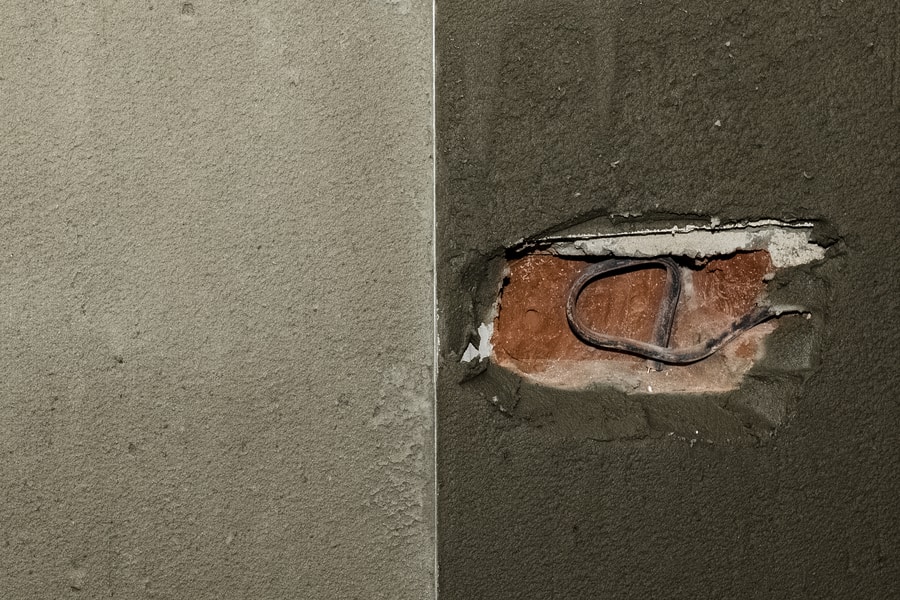
The stucco on your home is not a solid barrier. It’s a layered system — stucco over mesh or lath, over a moisture barrier, over the structural wall behind it. When that system is working correctly, water that hits the surface either runs off or evaporates. When it’s compromised — through a crack, a failed sealant around a window, or a drainage plane that was never there to begin with — water moves inward.
Once moisture reaches the wood framing or sheathing behind the stucco, the clock starts. Wood absorbs water, swells, and begins to break down. In the right conditions, mold follows within hours. By the time the damage is visible from the outside — staining, bulging, sections pulling away from the wall — the interior of the wall system has often been wet for a long time.
This is why the surface appearance of your stucco after a storm is not a reliable indicator of what’s actually happening inside the wall. A professional moisture assessment is the only way to know for certain.
Stucco Repair vs. Stucco Remediation: How to Know Which One You Actually Need
These two terms get used interchangeably, but they describe very different scopes of work — and the difference matters a lot for your budget and timeline.
Stucco repair means addressing specific, localized damage: patching a crack, replacing a section that’s delaminated, resealing around a window or door. It assumes the underlying system is fundamentally sound and that the damage is contained. In Orange County, stucco repair costs can range from $250 for a straightforward patch to several thousand dollars depending on the size and location of the damage.
Stucco remediation is a different conversation. It means the existing system has failed in a way that can’t be resolved by patching — typically because moisture has been trapped behind the surface long enough to compromise the substrate, the moisture barrier, or both. Remediation involves removing the failed stucco down to the structural wall, addressing whatever damage exists underneath, and rebuilding the exterior system from scratch. Complete stucco remediation typically runs $1,000 to $9,000, with costs averaging around $6 to $9 per square foot depending on the extent of the damage and the system being installed.
The honest answer is that you can’t know which one you need from a visual inspection alone. We use moisture meters — small probes inserted into the wall at key locations — to measure what’s actually happening behind the surface. Around windows, doors, and roof eaves are the spots where hidden moisture is most commonly found. If the readings come back clean, you’re likely looking at a repair. If they don’t, you need to know that before any patching work begins — because patching over a wet wall in Central Florida’s humidity doesn’t fix the problem. It seals it in.
How to Find a Licensed Stucco Contractor in Florida — and Why It Matters
In Florida, stucco work falls under the Plaster and Lath Specialty Contractor license issued by the Florida Department of Business and Professional Regulation — the DBPR. This is a state-level credential that requires passing both a trade examination and a business and finance examination. It’s not a general contractor’s license, and a general contractor’s license doesn’t cover stucco work. When you’re vetting contractors after a storm, this is the specific credential to ask about.
The reason this matters beyond just legal compliance is practical. A licensed contractor can pull the building permits that Orange County requires for structural stucco repairs. Without permits, work that affects the structural integrity of your exterior wall system isn’t inspected — and uninspected repairs can create problems down the road if you sell the home or need to file an insurance claim that references the repair.
It also matters for insurance documentation. A licensed contractor’s written assessment carries weight with an adjuster in a way that a handyman’s quote doesn’t. If you’re filing a claim for storm damage, having a licensed professional document the scope and cause of the damage — before any repairs begin — is one of the most useful things you can do to protect your claim.
When you call a contractor, ask for their DBPR license number and verify it through the state’s online portal. Ask whether they carry general liability insurance and workers’ compensation, and request a Certificate of Insurance before any work starts. A contractor who hesitates on either of those requests is a contractor worth skipping.
We’re fully licensed and insured in Florida, and we’ve been working specifically in Central Florida’s climate — Orange County included — for over 20 years. Our background includes structural work coordinated with engineers, which means when we assess your stucco after a storm, we’re looking at the whole system, not just the surface. We give you a transparent, upfront estimate after inspection, and we can typically get back to you within 24 to 48 hours of your initial contact.
What to Do Right Now If a Storm Just Hit Your Orange County Home
Do the walk-around. Look for cracks wider than an eighth of an inch, hollow-sounding sections, water staining, and anything that looks different than it did before the storm. Document what you find with photos before anything gets touched — that documentation matters for your insurance claim.
Then get a professional assessment within 48 hours if anything looks off. Not because every crack is an emergency, but because in Orange County’s humidity, the cost of waiting compounds faster than most people expect. A $250 repair that gets ignored through another storm season can become a $10,000 remediation project. The assessment itself tells you where you actually stand — and a good contractor will give you a straight answer, not a sales pitch.
If you’re in Orange County and you want a second set of eyes on what you’re seeing, we’re the team to call. We know this market, we know these homes, and we’ll tell you honestly what you’re dealing with.