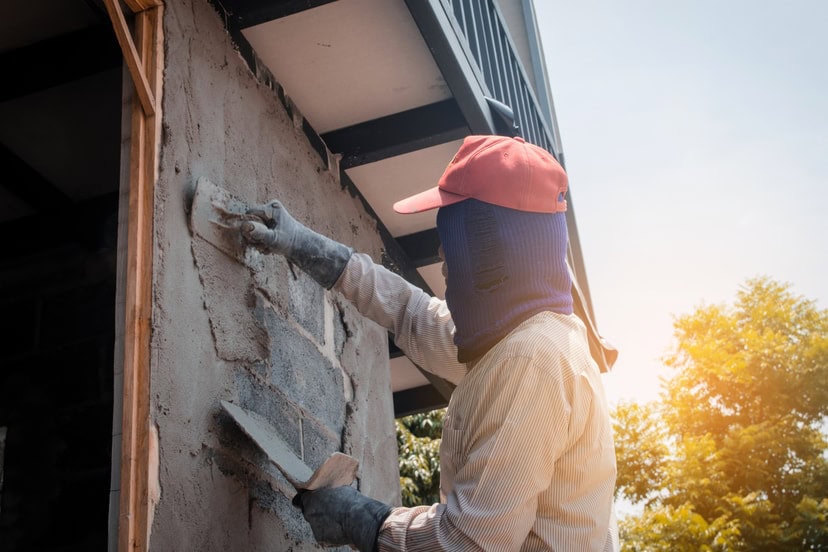
If you’ve patched the same crack twice and watched it come back, you already know the frustration. You’re not sure if the next step is another $1,000 fix or a $12,000 re-stucco — and you’re not sure whether to trust whoever’s telling you which one you need.
That’s a reasonable place to be. This isn’t a simple decision, and the stakes are real. What follows is a straight look at how these two options compare in cost, when each one actually makes sense, and what’s specific to Orange County homes that changes the math entirely.
Stucco Crack Repair Cost: What Patch Work Actually Runs in Orange County
For minor damage — hairline cracks, small chips, surface wear — professional stucco crack repair typically runs between $400 and $1,500. For larger areas with deeper damage or signs of water infiltration, that range climbs to $600–$2,659, with a national average sitting around $1,629. EIFS (synthetic stucco) repair is a different story: expect $30–$50 per square foot when that system is involved.
Those numbers make patching look like the obvious choice. And sometimes it is. But the stucco crack repair cost you see on an estimate is only part of what you’re actually paying for — the other part is whether the repair will hold.
When patch repair is the right call — and when it isn’t
A well-executed patch on traditional three-coat stucco can last years, even decades, when the damage is genuinely surface-level. We’re talking about cracks that formed from normal thermal expansion, small impact damage, or minor weathering — nothing that’s allowed sustained moisture behind the wall. If the substrate is dry, the surrounding stucco is sound, and the damaged area is isolated, a patch is not a compromise. It’s the correct fix.
The problem is that Orange County’s climate makes it hard to stay in that category for long. Central Florida averages 74% relative humidity, and the rainy season brings daily afternoon thunderstorms from June through September. Every crack in your stucco is an entry point. Once water gets in — even a little — it doesn’t just sit there. It works its way toward the sheathing, and in Florida’s heat and humidity, that process moves fast.
So the real question isn’t whether a patch is cheaper upfront. It’s whether a patch is actually addressing the problem, or just covering it. If you’ve had the same area repaired more than once, or if the crack reappeared within a season or two, that’s the wall telling you something the surface repair didn’t fix.
There’s also a math problem worth naming directly. If you spend $1,200 on a patch repair every two years for six years, you’ve spent $3,600 — and you still have a wall with an unresolved moisture issue. A targeted partial re-stucco of a failing section might have cost more upfront but less over that same window, and it would have actually solved the problem. Repeated patching isn’t always the conservative choice. Sometimes it’s the expensive one.
The general rule we use: if the damaged or compromised area covers more than roughly 30% of a wall plane, or if moisture has reached the sheathing, a full re-stucco of that section is typically the better investment over a ten-year horizon.
What hidden moisture damage does to your repair budget
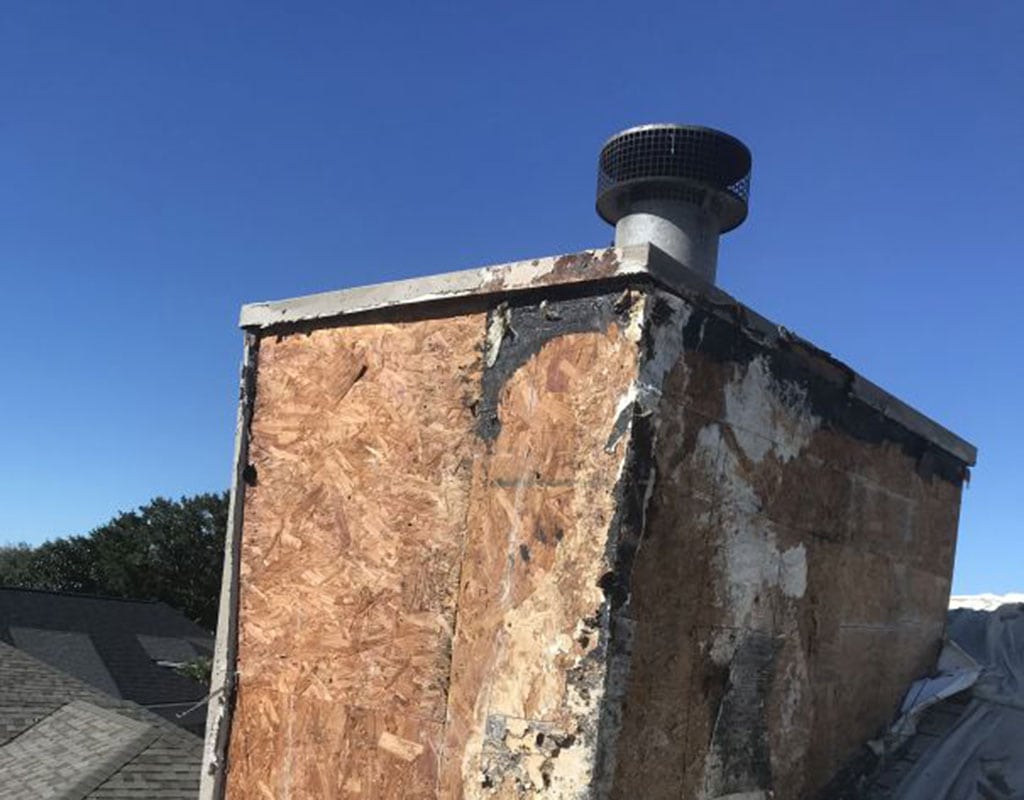
Here’s what a lot of homeowners don’t find out until a contractor opens the wall: the stucco was the least of it. Behind a surface that looked like a straightforward crack repair, there’s rotted sheathing, compromised framing, sometimes mold. The visible damage was just where the water finally showed up — not where it started.
This is one of the most common scenarios we see in older Orange County homes, particularly those built in the late 1980s and 1990s. The soil here — Myakka fine sand — has low bearing capacity and shifts seasonally, which contributes to foundation movement and stucco cracking. Add thirty years of Florida humidity working through those cracks, and you get walls that look repairable from the outside but need significantly more attention once you get into them.
A moisture inspection — where a contractor drills small test holes and checks the sheathing’s moisture content — typically runs $200–$500. That’s not a large number relative to what you’re trying to decide. If the sheathing reads clean, you patch with confidence. If it doesn’t, you’ve just avoided authorizing a $1,500 cosmetic repair over a wall that needed full remediation. That inspection cost is almost always worth it.
When wood rot is present, the repair scope expands. We handle wood repair underneath stucco as part of our full-service exterior work — because patching over compromised framing just delays a larger failure. A contractor who only does the surface work and leaves the substrate question unanswered isn’t doing you a favor, even if the quote is lower. The repair won’t hold, and the next contractor will be dealing with a bigger mess.
For structural stucco problems — cases where foundation movement is actively causing cracking — we coordinate with engineers. That’s not something most stucco contractors offer, and it matters when the cause of the damage isn’t just surface wear.
Stucco removal and replacing stucco with siding in Orange County
Sometimes the conversation shifts from patch-or-re-stucco to something bigger: whether to remove the stucco entirely and replace it with a different siding material. It’s a question worth taking seriously, especially on homes where the existing system has failed repeatedly or where an aging EIFS installation has reached the end of its useful life.
Stucco removal runs $1–$4 per square foot for professional work. On a typical Orange County home, that adds a meaningful cost to the overall project — and it reveals whatever’s been hiding underneath, which can cut either way. Sometimes the substrate is in good shape and the project stays on budget. Sometimes it isn’t, and the scope expands.
The real cost of replacing stucco with siding
Vinyl siding runs $4–$12 per square foot installed. Fiber cement — James Hardie being the most common brand in this market — comes in at $5–$15 per square foot installed. A full stucco re-application, by comparison, typically runs $7–$9 per square foot. So on raw material and labor cost alone, switching to siding isn’t automatically cheaper than re-stuccoing.
What drives homeowners toward siding is usually a desire to get off the stucco maintenance cycle altogether — no more crack repairs, no more color matching, no more wondering what’s behind the wall. That’s legitimate. But there’s a critical caveat: you cannot simply install new siding over existing stucco without addressing what’s underneath. Covering a wall that has moisture damage traps the problem. The new siding will eventually show the same failure symptoms, and by then the remediation is more expensive because the siding has to come off first.
If you’re seriously considering this route, the right sequence is: remove the existing stucco, assess and repair the substrate, then install the new siding system with proper moisture barriers. Skipping the assessment step is how a siding project becomes a six-figure nightmare.
For most Orange County homeowners with traditional three-coat stucco in reasonable condition, re-stucco is still the more cost-effective long-term answer. Stucco done right lasts 50–80 years. If the underlying system is sound and the damage is manageable, you’re not at the end of its life — you’re in the middle of it.
Why the patch vs. replace decision is different for 1990s EIFS homes in Orange County
This is the part of the conversation that’s specific to Central Florida in a way that most national cost guides won’t tell you.
A significant portion of Orange County’s housing stock — particularly in neighborhoods like Windermere, Dr. Phillips, and the suburban rings built out through the 1990s — was clad with EIFS, also called synthetic stucco. The systems installed during that era were barrier EIFS: they had no drainage plane, meaning any moisture that got behind the cladding had nowhere to go. It just sat against the sheathing.
In a dry climate, that design flaw might take a long time to cause serious damage. In Central Florida, with 74% average humidity and a six-month rainy season, it doesn’t take long at all. Many of these systems are now 25–35 years old, and they’re failing — not because the homeowners did anything wrong, but because the system was never designed to handle this climate indefinitely.
For these homes, patch repair is almost always a temporary measure at best. You can seal a surface crack in aging barrier EIFS, but if moisture is already behind the system — and in many cases it is, whether or not it’s visible yet — the patch doesn’t address the actual problem. The damage continues behind the wall while the surface looks repaired.
The real decision for a 1990s EIFS home in Orange County isn’t usually patch vs. full re-stucco. It’s whether to replace the EIFS system with a modern drainable EIFS (which includes a drainage plane and performs significantly better in Florida’s climate), switch to a different cladding system entirely, or do a full traditional stucco re-application. Each of those paths has a different cost profile and a different long-term performance expectation.
Modern EIFS systems with proper drainage also carry an energy efficiency benefit — the continuous insulation layer can reduce energy waste by 18–25%, which offsets some of the higher upfront cost over time. EIFS costs roughly 15–35% more than traditional stucco upfront, but in Florida’s climate, the energy savings start adding up within the first several years.
We specialize in aging EIFS systems specifically because they’re so common across Orange, Seminole, and Volusia Counties, and because diagnosing them correctly requires understanding how the system was originally installed — not just what the surface looks like today.
How to know which option is right for your Orange County home
The honest answer is: it depends on what’s actually happening behind the wall. The surface is only part of the story, and in Orange County’s climate, the part you can’t see is often the part that matters most.
We’ll give you a straight assessment — not the one that generates the largest job. If a patch will hold, we’ll say so. If it won’t, we’ll show you why. That’s not a sales pitch; it’s how we’ve worked for over twenty years in Central Florida.
If you’re trying to figure out where your home falls, reach out to CF Stucco and Painting for an inspection and upfront estimate. We serve Orange County and the surrounding area, and we’ll give you a clear picture of what you’re actually dealing with before you commit to anything.