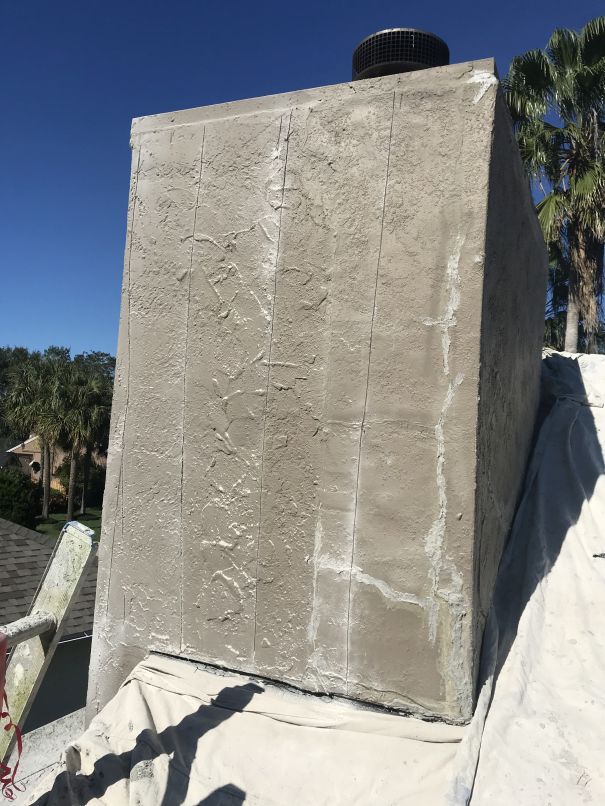
You noticed a crack. Maybe it’s been there a while, or maybe it showed up after the last storm. Either way, you’re trying to figure out what you’re actually dealing with before you call anyone — which is exactly the right instinct.
The problem is that most stucco repair cost guides are built around national averages that don’t account for what it’s like to own a stucco home in Orange County, FL. The humidity here, the soil conditions, the age of the housing stock — all of it affects what a repair actually costs and how urgent it really is.
Here’s what we’ve seen working in this market, and what you should know before you get a quote.
Stucco Crack Repair Cost in Orange County: What You’re Actually Paying
The range for stucco crack repair in Orange County runs from about $250 for a straightforward surface patch to well over $10,000 when moisture has been working behind the wall for months. Most homeowners dealing with standard repairs — a few cracks, no significant water infiltration — end up somewhere between $1,000 and $2,500.
That spread exists for a real reason. The visible crack is almost never the whole story. What drives cost is what’s behind it: whether the moisture barrier is intact, whether the substrate has started to rot, whether the lath has corroded. In Orange County’s climate, those hidden conditions develop faster than most people expect.
Why the Same Crack Can Cost $300 or $3,000 to Fix
Orange County averages around 74% humidity year-round. That’s not a talking point — it’s the reason a hairline crack that might stay stable for years in a drier climate can become a moisture infiltration point within a single rainy season here. Central Florida gets over 50 inches of rain annually, most of it in heavy afternoon storms that drive water sideways against your walls.
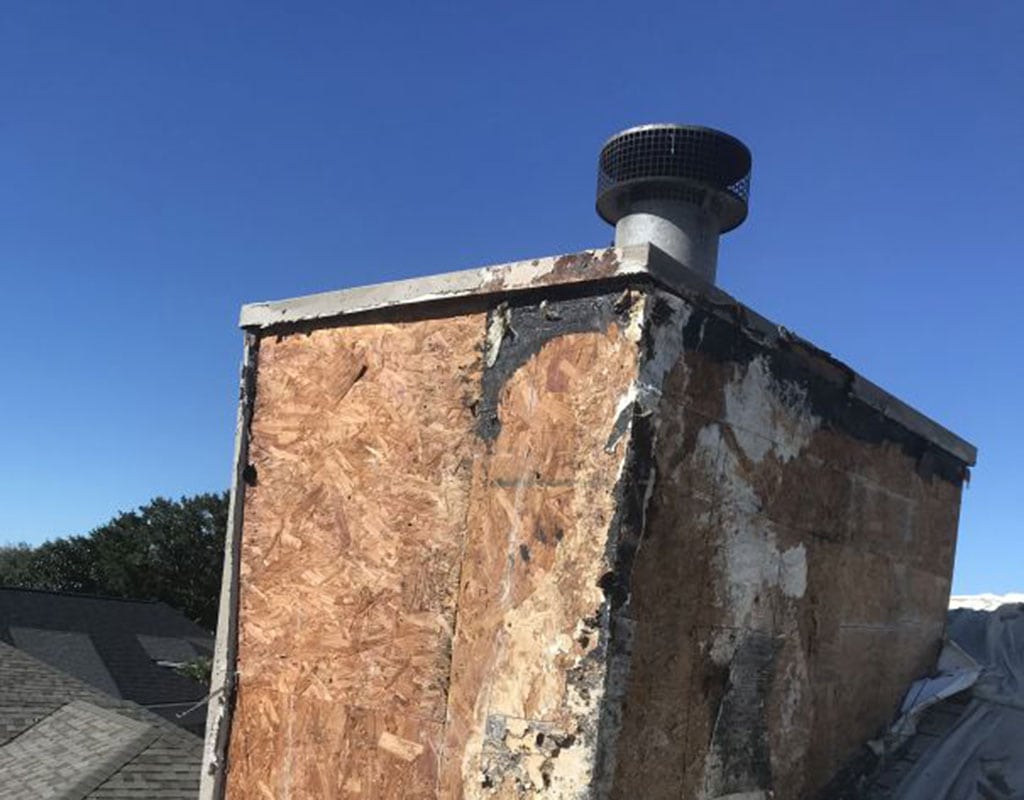
A crack that’s open during those storms is letting water in, and water behind stucco doesn’t just sit there — it works into the wood framing, the sheathing, and the moisture barrier underneath. So when you’re looking at a crack and wondering what it costs to fix, the honest answer is: it depends on what’s already happened behind it. A crack that’s been there six months through a Florida summer is a different repair than one you caught early.
The surface repair itself — removing the damaged area, checking the substrate, applying new stucco in layers with proper cure time between coats — is relatively predictable. What’s not predictable is what we find when we open it up.
Per square foot, standard crack repairs run roughly $8 to $50 depending on the damage type and location. When water has already gotten in and compromised the substrate, that range can climb to $60 to $120 per square foot — not because contractors are padding the estimate, but because the actual scope of work is fundamentally different. You’re no longer patching stucco. You’re replacing a moisture barrier, possibly repairing or replacing lath, addressing any wood rot in the framing, and then rebuilding the stucco system from the substrate out.
The other variable is texture and color matching. Older stucco weathers differently than fresh material — it fades under Florida sun, takes on a different sheen. Getting a repair to blend isn’t always a perfect science, but it’s a skill that matters. A patch that looks obviously wrong is a daily reminder that something went wrong, and it affects curb appeal whether you’re staying or planning to sell.
How Long Damage Has Been There Changes Everything About Cost
This is the part most homeowners underestimate. Moisture damage behind stucco doesn’t escalate gradually — it compounds. A repair that costs $400 when you catch it early can cost several times that after one rainy season passes.
The wood rot that starts at a small entry point spreads laterally through framing. Mold follows moisture. A failed moisture barrier that was a minor fix becomes a full wall remediation. In Orange County specifically, the timeline is compressed because of the climate. June through September is rainy season — afternoon storms, high humidity, standing water. If you’ve got a crack heading into that window, you’re not just looking at a repair cost today. You’re looking at what that repair costs after the water has had four months of daily pressure to work through it.
There’s also the foundation movement factor that’s specific to Orange County’s geology. The sandy, limestone-underlain soils here are prone to sinkhole activity and differential settlement. When the ground shifts slightly — which happens — stucco cracks. And those cracks aren’t cosmetic. They’re telling you something moved.
Diagonal cracks running from the corners of windows and doors, or step cracks in block construction, are the ones worth taking seriously immediately. Patching the surface without understanding what caused the crack means you’ll be patching it again. This is part of why our background in foundation repair matters in a practical way. When a crack pattern suggests structural movement rather than normal thermal expansion, we approach the diagnosis differently than a contractor who only works on the finish coat. The repair that holds is the one that addresses why it cracked, not just that it cracked.
Major vs. Small Stucco Repair: How to Tell What You’re Dealing With
Not every crack is a crisis. Some are exactly what they look like — surface-level thermal cracking from the daily expansion and contraction cycle that every stucco home in Florida goes through. But knowing the difference before you call a contractor means you show up to that conversation informed, not anxious.
The short version: small repairs are isolated, dry, and stable. Major repairs involve moisture, structural movement, or systems that have been failing for a while — like the EIFS installations that are now showing up across Orange County’s 1990s housing stock.
Small Stucco Repair and Patching Stucco Holes: When It’s a Straightforward Fix
Small stucco repairs — isolated cracks, surface holes, cosmetic damage from impact or weathering — typically run $250 to $800 depending on size and location. These are repairs where the surrounding stucco is sound, there’s no sign of moisture infiltration, and the damage is clearly contained. A woodpecker hole on an otherwise solid wall. A small impact crack near a corner. A section where the caulk around a window failed and the stucco at the edge chipped.
Patching stucco holes in this category is a real skill, but it’s not a complicated project when the substrate is intact. The process involves removing any loose or damaged material, verifying the lath and moisture barrier underneath are sound, and building the patch back up in layers — typically three coats for a traditional stucco system, with proper cure time between each coat. Rushing that process is one of the most common reasons DIY repairs fail. In Orange County’s humidity, the cure schedule matters.
The other thing that trips up small repairs is material selection. Standard rigid patch compounds from a hardware store are not the right material for Florida stucco repairs. They don’t flex with temperature changes, and Orange County’s daily heat cycles — 90-degree afternoons, cooler mornings, occasional cold snaps in winter — will crack a rigid patch within months. Elastomeric compounds are the correct choice because they move with the stucco rather than against it.
For genuinely small repairs, a capable homeowner with the right materials can handle hairline cracks. But the moment you’re not sure what’s behind the damaged area, or the crack is wider than a hairline, or you see any discoloration, softness, or musty smell near the repair site — those are signs to stop and get a professional assessment. The cost of getting it wrong is always higher than the cost of getting it right the first time.
Major Stucco Repair in Orange County: The EIFS Problem Most Homeowners Don’t Know They Have
If your home was built in Orange County, FL in the 1990s — and that covers a significant portion of the housing stock in communities like Metrowest, Dr. Phillips, Hunter’s Creek, and Windermere — there’s a reasonable chance your exterior is EIFS, not traditional stucco. EIFS stands for Exterior Insulation and Finish System. It’s a synthetic stucco product that was widely used during the 1990s construction boom, and it looks nearly identical to traditional stucco from the outside.
The problem is that many of those 1990s EIFS installations were done without drainage planes — meaning there was no designed path for moisture to escape if it got behind the system. After 25 to 35 years, those systems are failing. And when EIFS fails, it fails quietly. You might see soft spots in the stucco, bubbling, or discoloration around windows and doors. By the time those signs are visible, moisture has often been sitting against the wood substrate for a long time.
Major EIFS repair is not the same as patching traditional stucco. EIFS cannot be repaired with cement-based compounds — the materials are fundamentally incompatible, and using the wrong product accelerates the failure. EIFS remediation involves removing the failing sections, inspecting and addressing whatever substrate damage has occurred, and rebuilding the system with compatible materials. For two full walls of EIFS remediation, costs can reach $5,000 or more depending on the extent of substrate damage discovered.
This is a category of repair that requires a contractor who actually understands the system — not one who will apply a cement patch over synthetic stucco and call it done. We’ve worked on aging EIFS systems throughout Orange County and the surrounding area, and the homes that get the most expensive repairs are almost always the ones where an earlier contractor used the wrong approach. A proper EIFS repair costs more upfront. It costs significantly less than doing it twice.
For major stucco repairs of any type — whether it’s EIFS failure, water damage remediation, or structural cracking that requires engineer coordination — the $1,000 to $2,500 typical range doesn’t apply. These are projects that need to be scoped after a thorough inspection, because the cost is determined by what’s actually there, not by the surface appearance.
Getting an Accurate Stucco Repair Estimate in Orange County, FL
The most useful thing this guide can leave you with is this: the crack you see is not necessarily the repair you’re paying for. In Orange County’s climate, what’s behind the wall matters more than what’s on it. Getting an inspection before assuming a scope — and before assuming a cost — is always the right first step.
A good estimate tells you what was found, what needs to happen, and why. It doesn’t change significantly once work starts. If you’re comparing quotes and one is dramatically lower than the others, it’s worth asking whether that estimate accounts for substrate condition or assumes the best case.
If you’re ready to get a real number for your specific situation, CF Stucco and Painting offers upfront estimates after inspection — no guesswork, no vague ranges. You can request a quote online and hear back within 24 to 48 hours.