If you’ve noticed cracks near your windows, soft spots when you press on the wall, or discoloration spreading across your exterior, you’re probably already asking the right questions. Is this just surface damage? Is there something worse behind it? And should you fix the stucco — or tear it off and start over with something different?
These aren’t easy calls, especially in Orange County, where the climate adds a layer of complexity that most online guides don’t account for. This page is here to give you a straight answer on how stucco siding installation works in Florida, what the process actually involves, and how to think through the repair-versus-replace decision before you call anyone.
How Stucco Siding Installation Works in Orange County’s Climate
Stucco is a siding material — that’s worth saying clearly, because a lot of homeowners think of it as something separate from “siding.” It’s applied directly to the exterior of a home and serves the same protective function as vinyl or fiber cement panels. The difference is in how it’s installed, how it performs over time, and how dramatically the local climate affects both.
In Orange County, proper stucco siding installation is built around moisture management first and aesthetics second. Central Florida averages 74% humidity year-round, and the county gets more than 50 inches of rain annually — most of it concentrated in afternoon thunderstorms from June through September. Any installation method that doesn’t account for that reality will show you the consequences within a few years.
The Three-Coat Stucco Installation Process
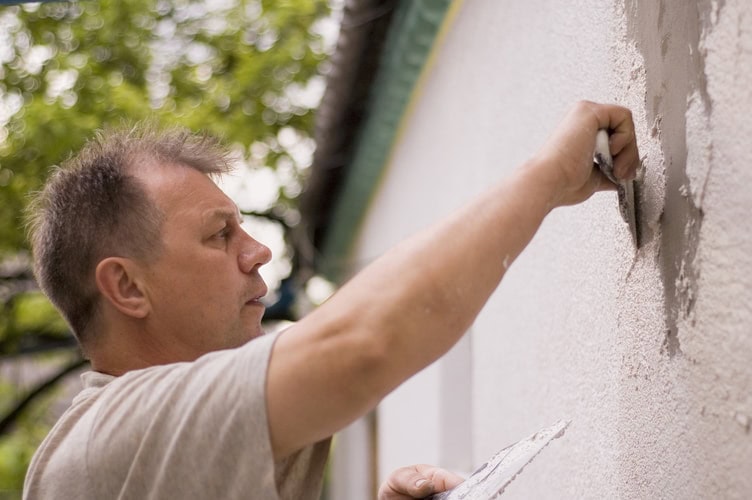
The installation process for traditional hardcoat stucco over wood framing follows what’s called a three-coat system. It starts with a scratch coat — roughly 3/8 of an inch thick — applied over metal lath that’s been fastened securely to the exterior sheathing.
Before any of that happens, a moisture-resistant building paper is installed shingle-fashion over the sheathing, lapping downward so any water that gets behind the system drains out rather than sitting against the wood. This detail alone separates a system that will last decades from one that fails in five years.
Once the scratch coat cures, the brown coat goes on — another 3/8 of an inch — and this is where the wall starts to take shape dimensionally. The finish coat, at about 1/8 of an inch, comes last and carries the texture and color. Between each coat, there’s a waiting period. Rushing that cure time is one of the most common mistakes on budget jobs, and it shows up as cracking within the first year.
At the base of every stucco wall, there should be a weep screed — a small metal channel that lets moisture escape from behind the system. It sounds like a minor detail, but missing or improperly installed weep screeds are one of the most consistent causes of moisture buildup and eventual rot in Orange County homes. The same goes for flashing around windows and doors. Every penetration in the wall is a potential entry point for water, and elastomeric caulking around those openings isn’t optional — it’s what keeps the system intact through years of Florida rain.
For EIFS — the synthetic stucco system that was widely installed on homes built in the late 1980s and 1990s — the process includes a rigid foam insulation board adhered to the sheathing, a base coat embedded with fiberglass mesh for reinforcement, and a finish coat on top. When EIFS is installed correctly with a drainage plane and a proper water-resistive barrier, it’s a high-performing system. It can reduce energy waste by 18 to 25 percent compared to uninsulated wall assemblies, which matters in Orange County, where air conditioning runs most of the year.
The problem isn’t EIFS itself — it’s the first-generation systems installed before drainage planes became standard practice.
Why Orange County’s 1990s Housing Stock Changes the Conversation
Orange County’s housing stock has a median build year of 1992. That’s not a coincidence — it reflects the massive residential development that swept through communities like Metrowest, Dr. Phillips, Hunters Creek, and Lake Nona during the late 1980s and 1990s. It also means a large share of local homes were built during the peak of first-generation EIFS installation, when moisture management standards were far less rigorous than they are today.
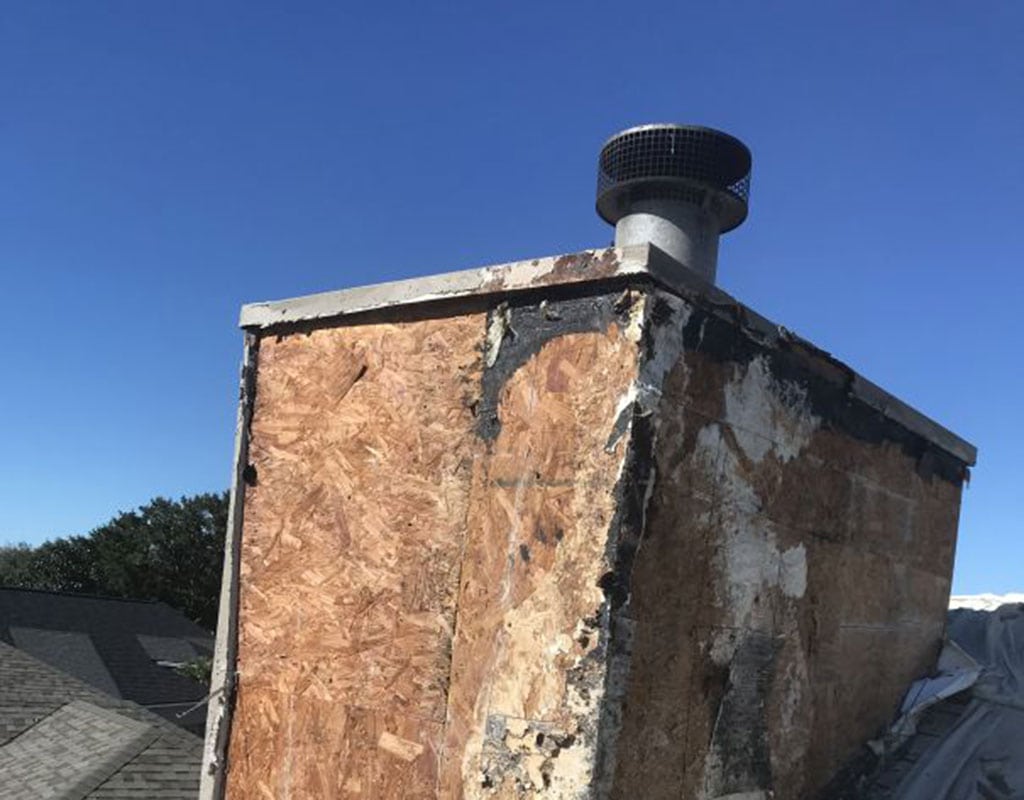
Those systems are now 25 to 35 years old. At that age, many of them are entering what you might call their failure window. The symptoms are easy to miss at first — a small crack near a window frame, a slightly soft section of wall, some discoloration that looks like it might just be dirt.
But behind those signs, moisture has often been sitting against wood framing for years, and what looks like a surface problem is sometimes a substrate problem. When you peel back a failing EIFS system, you frequently find wood rot underneath — sometimes minor, sometimes significant. We handle the wood framing repair in-house, which means if we open a wall and find rot, we’re not calling in a separate subcontractor or handing you a surprise invoice. It’s part of the job.
For homeowners in HOA-governed communities — and there are many throughout Orange County, from Windermere to Celebration — there’s often no choice but to restore the original stucco finish. HOA rules frequently mandate specific exterior materials, which means replacing stucco with vinyl or fiber cement siding isn’t always an option, regardless of cost. If you’re in one of those communities, proper stucco installation and repair is the path forward, and getting it done right the first time matters more than ever.
Replacing Stucco with Siding: When It Makes Sense and When It Doesn’t
Some homeowners reach a point where they’re not asking how to fix the stucco — they’re asking whether to keep it at all. That’s a fair question, and it deserves a straight answer rather than a pitch in either direction.
Stucco, when it’s properly installed and maintained, can last 50 to 80 years. Vinyl siding typically runs 20 to 40 years. That lifespan difference matters when you’re thinking about long-term value, especially in Orange County, where home values average around $403,694 and exterior renovations deliver meaningful ROI. But upfront cost, HOA restrictions, and the condition of what’s underneath the current stucco all factor into the decision.
Replace Stucco with Siding Cost: What the Numbers Actually Look Like
Stucco siding installation typically runs between $7 and $17 per square foot installed, depending on the system — traditional hardcoat on the lower end, EIFS with full drainage plane detailing toward the higher end. For a 2,000 square foot home, that puts a full installation somewhere between $14,000 and $34,000.
Vinyl siding comes in lower on materials — roughly $6.50 to $12.50 per square foot installed — and fiber cement lands between $5 and $15 per square foot depending on the product and labor involved. Those numbers look favorable for siding alternatives until you factor in what it actually costs to get there from stucco.
Stucco is not like vinyl panels that unclip and come down in an afternoon. It’s a layered, hardened system adhered to the wall, and removing it requires demolition work that adds cost and time before a single piece of new siding goes up.
Cost to Remove Stucco and Replace with Siding: The Full Picture
Stucco removal typically adds $1 to $3 per square foot to the project cost before anything else begins. On a 2,000 square foot home, that’s $2,000 to $6,000 just for demolition and disposal — and that’s before you’ve seen what’s underneath.
If the sheathing or framing has moisture damage, that gets addressed before new siding goes on, which adds more. The total cost of removing stucco and replacing with vinyl or fiber cement siding can easily approach or exceed what a quality stucco reinstallation would have cost, once you account for all the steps involved.
There’s also a Florida-specific performance consideration that doesn’t come up much in general siding guides. Vinyl siding can warp in sustained heat, and Florida summers are sustained. It also doesn’t offer the same wind resistance as properly installed stucco under the Florida Building Code’s wind mitigation requirements — a real consideration in Orange County, which sits within the hurricane impact zone for major storms tracking across the peninsula.
That said, replacing stucco with a different siding material isn’t always the wrong call. If the existing stucco system has failed comprehensively, if the substrate damage is extensive, or if you have specific aesthetic goals that stucco can’t meet, it may genuinely be the better path. The honest answer is that it depends on what’s actually there — which is exactly why we don’t quote over the phone. We send someone out to inspect the property first, and the estimate reflects what we actually find.
Florida requires a permit for stucco work exceeding 25 square feet, and the state’s DBPR recognizes stucco as a standalone Plastering and Stucco specialty contractor classification — separate from a general siding or construction license. Hiring a contractor without the correct classification can result in failed inspections and warranty issues that fall back on you as the homeowner. It’s worth asking before anyone starts work.
Getting Stucco Work Done Right in Orange County
The decision about what to do with your exterior — repair, reinstall, or replace — is a lot easier to make once you actually know what you’re dealing with. Most of the anxiety homeowners feel going into this process comes from not knowing whether the damage is surface-level or structural, whether the cost will be what they were quoted, and whether the contractor will still be responsive three weeks into the job.
Those are reasonable concerns, and they’re exactly what we try to address from the first call. CF Stucco and Painting has been working in Orange County and the surrounding Central Florida area for over 20 years, and we’ve seen what Florida’s humidity, storm seasons, and aging 1990s EIFS systems actually do to a home’s exterior.
If you’re trying to figure out your next step, we’re happy to come take a look — no phone guesses, just an honest assessment and a clear estimate.