You noticed a crack. Maybe it’s been there a while, or maybe last summer’s storms finally made it impossible to ignore. Either way, you’re now trying to figure out whether it’s serious, what it’ll cost, and who you can actually trust to fix it without disappearing after the deposit clears.
That’s a reasonable place to be. Stucco damage in Orange County is common, and the decisions homeowners make in the first few days — patch it yourself, call the cheapest contractor, wait and see — tend to determine whether the repair lasts or fails within a year. Here’s what you actually need to know.
Stucco Cracks: When to Worry and When to Wait
Not every crack in your stucco is a crisis. Some are the natural result of your home expanding and contracting through Florida’s daily temperature swings — warm afternoons, cooler nights, and summer heat that pushes exterior surfaces to their limits. Hairline cracks under about 1/16 of an inch wide are often cosmetic, and in a climate like Orange County’s, they’re nearly inevitable on older stucco.
The ones that warrant a closer look are wider than 1/8 of an inch, show up near windows or doors at diagonal angles, or seem to be growing over time. Those patterns tend to point to something happening behind the surface — moisture intrusion, substrate movement, or in some cases, foundation-related shifting. That’s a different conversation than a surface patch.
What Stair-Step Cracks in Stucco Actually Mean
Stair-step cracks follow the mortar joints of a wall in a staircase pattern, and they get misread constantly. If your home has concrete block construction — which is common in older Orlando-area neighborhoods like College Park, Conway, and Pine Hills — hairline stair-step cracks along the mortar joints are a fairly normal aging pattern. They don’t automatically mean your foundation is failing.
On wood-frame construction, that same stair-step pattern carries more weight. Wood-frame homes flex differently, and when stucco cracks in that pattern on a wood-frame wall, it’s more likely to indicate structural movement, differential settlement, or a problem with the substrate underneath. The crack you see on the surface is the symptom. The cause is somewhere behind it.
This is one of the reasons we approach stucco repair the way we do. Our owner spent over 20 years in foundation repair before moving into stucco work — working alongside engineers on structural projects. That background changes how you read a crack. Instead of seeing a surface problem, you’re trained to ask why it happened, which is the only question that actually matters if you want the repair to last.
When stucco damage does involve structural concerns, we coordinate with engineers before any repair work begins. It’s not standard practice in this industry, but it’s the only responsible approach when the damage goes deeper than the finish coat. A patch applied over a structural problem isn’t a repair — it’s a delay.
If you’re unsure what you’re looking at, the safest move is a professional stucco inspection in Orange County, FL. A thorough assessment typically involves moisture probes and a hands-on evaluation of the affected area, not just a visual glance from the driveway.
How to Repair Stucco Cracks on Your House Without Creating a Bigger Problem
The most common mistake homeowners make when they find a crack is reaching for standard caulk from the hardware store. It seems like a reasonable fix — fill the gap, paint over it, done. The problem is that standard caulk doesn’t flex the way stucco does. Florida’s thermal cycling will break that seal within months, and you’re back where you started, except now there’s a layer of failed caulk to deal with before anyone can do a proper repair.
Elastomeric caulk and elastomeric coatings are the right materials for exterior house stucco repair in this climate. Elastomeric products can stretch significantly without breaking, which means they move with the wall rather than against it. They also create a breathable, waterproof barrier — critical in Orange County, where average humidity sits around 74% and rainfall tops 50 inches a year.
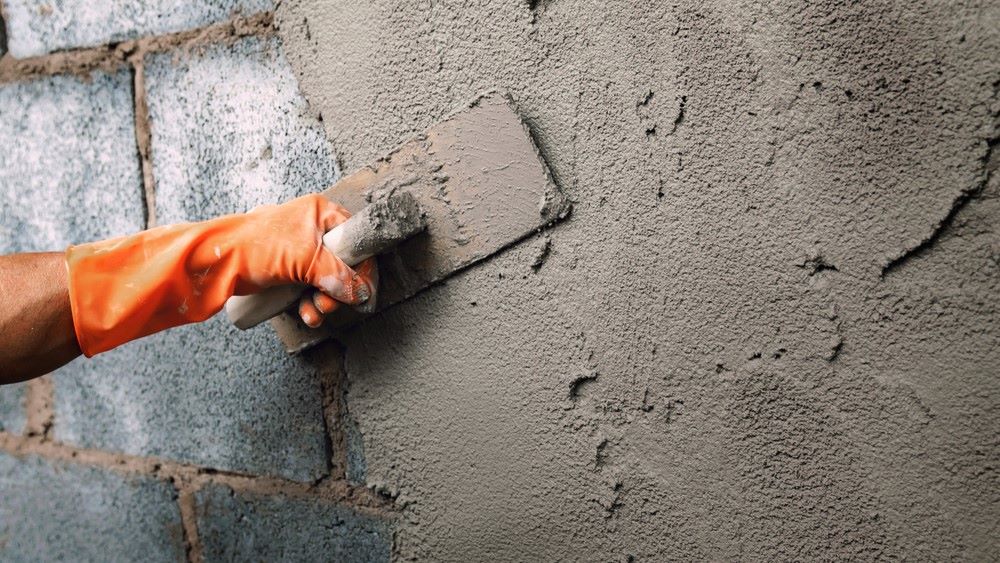
For cracks that go deeper than the finish coat, the repair process involves cleaning out the damaged area, undercutting the edges so the new material has something to bond to, applying a bonding agent, and then rebuilding the stucco in layers — scratch coat, brown coat, finish coat — the same way it was originally installed. Skipping steps, especially the bonding agent or the curing time between coats, is how patches pop off within a year.
A painter who fills cracks with spackling compound before repainting is not doing a stucco repair. That’s one of the more expensive misunderstandings we see — homeowners who had their exterior “touched up” before a paint job and are now dealing with paint failure and reopened cracks because the underlying stucco was never properly addressed. If you’re planning to repaint, make sure any stucco repair happens first, and make sure it’s done by someone who actually works in stucco.
Replacing Stucco with Siding: Is It Actually Worth It?
When homeowners have dealt with recurring stucco problems — the same crack repaired twice, water stains that keep coming back, patches that never quite blended — the idea of ripping it all off and starting fresh with a different material starts to sound appealing. It’s a legitimate question, and it deserves an honest answer rather than a contractor steering you toward the more expensive job.
In most cases, properly repaired stucco with a good moisture barrier and a quality elastomeric finish coat will outlast a siding replacement and cost significantly less. The problem usually isn’t stucco as a material — it’s how it was installed, or how it was (or wasn’t) maintained over the years.
Replace Stucco with Siding: What It Actually Costs in Orange County
If you’re seriously considering a full material swap, the cost picture is worth understanding before you commit. Siding replacement in Florida runs roughly $4 to $13 per square foot depending on the material — fiber cement, vinyl, and aluminum all land in different ranges. On a 2,000-square-foot home, a full stucco removal and siding installation can run anywhere from $8,000 to well over $20,000 once you factor in labor, disposal, and any substrate repairs that come up once the old stucco is off the wall.
That last part is where the surprises tend to happen. When stucco comes off a wood-frame home that’s had moisture intrusion — and in Orange County, that’s not rare — you often find rotted sheathing, damaged lath, and compromised moisture barriers underneath. Those repairs have to happen regardless of what goes back on the wall, and they add to the total cost in ways that aren’t always visible in an initial estimate.
Stucco repair, by comparison, ranges from around $250 for minor work up to $3,000 or more for more involved repairs, with the national average landing around $1,700 for a mid-sized repair. EIFS remediation on two full walls — a scenario we see regularly in Orange County’s 1990s-era communities — can reach $5,000. That’s still a fraction of full replacement in most cases.
The honest calculus is this: if your stucco has failed in multiple areas, shows signs of widespread moisture intrusion, or was installed poorly enough that repairs keep failing, replacement may make sense. But if the damage is localized and the underlying structure is sound, a proper repair almost always makes more financial sense than starting over. We’ll tell you which situation you’re actually in after we’ve seen the wall — not before.
How to Match Stucco Texture and Color After a Repair
Texture and color matching is where a lot of otherwise solid stucco repairs fall apart visually — and in Orange County’s HOA-dense communities, a patch that looks like a patch can create its own set of problems. Getting a close match requires the right applicator, the right mix, and realistic expectations about what’s achievable on weathered stucco.
How to Color Match Stucco When the Original Has Faded
Here’s the honest version: a perfect, invisible match on aged stucco is rarely possible. Stucco color shifts as it weathers, and the rate of change depends on sun exposure, wall orientation, and how many years of Florida UV the surface has absorbed. The south- and west-facing walls of a home typically fade faster than the north-facing ones, which means even a well-matched color can look slightly different depending on where the repair is.
What a skilled applicator can do is get close enough that the repair doesn’t create an obvious patchwork look. That involves custom tint matching against the existing surface, using the same finish texture as the surrounding stucco, and in some cases recommending a full repaint of the affected elevation so the repaired area blends into a uniformly fresh surface rather than sitting next to visibly aged stucco.
We work with cosmetic masonry specialists specifically for texture and color matching, because it’s a skill set that sits at the intersection of stucco application and finish work. It’s not something every stucco crew does well, and it matters — especially if you’re in a community where the HOA has to approve exterior changes before work begins. Getting the match right the first time saves the back-and-forth of an HOA rejection.
For homeowners in communities like Hunters Creek, Meadow Woods, or parts of Dr. Phillips — where a large percentage of the housing stock was built in the 1990s and exterior finishes have had 25-plus years to weather — color matching is almost always part of the conversation. We factor it in from the start rather than treating it as an afterthought.
Average Cost of Stucco Repair and How to Hire a Licensed Stucco Contractor in Orange County
Stucco damage repair cost in Orange County, FL ranges widely depending on what you’re actually dealing with — minor crack repairs start around $250, mid-range repairs average around $1,700, and more complex work involving water damage or EIFS remediation can reach $5,000 or more. The number that matters most is the one you get after someone has actually looked at your walls, not a ballpark from a phone call.
When you’re looking at local stucco repair companies, the question worth asking isn’t just “how much?” — it’s “why did this happen, and how are you going to make sure it doesn’t happen again?” A licensed stucco contractor should be able to answer both. In Florida, verify that anyone you hire holds a current state license through the DBPR and carries general liability insurance and workers’ compensation coverage. Unlicensed stucco work creates real problems at resale and leaves you with no recourse if the repair fails.
At CF Stucco and Painting, we’ve built our work around the idea that a repair is only as good as the diagnosis behind it. If you’re seeing cracks, staining, soft spots, or damage that keeps coming back, we’d rather help you understand what’s actually going on than sell you a patch. Reach out for an upfront estimate — we’ll take a real look and give you a straight answer.
—
**How much does it cost to remove stucco and replace with siding in Orange County, FL?** Full stucco removal and siding installation on a typical Orange County home runs roughly $8,000 to $26,000 or more, depending on home size, siding material, and what’s found underneath once the stucco comes off. Fiber cement siding sits at the higher end of the material range; vinyl is generally lower. Substrate repairs — rotted sheathing, damaged moisture barriers — are common in older Orange County homes and add to the total. In most cases, a proper stucco repair is significantly less expensive than full replacement.
**How do I match stucco color on a repair?** Color matching starts with comparing the new tint against the existing surface in natural light. Because stucco weathers and fades over time — especially on south- and west-facing walls in Florida’s UV intensity — an exact match isn’t always achievable. The goal is a close enough match that the repair doesn’t stand out. In some cases, repainting the full elevation is the cleanest solution. In Orange County’s HOA communities, it’s worth confirming the color approach with your association before work begins to avoid a rejection after the fact.
**How do I match stucco texture?** Texture matching requires an applicator who can replicate the original finish — whether that’s a smooth coat, sand finish, dash texture, or something else. The mix ratio, application method, and tool all affect the final look. An experienced stucco crew will assess the existing texture before mixing anything and test on a small area when possible. It’s one of the more skill-dependent parts of exterior house stucco repair, and it’s worth asking specifically about before hiring any stucco workers or contractors.