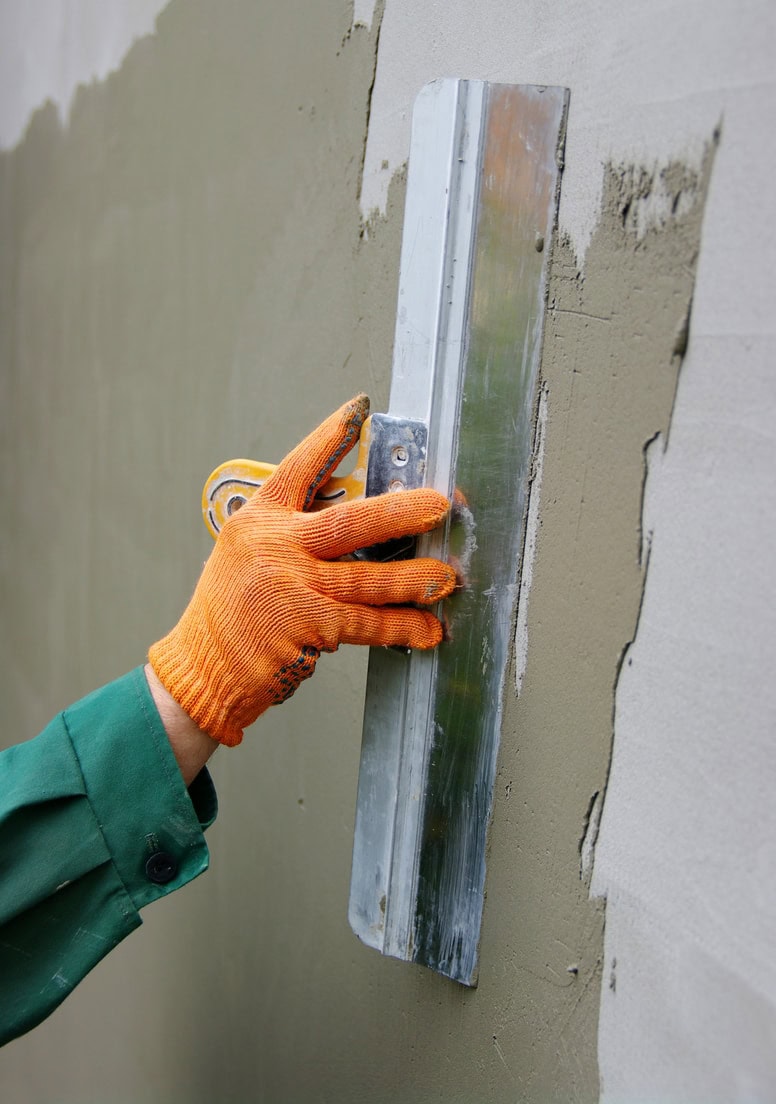
If your home was built in Orange County, FL sometime between the late 1980s and early 2000s, there’s a reasonable chance the exterior isn’t traditional stucco — it’s EIFS. Most homeowners don’t know the difference, and most stucco contractors won’t tell you it matters. But it does, especially in Central Florida, where 74% average humidity and over 50 inches of rain a year make the type of cladding on your walls a much bigger deal than it sounds. This guide covers what EIFS actually is, why older systems are failing right now across Orange County, and what you should be watching for before the damage becomes expensive.
What Is EIFS and How Is It Different from Regular Stucco?
EIFS stands for Exterior Insulation and Finish System. It’s sometimes called synthetic stucco, and while it looks similar to traditional stucco from the street, the two are built completely differently. Traditional stucco is a cement-based plaster applied directly over a substrate — it’s heavy, rigid, and has been used on buildings for centuries. EIFS is a multi-layer system that starts with a rigid foam insulation board, followed by a fiberglass mesh, a base coat, and a textured finish coat on top.
That foam layer is the key difference. It gives EIFS a much higher insulating value — roughly 3 to 5 per inch compared to traditional stucco’s 0.20 — which matters in Florida where air conditioning costs dominate utility bills. EIFS is also lighter and more flexible, which means it handles thermal movement better than hard stucco. Done right, it can last the life of a building.
Why 1990s EIFS Systems Are a Problem in Orange County
Here’s where things get specific to Orange County — and to a lot of homeowners who don’t realize they’re sitting on a ticking clock.
The EIFS installed on Florida homes during the 1990s construction boom was what the industry calls barrier EIFS. The design logic was simple: make the system completely waterproof so no moisture ever gets in. No drainage plane, no water-resistive barrier behind the foam — just a sealed exterior that was theoretically impenetrable. The problem is that in Central Florida’s climate, that seal always eventually fails. Sealants around windows, doors, electrical boxes, and hose bibs degrade. Cracks form. And when moisture finds its way in behind a barrier EIFS system, there’s nowhere for it to go. It just sits there, trapped behind the foam board, slowly rotting the wood framing and sheathing underneath.
By the mid-1990s, the industry had already recognized this problem and mandated drainage planes in new EIFS installations. But that didn’t fix the thousands of homes already built with barrier systems across Orange County communities like Dr. Phillips, Metrowest, Windermere, Hunters Creek, and Bay Hill. Those homes are now 25 to 35 years old. The foam still looks fine on the outside. The finish coat might not show a single crack. But behind it, moisture has had decades to work.
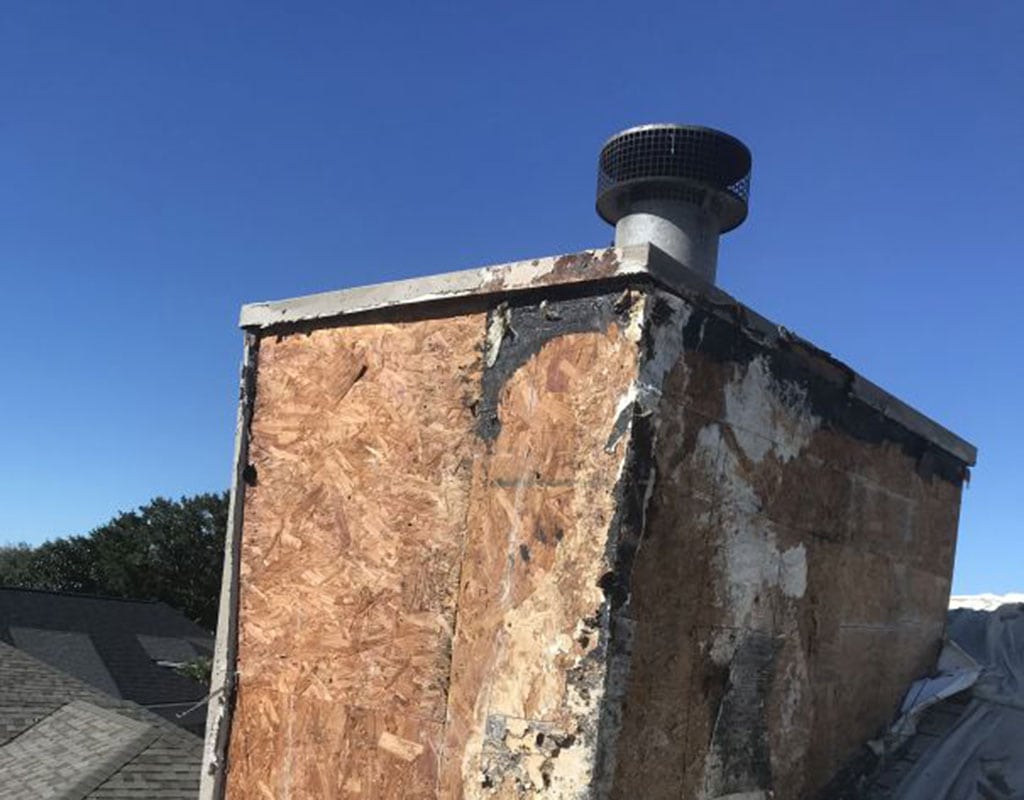
This is the part that catches homeowners off guard. EIFS moisture intrusion is famously invisible until it isn’t. By the time you see bulging, discoloration, or soft spots on your exterior wall, there’s often significant wood rot or mold already present behind the system. Orange County’s daily summer thunderstorms — which track through from June through September and drive wind-blown rain into every unsealed joint — accelerate this process faster than most people expect.
If your home was built before 2000 and has what looks like stucco on the exterior, it’s worth finding out exactly what you have before the next rainy season.
How to Tell If Your Home Has EIFS (and Why Most Contractors Get This Wrong)
The simplest field test is to knock on the exterior wall. Traditional three-coat stucco feels hard and dense — it sounds like knocking on concrete. EIFS has foam behind it, so it sounds hollow and gives slightly under pressure. You can also look at the thickness at window or door openings: traditional stucco is typically about an inch thick; EIFS is thicker because of the foam board, often two to four inches from the substrate to the finish coat.
What you should not do is assume any licensed stucco contractor can tell the difference — or more importantly, repair it correctly. Most stucco contractors know how to apply and patch traditional three-coat systems. EIFS is a different product that requires knowledge of drainage planes, compatible base coats, proper mesh embedding, and precise sealant detailing at every penetration. Using the wrong repair approach on EIFS doesn’t just fail to fix the problem — it can make moisture intrusion worse by sealing over areas that need to breathe or drain.
The most common installation failure we see on older Orange County homes isn’t dramatic cracking or obvious damage. It’s improper detailing at the small stuff: a light fixture that wasn’t properly flashed, a window frame where the sealant has shrunk and separated, a hose bib that was never correctly integrated into the system. Each of those gaps is a direct path for water to get behind the foam board. In a climate where it rains 50-plus inches a year, those gaps don’t stay dry for long.
This is why it matters whether the contractor you call actually understands EIFS — not just stucco in general.
Stucco Cracks: When to Worry and When to Leave It Alone
Not every crack in an exterior wall is a crisis. In Florida’s climate, some degree of surface cracking is normal — thermal expansion and contraction from the daily cycle of hot afternoons and cooler nights puts stress on any exterior cladding. The question is what kind of crack you’re looking at and where it is.
Hairline cracks — thinner than 1/16 of an inch — are usually cosmetic. They’re common on both traditional stucco and EIFS finish coats, and in most cases they don’t indicate structural problems or active moisture intrusion. A good elastomeric caulk and a compatible finish coat is typically all they need. What changes the equation is crack width, pattern, and location.
Crack Patterns That Signal a Deeper Problem
Diagonal cracks running at 45-degree angles from the corners of windows and doors are one of the more telling signs. They usually indicate differential movement in the structure — either foundation settlement or significant thermal stress — and they tend to recur after patching if the underlying cause isn’t addressed. Stair-step cracks following the mortar joints in a concrete block wall can indicate the same thing. Spiderweb or map cracking across a broad section of wall often points to a base coat failure or, in EIFS systems, delamination of the mesh layer.
The most serious scenario is a crack wider than 1/8 of an inch with edges that don’t run parallel — where one side of the crack sits slightly higher or lower than the other. That offset is a sign of real structural movement, and it warrants a professional evaluation, not a tube of caulk.
On EIFS specifically, cracks near penetrations — windows, doors, electrical boxes, deck attachments — deserve extra attention regardless of their size. Those are the locations where barrier EIFS systems most commonly fail, because the sealant joints at those transitions are the first thing to degrade. A small crack at a window corner on a 1990s EIFS home isn’t just a cosmetic issue. It’s potentially a direct moisture path into a system with no drainage plane behind it.
We’d also add this: if you’ve had a section of your exterior patched before and the crack came back, that’s not a sign that stucco is unreliable. It’s a sign that the repair addressed the symptom without identifying the cause. In our experience, that pattern — repeated patches that don’t hold — is one of the clearest indicators that there’s a moisture or substrate issue driving the cracking from behind.
Stucco Restoration vs. Remediation: Understanding Your Options
When the damage goes beyond surface cracking, homeowners in Orange County, FL are often faced with two paths: restoration or remediation. These terms get used loosely, but they mean different things and the distinction matters for your budget and your timeline.
Stucco restoration typically refers to repairing and refinishing the existing system — addressing cracks, failed sealants, and surface deterioration without removing the cladding entirely. On a well-maintained EIFS home where moisture intrusion has been caught early, restoration can bring the system back to full performance. This involves a thorough inspection, moisture testing to identify any wet areas behind the foam, repair of failed sealant joints and cracks, and a fresh finish coat with an elastomeric coating designed to handle Florida’s UV exposure and rainfall. Done correctly, a restored EIFS system can perform well for years.
Remediation is a different scope of work. It means partially or fully removing the EIFS cladding, repairing or replacing the damaged substrate underneath — which often includes rotted sheathing, framing, or both — and reinstalling a new system with a proper water-resistive barrier and drainage plane. Remediation is necessary when moisture intrusion has been active long enough to compromise the structure behind the foam. On a 2,000 square foot home, moderate damage with EIFS replacement runs $40,000 to $60,000. Significant damage that requires replacing the cladding system entirely runs $60,000 to $80,000. Those numbers are why early detection matters so much.
The threshold we use is roughly this: if more than 25 to 30 percent of the cladding system shows moisture damage or the substrate has been compromised, remediation is almost always more cost-effective in the long run than repeated patching. Below that threshold, a properly scoped restoration is usually the right call. The key word is “properly scoped” — which means understanding what’s behind the foam before deciding what to do about the surface.
This is where working with stucco remediation contractors who have real EIFS experience makes the difference. The inspection process, the moisture testing, and the repair scope all depend on understanding how the system was originally installed and what it’s done since.
Finding the Right EIFS Contractor in Orange County
The short version: not every contractor who does stucco work knows EIFS. The skills overlap, but they’re not the same, and using a general stucco contractor on an aging EIFS system can lead to repairs that fail quickly or, worse, seal over moisture problems that continue to grow behind the foam.
What to look for is straightforward. You want someone who’s licensed and insured in Florida — required for any structural repair that needs an Orange County building permit. You want someone who specifically understands EIFS, not just stucco in general. And you want someone who will inspect the system, test for moisture, and tell you honestly what the scope of work actually is before asking you to sign anything.
If you’re in Orange County, FL and you’re not sure what your exterior is made of, or you’ve noticed cracks, soft spots, or water stains that haven’t been explained, we’re here to help. We offer free estimates after inspection with a callback within 24 to 48 hours.