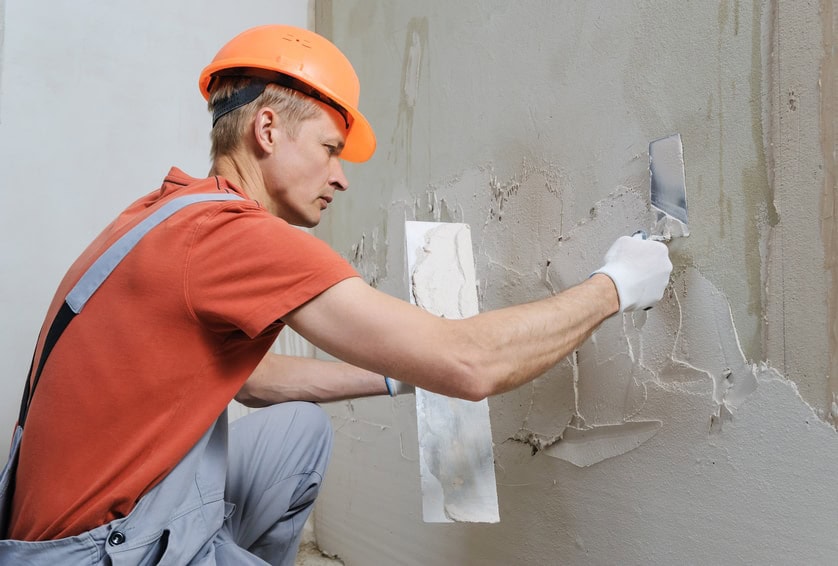
If your Orange County, FL home was built sometime between 1988 and 2000, there’s a real possibility the stucco on your exterior walls isn’t traditional hardcoat stucco. It might be EIFS — a synthetic system that was everywhere during the 1990s building boom and is now quietly failing on tens of thousands of homes across Central Florida. The problem isn’t always obvious from the outside. That’s what makes it dangerous.
We’ve written this guide for homeowners who want to understand what EIFS is, why the version installed in the ’90s has a known failure problem, and what a qualified stucco contractor should actually do about it.
What Are EIFS Stucco Systems and Why Do 1990s Homes Have Them?
EIFS stands for Exterior Insulation and Finish System. It’s a multi-layer cladding system that includes a foam insulation board, a reinforcing mesh, a base coat, and a textured finish coat. From the street, it looks almost identical to traditional stucco. That’s part of why so many homeowners don’t know they have it.
The system was developed in post-WWII Germany and made its way into American commercial construction in the 1970s. By the 1980s and ’90s, it had moved into residential homes in a big way—especially in fast-growing Sun Belt markets like Orange County, FL. The region added roughly 42,000 new residents per year throughout the 1990s, and much of the housing built to absorb that growth was clad in EIFS. The median construction year for an Orange County, FL home today is 1992. That’s not a coincidence—it’s a direct reflection of that era’s building activity.
The appeal at the time was real. EIFS offered better insulation than traditional stucco, a smooth aesthetic finish, and lower installation costs. What wasn’t fully understood yet was how the system would behave over decades in a climate like Central Florida’s—with sustained heat, humidity, and intense seasonal rainfall.
Why 1990s Barrier EIFS Was a Flawed System
The specific version of EIFS installed throughout the 1990s is known as a barrier system. The design logic was straightforward: make the outer shell completely waterproof so no moisture ever gets in. In theory, that sounds fine. In practice, it created a serious problem.
No exterior cladding system is truly impenetrable. Water finds its way in through cracks that develop over time, through improperly sealed window and door frames, around pipes and light fixtures, and anywhere the finish coat has been compromised. With traditional stucco, that water can eventually work its way back out. With barrier EIFS, it can’t. The system that was designed to keep water out also traps any water that gets in—and it traps water vapor along with it.
Behind the foam board and base coat sits the wood framing of your home. When that wood is exposed to sustained moisture, it doesn’t take long for problems to develop. The Engineered Wood Association has published data showing that wood rot actively progresses when moisture content reaches 20 to 25 percent. A barrier EIFS home with even a small water entry point can create exactly those conditions—slowly, invisibly, and over years.
The controversy around this became public in 1995, when a wave of lawsuits was filed in North Carolina by homeowners who had discovered severe mold, rot, and structural damage behind their EIFS-clad walls. Those cases led to settlements ranging from tens to hundreds of thousands of dollars per property. By 2000, most major insurance carriers had implemented broad EIFS exclusions on contractor liability policies. Some banks refused to extend mortgages on EIFS homes with damage. The system that had been installed on millions of homes across the country was now a known liability.
What changed after that was the introduction of drainable EIFS—a redesigned version with a built-in drainage plane that lets any water that gets behind the system escape rather than accumulate. Modern drainable EIFS, when properly installed, shows less than one percent moisture-related failure rates. The problem is almost entirely specific to the pre-2000 barrier systems—the ones that stucco workers were installing on homes in Winter Park, Windermere, MetroWest, and communities across Orange County, FL throughout the 1990s.
If your home was built during that window, the question isn’t really whether your EIFS is aging. It’s whether the damage has already started—and how far it’s gone.
How to Tell If Your Home Has 1990s EIFS and What Failure Actually Looks Like
Most homeowners have no idea whether they have EIFS or traditional stucco. The two systems look nearly identical from the outside, especially once they’ve been painted. There are a couple of simple ways to check.
Knock on the wall—EIFS has foam insulation behind it and tends to produce a hollow sound, while traditional hardcoat stucco sounds more solid. You can also look at an exposed edge, like at a corner or around a window frame—if you see a thin layer of foam board, you have EIFS.
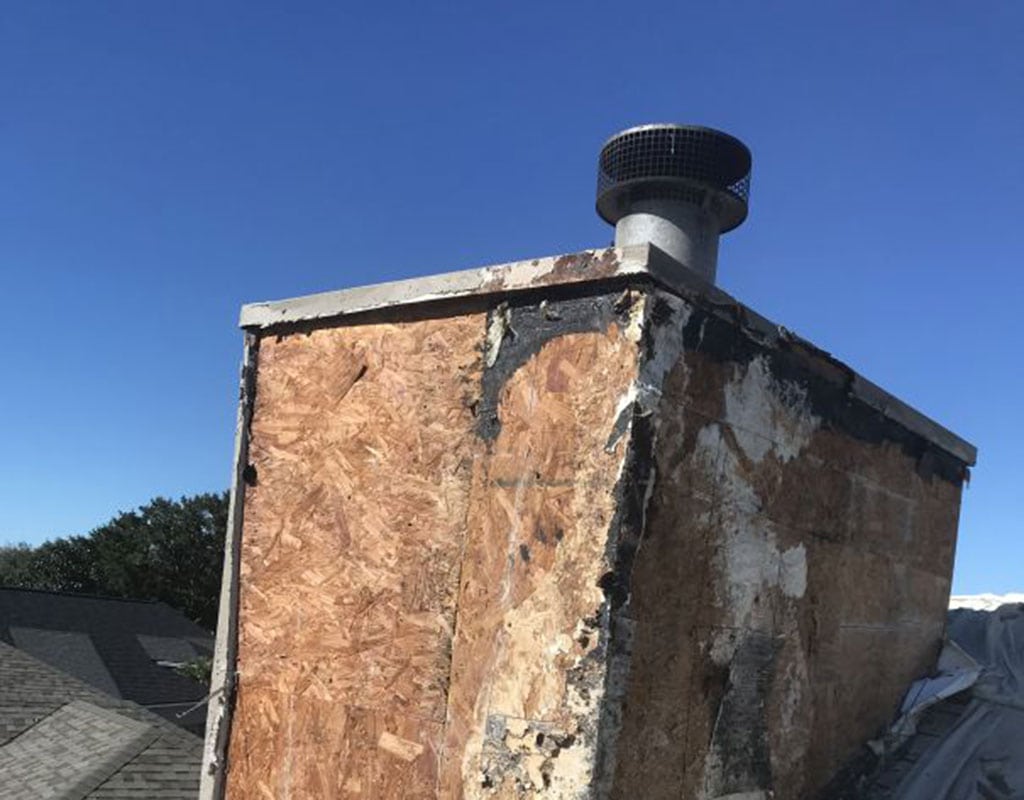
The more important question is whether the system is failing. Early-stage EIFS problems don’t always look dramatic. You might notice hairline cracks in the finish coat, especially around window corners or where different building materials meet. You might see faint staining or discoloration that appears after rain. A soft spot when you press the wall—a slight give that shouldn’t be there—is a more serious sign, often indicating that the foam board or substrate behind it has been compromised by moisture.
Inside the house, the signs can show up as water stains on interior walls or ceilings near windows, a musty smell in rooms along exterior walls, or unexplained humidity in areas that shouldn’t have it. By the time you’re seeing these symptoms, the moisture has typically been present for a while.
What makes this particularly difficult is that the exterior surface can look completely intact while serious damage is already progressing behind it. The finish coat of EIFS is relatively durable—it doesn’t necessarily crack or stain just because the substrate behind it is wet. That’s why a visual inspection from the outside isn’t enough. A qualified stucco contractor should be doing a hands-on assessment, checking for soft spots, looking at all the penetration points—windows, doors, pipes, any place where different materials meet—and understanding the full picture before recommending a repair scope.
Orange County, FL’s climate makes this more urgent than it might be elsewhere. With average humidity sitting around 74% and more than 50 inches of rainfall per year, any moisture that gets behind a barrier EIFS system doesn’t just sit there—it stays wet. The dry season brings intense UV radiation that accelerates cracking in the finish coat, opening new entry points. The June-through-September rainy season then drives water into those cracks daily. It’s a cycle that compounds the damage year over year, and homes built in the early ’90s have been through that cycle more than 30 times now.
EIFS Repair in Orange County, FL: What the Right Fix Actually Involves
When a homeowner finds out they have a 1990s EIFS problem, the first instinct is often to patch it and move on. A contractor caulks the visible cracks, maybe applies a fresh coat of paint, and the surface looks fine again. That approach works for purely cosmetic issues. It doesn’t work for moisture intrusion.
If water has already gotten behind the system, sealing the surface traps that moisture inside. The rot continues. The mold continues. The visible repair holds for a season or two, then the symptoms come back—usually worse. This is the single most common reason homeowners end up calling us after a previous contractor has already been out.
The right repair starts with an honest assessment of what’s actually happening behind the surface. That means checking every penetration point, testing for soft spots, and in cases where structural damage is suspected, coordinating with an engineer to understand the full extent of what needs to be addressed.
What a Proper EIFS Assessment Should Cover
A thorough EIFS assessment isn’t a five-minute walk around the perimeter. It’s a methodical inspection of every place where water could have entered and every area where damage could have progressed.
The highest-risk areas are almost always the penetration points—the places where the EIFS system meets a different material. Window and door frames are the most common entry points, particularly on homes where the original installation didn’t include proper flashing. Barrier EIFS homes from the 1990s can often be identified by the absence of visible flashing where the stucco meets window and door frames—the system was designed to be the barrier, so many installers skipped the flashing entirely. That decision is now showing up as water damage in homes across Orange County, FL’s older neighborhoods.
Pipes, light fixtures, and any other penetrations through the wall are also high-risk. Every one of those points is a potential water entry that needs to be checked individually. Corners and transitions—where the EIFS meets the foundation, the roofline, or a different cladding material—are also common problem areas.
Once the assessment is complete, the repair scope should be proportional to what was actually found. A small area of localized damage where the foam board and substrate are still intact might be addressable with targeted removal, substrate drying, and reinstallation of the affected section. A larger area where moisture has reached the wood framing requires removing the EIFS system down to the structural elements, assessing and replacing any rotted wood, installing proper flashing and a drainage plane, and rebuilding the system correctly. In serious cases, that work should be coordinated with a structural engineer—not because it’s always a major structural failure, but because having professional documentation of what was found and how it was repaired protects the homeowner, especially if they plan to sell.
We come from a foundation repair background. That shapes how we approach EIFS work—we’re looking for the reason the damage happened, not just the surface it showed up on. Patching the visible symptom without addressing the cause is a short-term fix that costs more in the long run.
EIFS repair costs in Orange County, FL vary significantly based on scope. For localized repairs, the range is generally $30 to $50 per square foot. For cases involving water damage remediation that has reached the structural elements, total project costs can range from $15,000 to $100,000 depending on the extent of the damage. Those numbers aren’t meant to alarm—they’re meant to explain why getting an accurate assessment early matters. A problem caught at the crack stage costs far less than the same problem caught after two more rainy seasons.
What to Look for When Hiring Stucco Workers for EIFS Problems
Not every stucco contractor has meaningful experience with 1990s EIFS systems. This is a specific type of work that requires understanding the system’s original design, its known failure mechanisms, and the correct repair approach—which is different from repairing traditional hardcoat stucco. Hiring a general contractor or painter who isn’t trained in EIFS can result in repairs that look right but don’t address the moisture problem, and in some cases can make it worse by sealing in moisture that needed to escape.
There are a few things worth asking any contractor before you hire them for this kind of work. First, ask them to explain the difference between barrier EIFS and drainable EIFS—a contractor who knows the material will answer that without hesitation. Second, ask whether their assessment includes checking the penetration points and testing for soft spots, or just a visual walk-around. Third, ask what happens if they open the wall and find more damage than expected—you want to understand their process for communicating scope changes before work begins, not after.
Florida’s contractor licensing requirements exist for good reason. Any stucco contractor working on structural repairs in Orange County, FL should be fully licensed through the Florida Construction Industry Licensing Board and carry both liability insurance and workers’ compensation coverage. For work that requires a building permit—which structural EIFS repairs often do—the contractor needs to be familiar with Orange County’s permitting process and the City of Orlando’s Building and Zoning Division requirements. Unlicensed work on a permitted project creates problems that follow the home, not just the contractor.
The reviews that matter most for this type of work are the ones that specifically mention moisture damage, EIFS, or water intrusion—not just general praise for a clean job site. When a homeowner says the crew found a rusted metal component and replaced it rather than just resealing the surface, that tells you something real about how the contractor approaches the work. That’s the kind of decision-making that separates a repair that holds from one that doesn’t.
One more thing worth knowing: if you’re planning to sell your home and it has 1990s EIFS, a buyer’s inspector is likely to flag it for moisture testing. Unresolved EIFS damage can reduce your sale price by 3 to 16 percent—on a $250,000 home, that’s $7,500 to $40,000 in value at risk. Addressing it before it shows up on an inspection report is almost always the better financial decision, and having documented, properly permitted repair work on file gives buyers and their lenders confidence that the problem was handled correctly.
Getting EIFS Stucco Problems Fixed Right in Orange County, FL
If your Orange County, FL home was built in the early 1990s, the stucco on your walls has been through more than three decades of Florida humidity, UV exposure, and rainy seasons. If it’s EIFS—and there’s a meaningful chance it is—the question isn’t whether the system is aging. It’s whether you know what’s happening behind the surface.
The good news is that most EIFS problems, caught early, are manageable. The damage that looks expensive on paper usually got that way because it was left alone for too long. An honest assessment from a contractor who actually understands these systems is the starting point—not a commitment to a full remediation, just a clear picture of what’s there.
CF Stucco and Painting works across Orange County, FL and the surrounding region specifically because these problems are concentrated here. If you’re seeing cracks, soft spots, staining, or you simply want to know what you’re dealing with before it becomes urgent, reach out to us for an inspection and a straight answer.