Your stucco looks fine from the street. No obvious cracks. No peeling paint. Nothing that screams “problem.”
But here’s what most Central Florida homeowners don’t realize until it’s too late: moisture doesn’t announce itself. It hides behind your walls for years, quietly rotting wood and feeding mold, until one day you’re staring at a $60,000 repair estimate. Spring gives you a brief window to catch these issues before the rainy season makes everything worse. This isn’t about paranoia. It’s about knowing what to look for, what you can handle yourself, and when it’s time to bring in someone who actually knows where Florida humidity likes to hide.
Spring Stucco Inspection Checklist for Florida Homes
Walk your property on a dry day when the light is good. You’re looking for anything that breaks the pattern. Start at ground level and work your way up.
Check around windows and doors first. These are where water finds its way in. Look for cracks, even hairline ones. Check if caulking has pulled away or dried out. Run your hand along the stucco near these openings and feel for soft spots or areas that give when you press gently.
Move to corners, roof lines, and anywhere two surfaces meet. These transition points fail first in Florida’s climate. You’re not trying to diagnose everything yourself. You’re gathering information about whether you need someone with better tools to take a closer look.
What Stucco Water Stains Actually Tell You
Dark streaks running down from windows aren’t just ugly. They’re your stucco telling you that water is getting in and can’t get back out. These stains show up as brownish or grayish blotches, sometimes with a trail that traces exactly where water traveled after the last heavy rain.
White chalky deposits mean something different. That’s efflorescence, and it happens when water pulls minerals out of your stucco as it evaporates. It looks harmless, almost like someone splashed white paint. But it confirms that moisture is moving through your wall, and wherever moisture goes in Florida, mold eventually follows.
Green or black films are mold growing on the surface. You can pressure wash it off, but if it comes back within weeks, the problem isn’t on your stucco. It’s behind it. Surface mold means there’s enough moisture trapped in there to keep feeding growth, and that’s when you stop DIYing and start making calls.
Not all stains mean catastrophic damage. Sometimes it’s just poor drainage from a gutter or a sprinkler hitting the wall. But you can’t know which kind you’re dealing with without either fixing the obvious water source and watching what happens, or getting someone to measure what’s actually happening behind that stucco. Central Florida gets more than 50 inches of rain annually. Every stain is worth understanding before June hits and the real storms start.
Stucco Moisture Problems You Can’t See Without Help
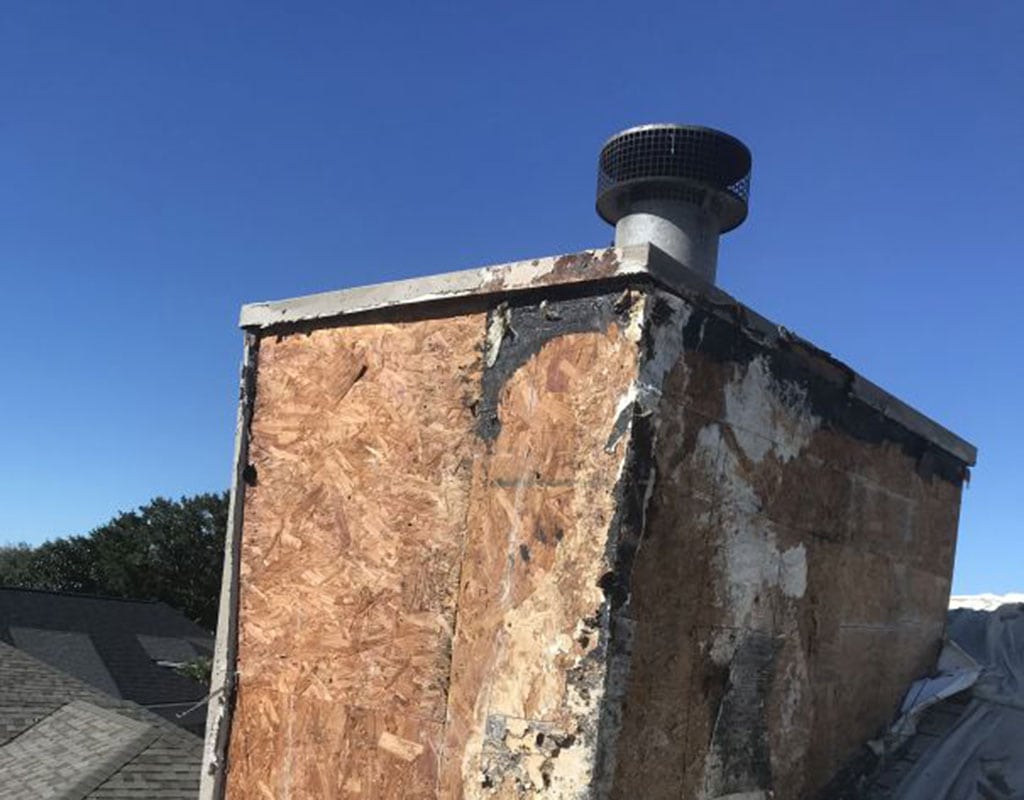
Here’s the part that keeps stucco contractors in business: the worst damage doesn’t show up until it’s expensive. Moisture gets behind your stucco through a crack you’d need a magnifying glass to see. It sits there in Florida’s heat and humidity, rotting the wood sheathing and studs that actually hold your house together. By the time the stucco starts bulging or you smell something musty, you’re not talking about a repair anymore. You’re talking about remediation.
Professional inspectors use thermal imaging cameras that show them temperature differences in your walls. Wet areas show up cooler than dry spots. They use moisture meters that measure exactly how much water is in the wood behind your stucco, not just whether it feels damp. And when they really need to know what’s happening, they drill tiny probe holes and measure moisture content in the substrate itself.
You can’t do any of that with a ladder and good intentions. The equipment costs thousands, and knowing what the readings actually mean takes years of seeing how Florida homes fail. This is why a $700 inspection can save you $70,000 in stucco repairs. It’s not about finding problems to sell you work. It’s about measuring what’s actually there before it becomes obvious to everyone, including your insurance company, who won’t cover it because it’s been happening slowly for years.
Florida’s humidity doesn’t take breaks. Even homes that look perfect can have moisture content in the wood that’s right at the edge of causing rot. Add one poorly sealed window or one missing piece of flashing, and you’ve tipped into damage territory. The only way to know where you stand is to measure it, and that means bringing in someone with the right tools and enough experience to interpret what those tools are saying.
Cost of Professional Stucco Inspection vs DIY Assessment
A professional stucco inspection in Orange County, FL runs between $500 and $1,200 for most homes. That covers a visual assessment, thermal imaging, and moisture testing in suspected problem areas. Larger homes or properties that need extensive probe testing can push toward $1,500.
Your DIY inspection costs nothing but time. Walk the house, check for obvious damage, take photos of anything concerning. That’s useful. It tells you whether you need to schedule a professional or whether you’re just being cautious. But it won’t tell you if moisture is hiding where you can’t see it, and in Florida, that’s where the expensive problems live.
The real question isn’t whether you can afford an inspection. It’s whether you can afford to skip one and find out later that water has been destroying your wall structure for three years.
What You Actually Get for Inspection Costs
When you pay for a professional stucco inspection, you’re buying information you can’t get any other way. The inspector walks your property looking for the same things you would—cracks and stains and soft spots—but they know which ones matter and which ones don’t. They’ve seen enough Florida homes to recognize patterns.
Then they pull out the thermal camera. It shows them cold spots where moisture is evaporating, warm spots where insulation is missing, and temperature patterns that indicate water is getting in through flashing failures you’d never spot from the ground. They use moisture meters on any suspicious areas, getting actual readings on how wet the wood is behind your stucco.
If those readings are high, they may recommend probe testing. That means drilling small holes and inserting sensors that measure moisture deeper in the wall assembly. Those holes get sealed after testing, and what you get is a number that tells you exactly how much trouble you’re in or whether you’re fine and just being thorough.
The inspection report documents everything with photos, moisture readings, and specific locations of any problems. That matters if you’re buying or selling. It matters if you need to file an insurance claim later. And it matters when you’re getting repair quotes, because you’ll know exactly what needs fixing instead of trusting that the contractor isn’t adding work you don’t need. Most inspectors in Central Florida deliver reports within 24 to 48 hours.
What you’re really paying for is certainty. Either you learn that your stucco is doing its job and you can stop worrying, or you learn exactly what’s failing and can fix it before it spreads. Both of those outcomes are worth more than the inspection costs.
When DIY Inspection Is Enough and When It’s Not
Do your own inspection twice a year—spring and fall. Walk the house, check the usual suspects, take notes. If everything looks the same as last time and nothing’s getting worse, you’re probably fine. This works for homes that were built correctly, maintained regularly, and haven’t been hit with anything unusual.
Call a professional if you see any staining or discoloration, even small amounts. Call if you find cracks wider than a credit card. Call if any area feels soft or spongy when you press on it. Call if you’re seeing mold that comes back after you clean it. And definitely call if you’re buying a home with stucco, selling one, or if your house was built between 1980 and 2000 when Florida’s building codes weren’t as strict about moisture barriers.
Your DIY inspection is a screening tool. It tells you whether everything is obviously fine or whether you need better information. Think of it like checking your oil. You can look at the dipstick yourself, but if it’s low or looks wrong, you’re not rebuilding the engine in your driveway. You take it to someone who knows what they’re looking at.
Florida’s climate is hard on stucco. The humidity, the rainfall, the heat—all of it creates conditions where moisture problems develop even in well-built homes. Professional inspectors see this every day. They know what Central Florida stucco failures look like at every stage. They know which problems are urgent and which ones you can monitor. They know what’s normal settling and what’s a sign that water has been getting in for years.
If you’re not sure whether you need an inspection, that uncertainty is your answer. The cost of being wrong is too high. A $700 inspection that finds nothing is still cheaper than ignoring a problem until it costs $50,000 to fix. And if the inspection does find something, you caught it early enough that the repair might only be a few thousand instead of a full remediation project that involves tearing off sections of your exterior and replacing rotted framing.
Protecting Your Home Before Florida’s Rainy Season Hits
Spring in Central Florida gives you maybe eight weeks to handle this before the heavy rains start. Use that time. Walk your house and look for the warning signs. Check your caulking, inspect around windows, feel for soft spots. If everything looks good, you’ve got peace of mind and you know what to watch for next time.
If you find anything concerning, or if you just want to know for sure that moisture isn’t hiding where you can’t see it, get a professional inspection scheduled. The inspection itself takes a few hours. The report gives you real numbers about what’s happening behind your stucco. Then you can make decisions based on facts instead of hoping everything is fine.
Your home is likely your biggest investment. Stucco problems don’t fix themselves, and Florida’s climate doesn’t give you breaks. But catching issues early—before they spread, before they rot your framing, before they become the kind of problem that shows up on inspection reports and kills real estate deals—that’s manageable. We’ve spent over 20 years helping Central Florida homeowners protect their stucco from exactly these issues, with the kind of clear communication and realistic timelines that let you plan instead of panic.