You noticed a crack. Maybe a stain. Maybe a section of stucco that sounds hollow when you tap it. So you called around for estimates. Now you’re staring at quotes that don’t match, wondering how the same crack on the same house can cost $500 from one contractor and $4,000 from another.
That gap isn’t random. It comes down to what’s actually happening behind the surface — and whether the contractor in front of you has bothered to find out. This guide walks you through what actually goes into a stucco repair estimate in Orange County, FL, what the numbers should look like, and how to tell whether you’re getting a real diagnosis or just a patch job.
Average Cost of Stucco Damage Repair in Orange County, FL
Nationally, most homeowners pay somewhere between $600 and $2,659 for stucco repairs, with an average around $1,629. The per-square-foot range runs from $8 to $50 depending on the type of damage, the stucco system involved, and how deep the problem goes once a contractor actually opens it up. Labor typically accounts for at least half of that total.
Those numbers are a reasonable starting point, but they don’t fully account for what it means to repair stucco in Central Florida. Orange County, FL averages around 74% humidity year-round. That sustained moisture load changes the equation — it accelerates stucco failure, encourages mold growth behind walls, and means that what looks like a surface crack on the outside can involve waterlogged substrate on the inside.
Florida-specific conditions push repair complexity, and therefore cost, toward the higher end of national ranges more often than not. What appears to be a minor surface issue in a drier climate can mask significant moisture damage in Orange County’s environment.
What Makes One Stucco Repair Estimate So Much Higher Than Another?
The single biggest driver of cost variance in stucco repair is what’s happening behind the visible surface — and most homeowners have no way of knowing until someone actually inspects it. A contractor who gives you a quote over the phone without seeing the wall is guessing. A contractor who shows up, taps the surface, checks for moisture, and looks at the crack pattern before quoting is doing their job.
The type of stucco matters enormously. Traditional three-coat stucco — cement, lime, sand, and water — behaves very differently from EIFS (synthetic stucco), which layers foam insulation board, fiberglass mesh, a base coat, and a finish coat. Repairing EIFS isn’t just about the surface; if moisture has gotten behind the system, the foam board may need to be replaced entirely, which is a significantly larger scope of work.
The depth of damage is another major variable. A hairline crack from normal thermal cycling — the daily expansion and contraction that Florida’s heat causes — is very different from a diagonal crack running from the corner of a window toward the foundation. That second type of crack is often a symptom of foundation movement, which is common in Orange County, FL’s sandy, high-water-table soils. Patching the surface without understanding what caused it means the crack comes back, usually worse.
Wood rot beneath the stucco is the hidden cost most homeowners don’t anticipate. When moisture has been infiltrating through a crack or failed sealant for months or years, the wood framing or sheathing underneath can deteriorate significantly. By the time you see exterior staining or feel the wall flex underfoot, the substrate damage may already be substantial. In Orange County’s 74% humidity environment, water sitting against wood accelerates decay far faster than in drier regions.
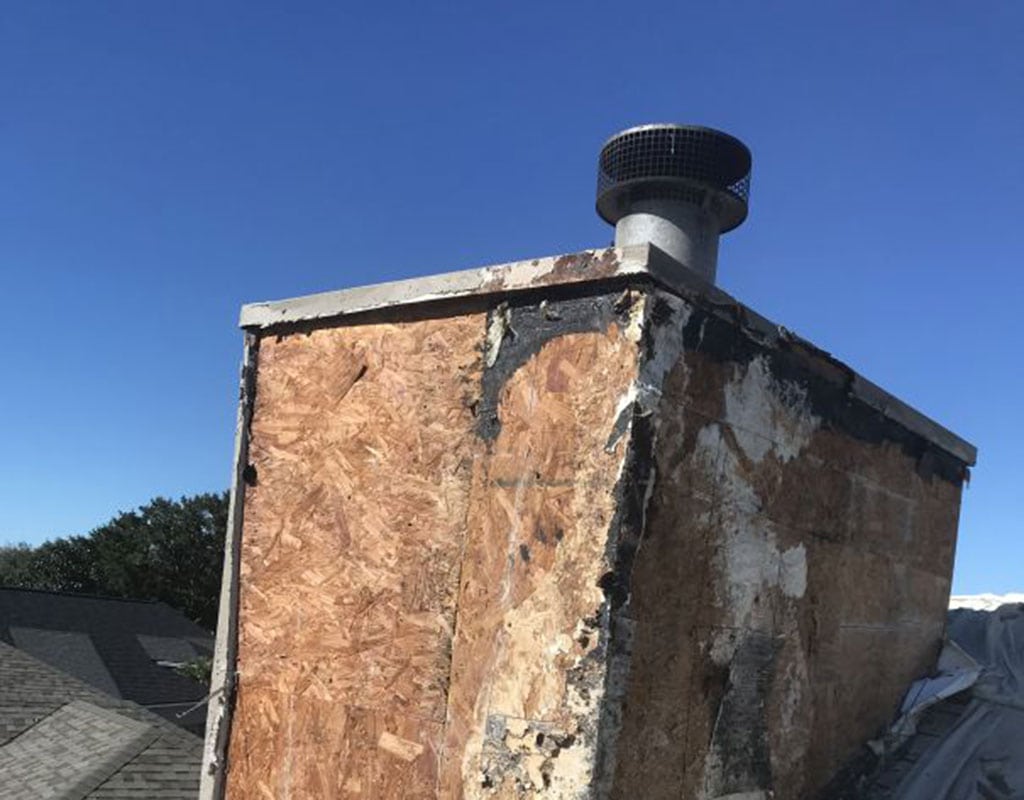
The location and accessibility of the repair affects labor cost too. A crack at eye level on a flat wall is straightforward. The same crack on a chimney, above a roofline, or on a two-story elevation requires additional setup time and equipment. That’s reflected in the estimate.
Why Orange County’s 1990s Homes Face Different Stucco Problems
A significant portion of Orange County, FL’s suburban neighborhoods — think Hunters Creek, Metrowest, Windermere, and the communities that developed rapidly through the late 1980s and 1990s — were built during the peak years of EIFS installation. Synthetic stucco was widely used on residential construction during that era, often applied without the drainage planes that modern building codes now require.
Those systems are now 25 to 35 years old, and many of them are failing. Not dramatically, in most cases — not with water pouring through the walls. More quietly: moisture accumulating behind the finish coat over years, slowly degrading the foam insulation board, softening the substrate, and sometimes fostering mold growth well before any exterior symptom appears. By the time a homeowner notices staining, bubbling, or a soft spot in the wall, the damage behind it is often more extensive than the surface suggests.
This is a locally specific problem that national cost guides don’t address. When we assess an EIFS system on a 1990s Orange County, FL home, we’re not just looking at the finish coat — we’re evaluating the full system, including whether the foam board has been compromised and whether moisture has reached the framing. That assessment changes both the scope of the repair and the estimate.
It also changes what a “good” repair looks like. A contractor who coats over a compromised EIFS system without addressing the underlying moisture issue hasn’t solved the problem — they’ve covered it up. The right repair on an aging EIFS system may cost more upfront, but it’s the only kind that actually holds.
We work with cosmetic masonry specialists to match existing textures and colors, because a repair that’s structurally sound but visually obvious isn’t a finished job. In Orange County’s active real estate market where home values are closely tied to curb appeal, a seamless repair matters — whether you’re staying in the house or preparing to sell it.
Replace Stucco with Siding Cost: When Does It Actually Make Sense?
When a stucco repair estimate comes in higher than expected, it’s natural to wonder whether you’d be better off removing the stucco entirely and replacing it with siding. It’s a reasonable question, and the honest answer is: sometimes yes, but less often than people assume.
Stucco removal alone — before any new material goes on — typically runs between $3 and $10 per square foot, with average total removal projects costing around $7,000 and larger jobs reaching $14,000 or more. That’s just the demo work. New siding installation is a separate line item on top of that.
Cost to Remove Stucco and Replace with Siding in Florida
The math on stucco-to-siding replacement can be sobering once you lay it out. Stucco removal runs $12 to $15 per square foot when you factor in disposal fees. Vinyl siding installation adds $6.50 to $12.50 per square foot. If you’re considering fiber cement board like Hardie Board instead, that option carries an $8,000 to $10,000 premium over vinyl — and for a medium-sized home, total project costs including removal and labor can reach $80,000 or more.
Compare that to the cost of a targeted stucco repair on localized damage, which in most cases is a fraction of that figure. For homeowners dealing with a section of failed stucco — even a significant one — repair is almost always more cost-effective than full replacement, assuming the underlying structure is sound and the damage is contained.
Where replacement starts to make sense is when the stucco system has failed across the majority of the exterior, when moisture infiltration has been ongoing for long enough that the substrate damage is widespread, or when a homeowner has a strong preference for a different exterior material and is planning a larger renovation anyway. In those situations, the economics of repair versus replace shift.
Florida adds one more variable worth mentioning: the type of stucco affects how difficult removal is. Cement-based traditional stucco is heavy and labor-intensive to remove. EIFS is lighter but can conceal moisture damage that only becomes apparent once the system is opened up, which can add scope and cost to a removal project. Getting an honest assessment of what’s actually on your home — and what condition the substrate is in — is the only way to make this decision with real information rather than assumptions.
What a Trustworthy Stucco Repair Estimate Process Actually Looks Like
A legitimate stucco repair estimate starts with a physical inspection — not a phone call, not a photo, not a quick look from the driveway. We need to see the crack pattern up close, check for moisture behind the wall, assess whether the damage is cosmetic or structural, and evaluate the condition of the substrate before any number means anything.
Diagonal cracks running from window or door corners toward the ground are a different conversation than hairline cracks in the finish coat. One is likely cosmetic; the other may indicate foundation movement. In Orange County, FL, where sandy soils and a high water table make foundation settlement more common than in many other parts of the country, misreading that distinction leads to repairs that fail within a season or two.
Our owner’s 20-year background in foundation repair means we’re looking at stucco problems through a structural lens, not just a surface one. When a repair calls for engineering input, we coordinate that — because a patch over a structural problem isn’t a repair, it’s a delay.
After the inspection, a written estimate should clearly explain what’s included, what might change if additional damage is found once work begins, and why. The price range on a stucco job can be wide because what’s visible on the surface doesn’t always reflect what’s underneath. What you want is transparency: here’s what we see, here’s what we expect, here’s what could change and why.
We also think it’s worth asking any contractor you’re considering about their approach to texture and color matching. A structurally sound repair that leaves a visible patch is an unfinished job. For homeowners in Orange County, FL’s active real estate market — whether you’re listing soon or just want the exterior to look right — that detail matters more than most contractors acknowledge.
We offer discounts for military members, first responders, and seniors. It’s a small thing, but it reflects how we think about the people we work for.
Getting a Stucco Repair Estimate in Orange County, FL? Here’s What to Do Next
The cost of stucco repair in Orange County, FL varies as much as it does because stucco problems vary as much as they do. A surface crack and a moisture-compromised EIFS system are not the same job, and they shouldn’t carry the same estimate. The number that matters is the one that comes after someone has actually looked at your home, understood what’s causing the damage, and told you the truth about what it will take to fix it properly.
If your stucco has been patched before and the problem came back, that’s a diagnostic failure — not a material one. If you’ve gotten wildly different quotes and don’t know how to evaluate them, that’s a sign you need an inspection, not just another number.
CF Stucco and Painting serves Orange County, FL and the surrounding Central Florida region. Reach out online and we’ll get back to you within 24 to 48 hours to schedule a time to take a real look.