You noticed a crack in your stucco. Maybe it appeared after last summer’s thunderstorms, or you spotted it while pressure washing the driveway. Now you’re standing there wondering whether it’s nothing — or whether it’s the kind of thing you’re going to regret ignoring for another six months.
That uncertainty is exactly why we created this guide. Stucco cracks are the most common visual trigger that sends Orange County homeowners to Google, and for good reason. In our climate, a crack that looks minor on the surface can be doing real damage behind the wall. But not every crack is a crisis either. The goal here is to give you a straightforward way to read what you’re seeing — so you can make a smart decision instead of a panicked one.
When to Worry About Stucco Cracks — and When You Can Relax
The honest answer is that crack severity depends on more than just size. Width matters, but so does location, direction, and what’s happening around the crack — things like discoloration, soft spots, or bubbling paint nearby.
Hairline cracks — typically less than 1/16 to 1/8 of an inch wide — are the most common type and often the least serious. They form as stucco expands and contracts with temperature and humidity changes, which in Orange County, FL happens constantly. A home in Windermere or Dr. Phillips goes through dozens of these micro-stress cycles every week. That kind of surface cracking is normal aging, and in many cases it can be addressed without major intervention.
What changes the calculation is when a crack runs diagonally near a window or door, when it’s wide enough to slip a credit card into, or when you notice it alongside water staining, efflorescence (that white chalky residue), or paint that’s bubbling away from the wall. Those are signs the crack is connected to something deeper than surface shrinkage.
Spider Cracks and Cross-Pattern Cracks: What They’re Telling You
Two crack patterns that tend to alarm homeowners — and rightly so — are spider cracks and cross-pattern cracks. They look different, and they mean different things.
Spider cracks spread outward from a central point in a web-like pattern. They’re usually caused by an insufficient mud mix during the original stucco application, or by the stucco drying too fast before it had a chance to cure properly. In Florida’s summer heat, this is more common than people realize. A crew working during peak afternoon temperatures in July can inadvertently rush the cure, and the result shows up years later as a web of fine cracks across the wall surface.
On their own, spider cracks are often cosmetic — but they do open the surface to moisture, which in a climate that averages 74% humidity year-round is never something to ignore for long.
Cross-pattern cracks are a different story. These look like a grid — overlapping vertical and horizontal lines across a section of wall. That pattern typically points to a problem with the metal lath underneath the stucco, the framework the stucco is applied over. If the lath wasn’t properly fastened to the structure, it can shift and pull away, and the stucco above it fractures along those stress lines.
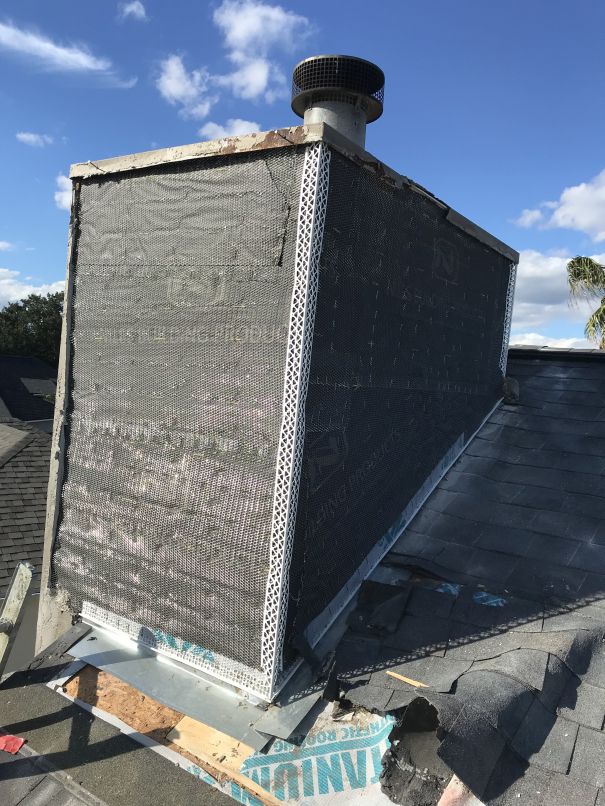
This isn’t a surface repair situation. Fixing it correctly means removing the affected stucco, addressing the lath, and rebuilding from there. Patching over cross-pattern cracking without dealing with the underlying cause is one of the most common mistakes we see — and one of the most common reasons homeowners end up calling us after a previous repair failed within a year. The crack you can see is a symptom. The question worth asking is what caused it, because that’s what determines whether a repair holds.
Diagonal Cracks Near Windows and Doors in Orange County Homes
Of all the crack types homeowners ask us about, diagonal cracks near window and door corners are the ones that deserve the most attention. They’re also, unfortunately, among the most common in Orange County’s housing stock.
Here’s why they form: windows and doors create stress concentration points in a wall. The stucco around them has to accommodate any movement in the structure — and in Central Florida, there’s a lot of movement to accommodate. Much of Orange County sits on Myakka fine sand, a loose, sandy soil that’s prone to settling and shifting over time. When a home’s foundation moves even slightly, that stress travels up through the wall and concentrates at the corners of openings. The result is a diagonal crack running at roughly 45 degrees from the corner of a window or door frame.
A narrow diagonal crack that’s been stable for years may be nothing more than the house settling into its foundation — something that happened decades ago and isn’t actively progressing. But a diagonal crack that’s widening, that appeared recently after a heavy rain event, or that’s accompanied by a door that’s started sticking or a window that no longer closes cleanly — those are signs the movement may still be active.
This is where our background in foundation repair becomes genuinely useful. Most stucco contractors look at a diagonal crack and see a patching job. With over 20 years of experience in foundation repair before focusing on stucco, we look at the same crack and ask whether the structure behind it is still moving. When there’s any question, we coordinate with engineers to evaluate the situation properly. It’s a step that costs a little more time upfront and saves homeowners from a repair that fails in six months because the root cause was never addressed.
Stucco Hairline Crack Repair: What’s Actually Involved
Hairline cracks are the category most homeowners feel tempted to handle themselves, and in some cases that instinct is reasonable. A true surface hairline crack — shallow, stable, and away from structural stress points — can often be addressed with the right caulk and a careful paint match.
The problem is that “the right caulk” and “careful paint match” are doing a lot of work in that sentence. In Florida’s humidity, the timing of a stucco repair matters as much as the materials. Apply caulk when the surface is holding moisture from the night before, and adhesion suffers. Paint before the caulk has fully cured, and the repair cracks again within months.
The best window for this kind of work in Orange County is October through April, when humidity drops enough to support proper curing — though repairs can be done year-round with the right approach and realistic timing expectations.
When Hairline Cracks in Florida Stucco Are More Than They Appear
The scenario we see most often goes something like this: a homeowner notices hairline cracks, caulks them over, paints the wall, and considers it done. Two rainy seasons later, the cracks are back — and this time there’s a soft spot in the wall, a water stain on the interior drywall, or paint bubbling along the base of the wall near the weep screed.
What happened is that the caulk sealed the surface but didn’t address what was happening behind it. In Orange County, where June through September brings daily afternoon thunderstorms, water finds its way into even the smallest surface opening. Once it’s behind the stucco, it has nowhere to go.
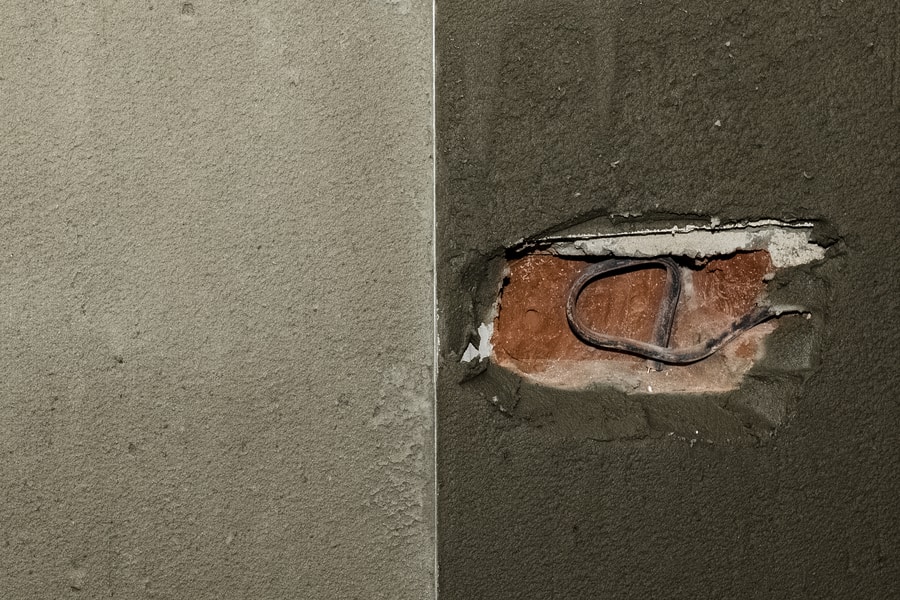
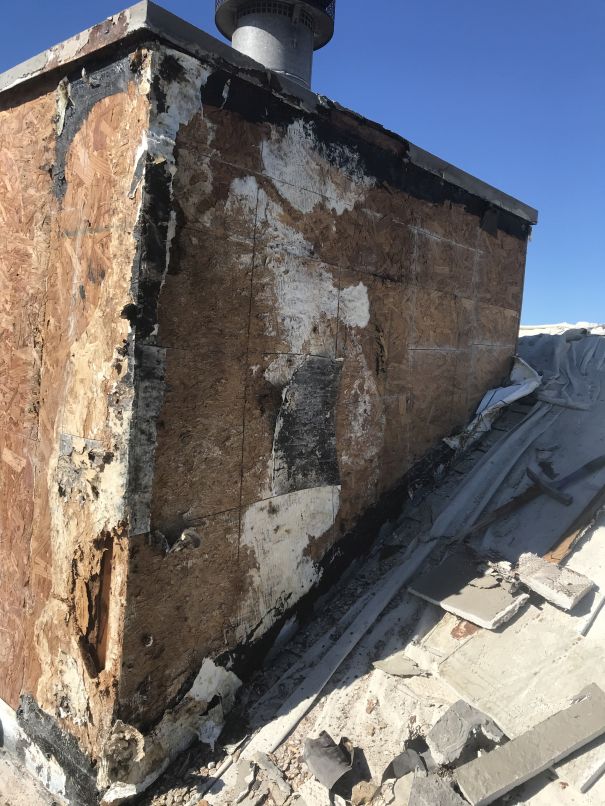
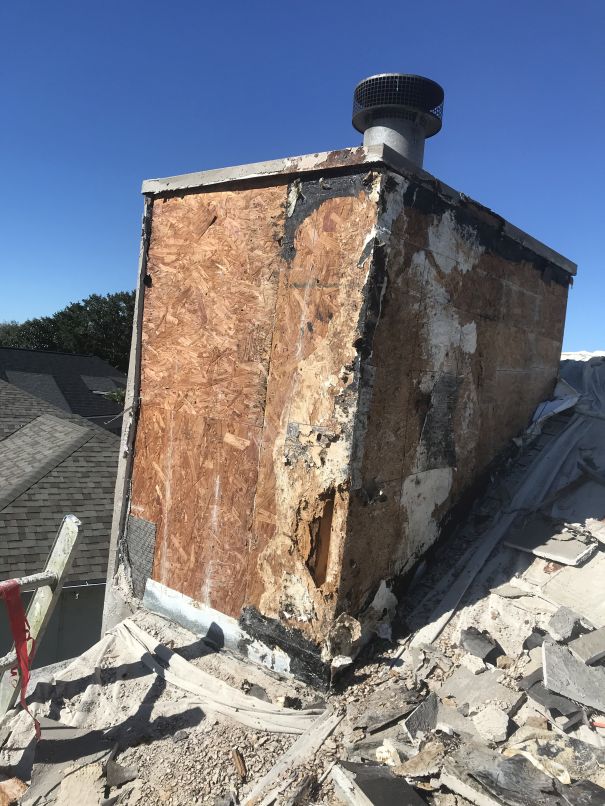
Over time, that trapped moisture works its way into the wood framing or sheathing underneath — and wood rot in a humid subtropical climate moves faster than most people expect. By the time the problem becomes visible from inside the house, the exterior damage is usually already significant. What might have been a straightforward surface repair has become a moisture remediation job that involves removing stucco, replacing rotted wood, and rebuilding the wall system from the substrate out.
We handle all of that — the wood repair, the stucco work, and the finish — because doing it in pieces with different contractors is how things get missed. Most hairline cracks are exactly what they look like. But in Florida’s climate, the downside of misreading one is real enough that getting a professional opinion before deciding to DIY is almost always worth the time. We offer estimates after a proper inspection, so you know what you’re actually dealing with before any commitment is made.
Stucco Exterior Wall Repair for 1990s EIFS Homes in Orange County
There’s a specific category of Orange County home that comes with its own set of stucco concerns, and it’s worth addressing directly: homes built between roughly 1988 and the late 1990s that used EIFS — Exterior Insulation and Finish System, sometimes called synthetic stucco or Dryvit.
EIFS was widely used during that era in established neighborhoods across Orange County, including parts of Dr. Phillips, Bay Hill, and Windermere. It’s a layered system — rigid foam insulation board covered by a base coat and a thin textured finish — and it looks similar to traditional stucco from the street. But it behaves very differently, and it requires a completely different approach to repair.
The core issue with aging EIFS systems is moisture management. Early EIFS installations often lacked proper drainage planes, meaning water that found its way behind the system had no exit path. Over 25 to 35 years, that trapped moisture causes the base coat to delaminate, the finish layer to crack and separate, and in many cases, the wood framing underneath to rot. Homeowners sometimes don’t realize they have EIFS until we open up a section of wall and find the damage that’s been accumulating quietly for years.
Repairing EIFS correctly is not the same as repairing traditional Portland cement stucco. The materials are different, the diagnostic process is different, and the repair sequence is different. A contractor who treats them the same will either make the problem worse or create a repair that fails within a few years. We specialize in these aging EIFS systems specifically because they’re so common in Orange County’s housing stock and so frequently mishandled. If your home was built during that era and you’re seeing surface cracks, soft spots, or discoloration, it’s worth having someone who actually knows the system take a look — not just someone who can patch the surface.
What to Do When You Find Cracks in Your Stucco
Most cracks in stucco are manageable — especially when they’re caught early. The ones that become expensive are almost always the ones that were noticed, set aside, and revisited a rainy season or two later when the damage had already spread behind the wall.
If you’re in Orange County and you’ve spotted something on your stucco exterior — whether it’s a hairline crack, a diagonal line near a window, a spider web pattern, or something you can’t quite categorize — the most useful thing you can do is get a real assessment before deciding whether it’s nothing or something. Not every crack needs a major repair. But knowing which kind you have changes everything about how you respond to it.
CF Stucco and Painting works throughout Orange County and the surrounding area, and we’re happy to take a look and give you a straight answer about what you’re dealing with. No pressure, no inflated diagnosis — just an honest evaluation and a clear estimate if work is needed.