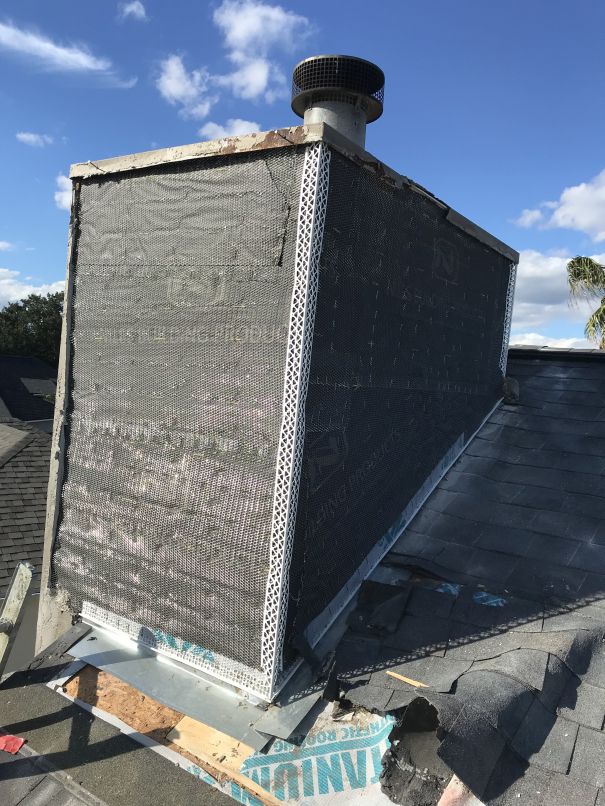
Hurricane season officially starts June 1, but the prep window that actually matters is right now — May and early June, before the first named storm forms and contractors get buried in calls. If your home has a stucco exterior, a walk-around inspection before the season starts isn’t just a good idea. It’s the difference between a minor repair and a major remediation. Orange County isn’t coastal, but it’s not protected either. Hurricane Charley proved that in 2004, when it pushed hurricane-force winds into Orlando from nearly 100 miles away. Here’s what to look for — and what it means when you find it.
Cracks in Stucco: What They’re Telling You
Not every crack is a crisis. But in a climate like Central Florida’s — 74% average humidity, 50-plus inches of rain a year, and a hurricane season that runs through November — even small cracks deserve a second look before the storms arrive.
The reason isn’t the crack itself. It’s what happens when storm-driven rain hits a wall with an open entry point. Unlike ordinary rainfall, hurricane rain is forced horizontally into wall assemblies under pressure. A crack that’s been harmless for years can become a water infiltration path in a matter of hours.
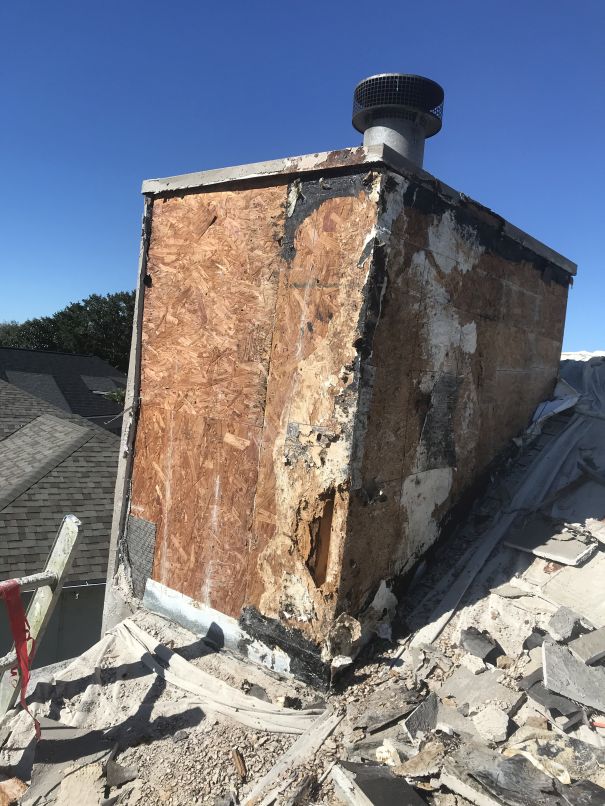
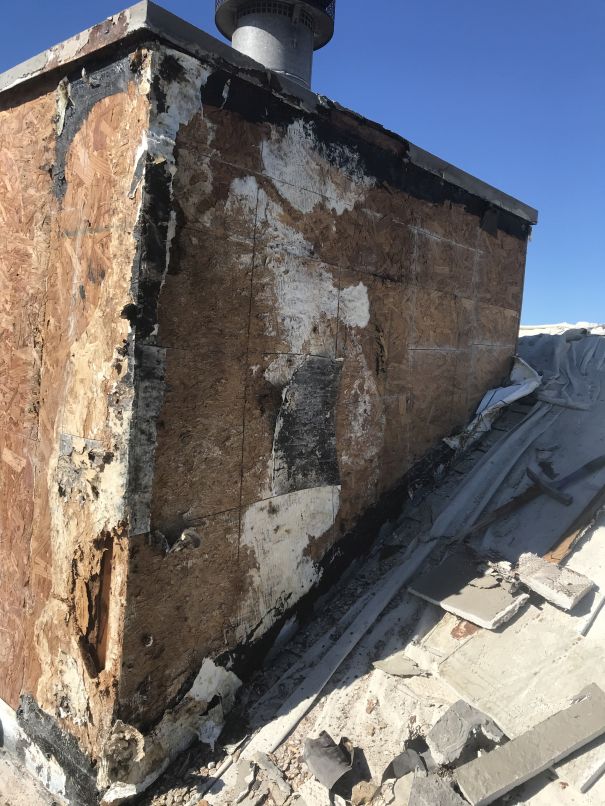
The first thing to understand is that stucco is not waterproof. It’s water-resistant, and it relies on the moisture barrier behind it to do the actual stucco waterproofing work. When cracks let water past the finish coat, everything behind it — the moisture barrier, the metal lath, the framing — is exposed. By the time you see a stain on your wall or feel a soft spot, that process has usually been happening for a while.
How to Tell If a Stucco Crack Is Serious
There’s a simple field test that professionals use and homeowners can apply themselves: the credit card test. If a crack is wide enough to slip the edge of a credit card into, it’s significant enough to need a proper assessment — not just a bead of caulk from a hardware store tube.
Hairline cracks under about 1/8 of an inch are common in Florida stucco and generally fall into the maintenance category. They still need to be sealed, especially before hurricane season, but they don’t necessarily point to something serious underneath.
What you’re really watching for are the cracks that tell a different story. Stair-step cracks — the ones that follow the pattern of the masonry blocks underneath — often indicate foundation movement. That’s not a surface problem. Bulging or bowing stucco is another major warning sign. When the stucco is pushing outward, it means water has already gotten trapped behind it and is working against the wall from the inside.
Spiderweb or map cracking across a larger area can indicate that the base coat has failed or that the finish coat has dried too fast. These patterns look dramatic but aren’t always structural — the key is understanding what’s underneath. And that’s where a lot of homeowners run into trouble, because the surface appearance of a crack doesn’t always match the severity of what’s happening behind it.
One detail that’s easy to overlook during a walk-around: the bottom edge of your stucco walls. There’s a metal flashing at the base called a weep screed, and it’s designed to let any moisture that gets behind the stucco drain out rather than sit. If it’s clogged, bent, or buried under soil or mulch, it can’t do its job. Same goes for kick-out flashing at roof-wall intersections — if it’s missing or damaged, water gets funneled directly into the wall assembly every time it rains. Both of these are worth checking before the season starts.
Why 1990s Homes in Orange County Need a Closer Look
If your home was built in the 1980s or 1990s — and a significant portion of Orange County’s housing stock was — there’s a specific reason to pay closer attention this season. That era saw widespread use of EIFS, or Exterior Insulation and Finish Systems, sometimes called synthetic stucco. These systems look similar to traditional hardcoat stucco from the outside, but they behave very differently, especially when it comes to moisture.
The problem is that many EIFS systems from that period were installed without drainage planes or adequate water-resistive barriers. Modern code requires these layers. Older installations often don’t have them. What that means in practice is that any moisture that gets behind the finish coat has nowhere to go. It sits against the framing and sheathing, and over time, it causes rot. In some cases, significant structural damage develops with no visible surface signs for years. By the time a homeowner notices something — a soft spot, a stain, a section of stucco that sounds hollow when you tap it — the repair has usually grown considerably in scope.
Neighborhoods like Conway, Meadow Woods, Hunters Creek, MetroWest, and the Doctor Phillips area have a lot of homes in this age range. If you’re in one of them and you haven’t had an EIFS-specific inspection, that’s the single most important thing you can do before hurricane season arrives. Traditional stucco inspection and EIFS inspection are not the same process. EIFS requires different tools — moisture probes, and in some cases thermal imaging — and a contractor who understands how these systems fail. A general walk-around won’t catch what’s already happening behind the finish coat.
It’s also worth noting that homes built before 2002 were constructed to lower wind resistance standards. Florida unified and strengthened its building code after Hurricane Andrew, but anything built before those reforms went into effect is operating under older requirements. That’s not a reason to panic, but it is a reason to be thorough.
Hurricane Damage Repair Starts Before the Storm, Not After
Most people think of hurricane damage repair as something you deal with after a storm. And sometimes that’s unavoidable. But the homeowners who come out of a bad storm with manageable repair bills are usually the ones who did their inspection beforehand — because they knew what was already compromised and had it addressed before the wind and rain made it worse.
Orange County received over $217 million in federal disaster relief after Hurricane Ian in 2022. That number reflects real damage to real homes across this county. A pre-season inspection doesn’t prevent a storm, but it does mean you’re not walking into hurricane season with existing moisture damage, open cracks, or failing EIFS — the conditions that turn a storm event into a full remediation.
What a Professional Stucco Inspection Actually Covers
A professional stucco inspection is not just a visual walk-around. A thorough inspection covers all exterior elevations, checks weep screeds and kick-out flashings, looks at the condition of caulking around windows and doors, and assesses whether the stucco system shows signs of moisture infiltration — including signs that aren’t visible to the naked eye.
For traditional hardcoat stucco, an experienced inspector can often identify problem areas through a combination of visual assessment and probing. For EIFS systems, the process is more involved. Moisture probes are used to test readings behind the finish coat, and in some cases thermal imaging is used to map wet areas without removing any material. Wet areas show up cooler than dry spots on an infrared scan, which helps pinpoint where water has entered and how far it’s traveled.
What a good inspection also does is give you documentation. If you’re in an area that takes a direct hit and you need to file an insurance claim, having a professional assessment of your stucco’s condition before the storm matters. Insurance adjusters sometimes undervalue soft damage — surface cracking, minor delamination — unless a contractor’s report clearly identifies the structural implications. Photographs of every elevation taken before hurricane season, combined with a written inspection report, put you in a much stronger position if you need to make a claim.
The inspection itself is also the starting point for understanding what kind of stucco wall repair, if any, you actually need. Not every inspection turns into a repair job. Sometimes the finding is that your stucco is in solid shape and a few areas of caulking need attention. That’s a good outcome. The point is knowing before the storm — not guessing.
Stucco Inspection Cost: What to Expect in Orange County
Professional stucco inspections for residential properties typically range from $495 to $1,595, depending on the size of the home, the number of exterior elevations, the type of stucco system, and whether advanced tools like moisture probes or thermal imaging are needed. Homes with three or more elevations, or properties with EIFS systems that require moisture mapping, tend to fall toward the higher end of that range. EIFS-specific inspections in Florida commonly run between $400 and $600 for smaller properties.
That range can feel like a meaningful expense, especially if your inspection comes back clean. But consider it against the alternative. Full stucco remediation on an average-sized home — tearing out failed material, replacing compromised lath and moisture barriers, and refinishing — can run anywhere from $14,000 to $34,000 depending on the extent of the damage. Moisture damage that develops behind stucco over years of undetected infiltration doesn’t stay cheap to fix.
The other thing worth understanding is that an inspection cost and a repair estimate are two different conversations. When we come out to assess your home, we provide upfront estimates after inspection — so you know exactly what you’re looking at before any work begins. No vague ranges, no surprise charges later. If the inspection reveals something that needs attention, we walk you through what it is, why it happened, and what it takes to fix it properly. If it doesn’t, we tell you that too.
We also work with engineers when a structural issue is involved — foundation movement, compromised framing, serious moisture damage behind the wall. Most stucco contractors don’t operate at that level. We do, because the owner’s background is in foundation repair and engineer collaboration, and that perspective shapes how we approach every inspection.
When to Schedule a Pre-Hurricane Stucco Inspection in Orange County
The right window is May and early June — before the season gets active and before contractor schedules fill up with post-storm work. If your home was built before 2002, or if you have an EIFS system that hasn’t been professionally assessed, that makes the timing more urgent, not less.
You don’t need to wait until you see something alarming. The whole point of a pre-hurricane inspection is to find what you can’t see from the driveway — the moisture that’s already behind the wall, the flashing that’s no longer doing its job, the crack that looks minor but isn’t sealed against storm-driven rain.
Orange County homeowners who came through Ian know what a bad season looks like. A few hours of inspection now is a reasonable trade for that kind of certainty. If you’re ready to schedule or just want to talk through what you’re seeing on your exterior, CF Stucco and Painting serves Orange County and five surrounding counties — and we can typically get back to you within 24 to 48 hours of an online quote request.